Land-Clearing Costs
Why Small Projects May Cost More Per Acre
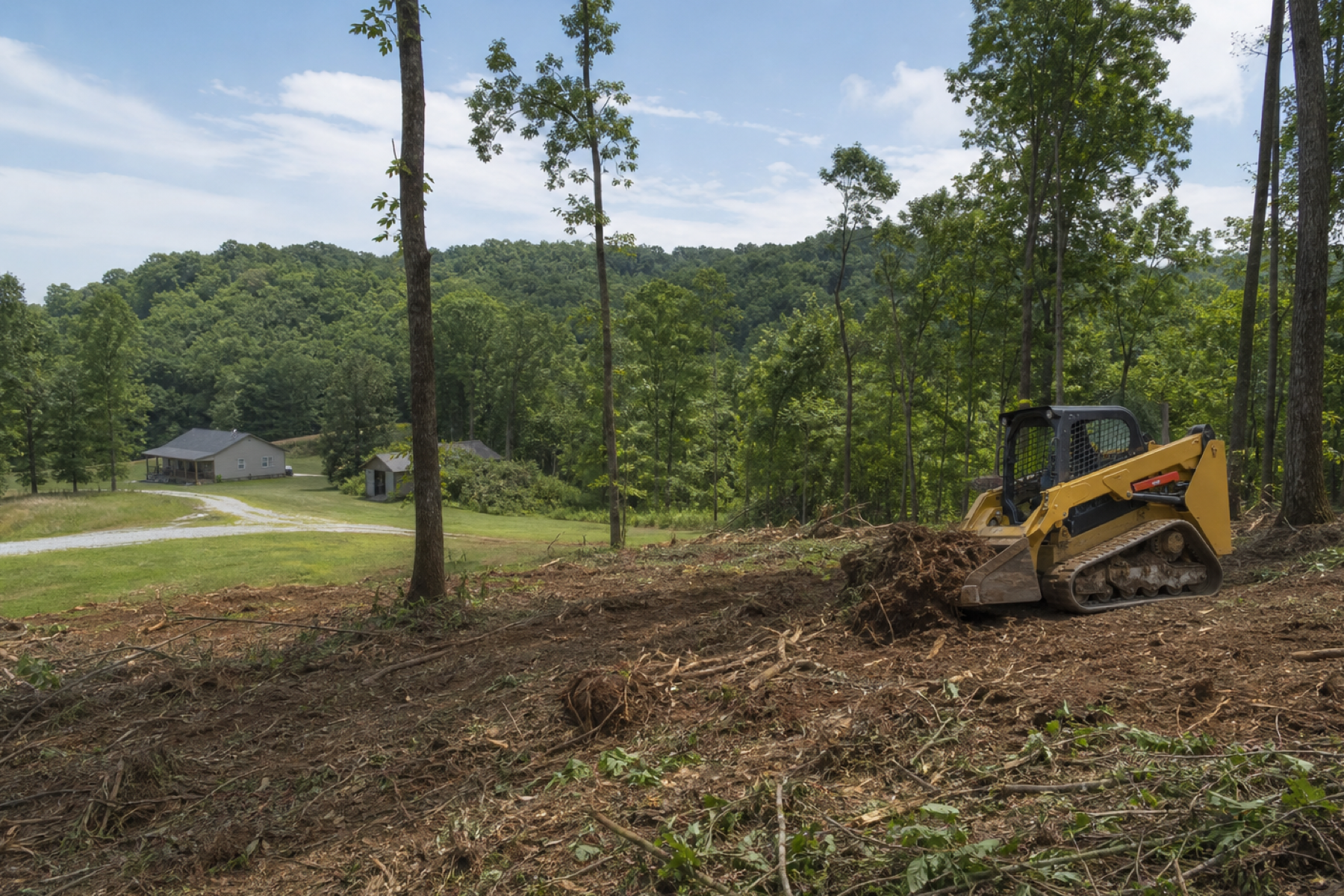
It surprises people: clearing one acre often costs more per acre than clearing ten. If per-acre pricing were a simple rate, that wouldn't happen — but it isn't, and understanding why helps set realistic expectations for a small job and explains why 'cost per acre' figures you find online rarely fit small projects.
This guide explains the fixed costs behind every project that don't shrink with the job, and why they weigh more heavily on small ones.
Every Job Has Fixed Costs
Before a single tree is touched, a project incurs costs that are the same whether it's one acre or ten: loading equipment onto trailers, driving it to the site, unloading and setting up, and doing it all in reverse at the end. This 'mobilization' is a real expense, and it doesn't get smaller just because the job is small. On a ten-acre project it's spread across ten acres; on a one-acre project, that same cost lands on a single acre.
Setup Time Doesn't Scale Down
Beyond hauling equipment, there's on-site setup: assessing the work area, positioning machines, and the general overhead of showing up and getting started. A crew spends a meaningful chunk of a small job simply arriving and preparing — proportionally far more than on a large job where the actual clearing dominates the day. The smaller the job, the larger that fixed slice looms in the per-acre math.
Minimums and Efficiency
- Many contractors have a practical minimum — it isn't worth mobilizing equipment for a job below a certain size, so small jobs carry a floor price.
- Large jobs let a crew hit an efficient rhythm; small jobs end before that efficiency pays off.
- A half-day of clearing still requires a full mobilization, so the fixed costs dominate.
How to Make a Small Project More Economical
There are ways to improve the math on a small job. Combining nearby work into one visit spreads the mobilization; timing it when a contractor is already working in your area can help; and being flexible on scheduling lets it fit efficiently into a route. Being clear and well-prepared — good photos, marked boundaries, cleared access — also means no time is wasted on the small window the job occupies. The key expectation to set, though, is that a small job's per-acre number will simply run higher than a big one's, and that's normal, not a markup. Our guide on what affects cost per acre covers the rest of the picture.
Helpful Guides
This guide is general information for property owners and does not replace an on-site evaluation. Upper Cumberland Land Clearing is an independent referral service; project scope, methods, equipment, pricing and scheduling are determined by the contractor who reviews your property.
Land-Clearing Costs Questions
Because every project has fixed costs — hauling equipment to the site, setup, and teardown — that don't shrink with the job. On a large job they spread across many acres; on a small job the same costs land on one acre, raising the per-acre figure.
Many do, at least practically. It isn't worth mobilizing equipment for a very small job below a certain threshold, so small projects often carry a floor price regardless of the exact acreage.
No — it reflects fixed mobilization and setup costs weighing more heavily on less acreage, not extra profit. It's the same reason online 'per-acre' averages (usually based on larger jobs) rarely match a small project.
Combine nearby work into one visit, be flexible on timing so it fits a contractor's route, and prepare well — good photos, marked boundaries, and clear access — so no time is wasted during the short window the job occupies.
Ready to Turn Overgrown Land Into Usable Property?
Share your contact details and you’ll be contacted to discuss where the property is, how much land is involved and what needs to be cleared.