Site Preparation
When Does a Site Need Erosion Control?
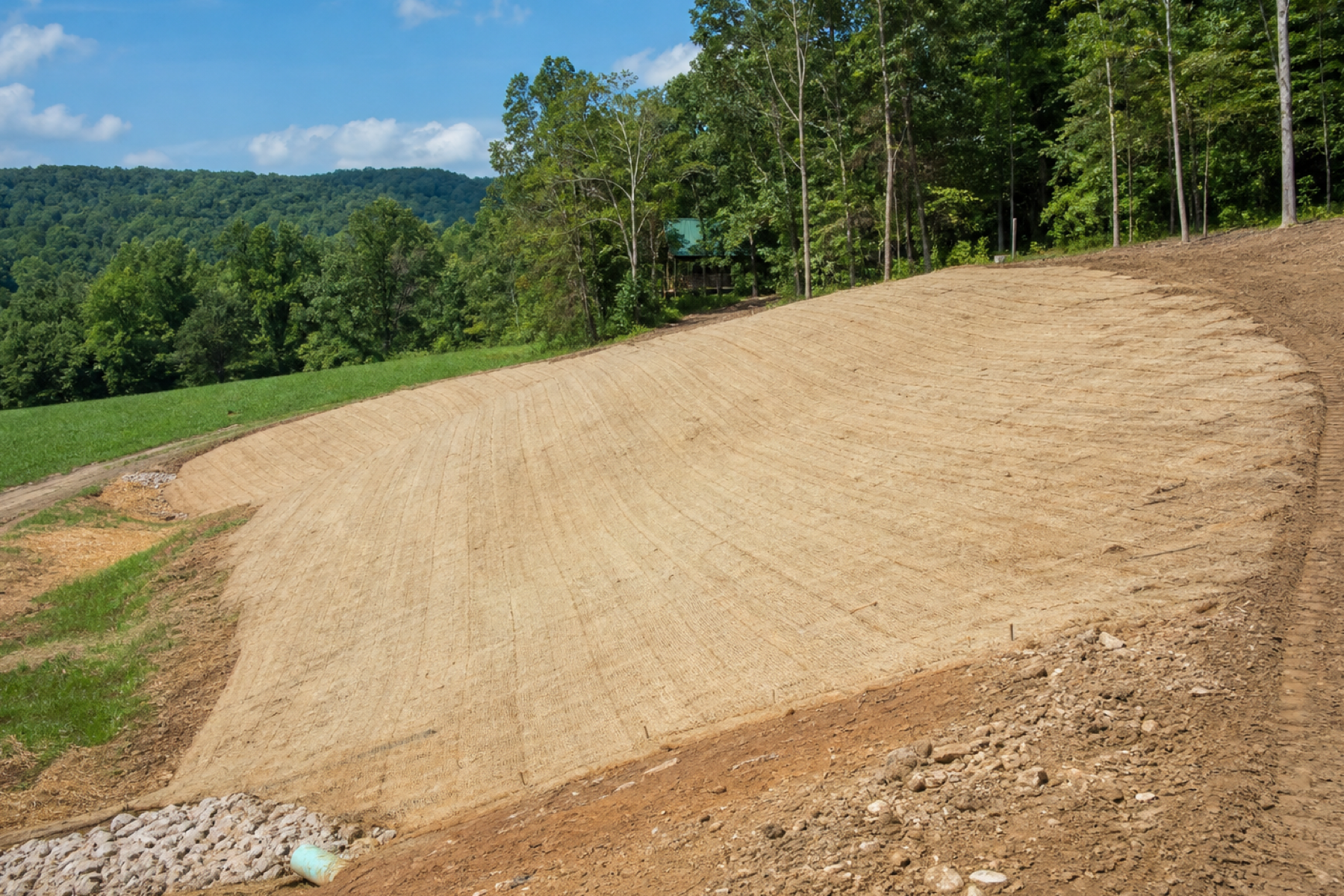
Whenever ground is cleared or disturbed, its natural protection — the vegetation and root systems that held the soil in place — is temporarily gone, and bare soil is vulnerable to washing away. Erosion control is how you protect disturbed ground until it's stable again. Knowing when it's needed (and when it isn't) keeps you from either ignoring a real problem or over-doing a minor one.
Why Disturbed Ground Erodes
Undisturbed land resists erosion because plant cover breaks the impact of rain and roots bind the soil. Clearing and grading remove that protection, leaving bare soil exposed to rain and runoff. A hard Tennessee downpour on bare ground can move a surprising amount of soil quickly — carving rills and gullies, silting up low areas and water, and undermining the very site work you just paid for. Erosion control bridges the gap until stable cover returns.
When It's a Priority
- Slopes — the steeper the disturbed ground, the faster and worse it erodes.
- Near water — ponds, creeks, streams, and drainage ways, where eroded soil does downstream harm.
- Large areas of bare soil that will sit exposed before the next stage or before cover establishes.
- Before an expected wet period — bare ground going into a rainy stretch needs protection.
- Where regulations require it — some disturbed sites are subject to erosion-control rules; confirm what applies.
When It's Less of a Concern
Not every cleared acre needs active erosion control. Flat, well-draining ground that's promptly stabilized — for example, forestry-mulched ground where the mulch layer itself protects the surface, or an area quickly seeded and established — carries much lower risk. Mulching in place is actually a mild built-in erosion control, since the chip layer shields the soil. The judgment is about slope, proximity to water, area of bare soil, and how long it stays exposed.
Common Methods
Erosion control ranges from simple to engineered: establishing vegetation quickly (seeding and mulch), leaving or applying a protective mulch layer, laying erosion-control blankets or matting on slopes, and using silt fencing or measures to keep sediment out of water and off neighboring ground. On slopes and near water, matting and sediment control do more; on gentle ground, prompt seeding and mulch often suffice. A contractor can advise what a specific site needs, and where regulations apply, confirm the requirements with the appropriate authority. Our guide on what should happen after a lot is cleared puts this in the site-prep sequence.
Helpful Guides
This guide is general information for property owners and does not replace an on-site evaluation. Upper Cumberland Land Clearing is an independent referral service; project scope, methods, equipment, pricing and scheduling are determined by the contractor who reviews your property.
Site Preparation Questions
When disturbed, bare soil is at real risk of washing — especially on slopes, near water (ponds, creeks, drainage ways), over large exposed areas, or heading into a wet period. Flat ground that's promptly stabilized or mulched is lower risk. Some sites are also subject to erosion-control regulations.
Because clearing removes the plant cover and roots that normally hold soil in place, leaving bare ground exposed to rain and runoff. A hard rain on bare, especially sloped, soil moves a lot of dirt fast — carving gullies and silting up water — until stable cover returns.
Establishing vegetation quickly (seeding and mulch), leaving or applying a protective mulch layer, erosion-control blankets or matting on slopes, and silt fencing to keep sediment out of water and off neighbors. Slopes and areas near water need more; gentle ground often just needs prompt seeding and mulch.
Yes, mildly — the mulch layer it leaves shields the soil surface from rain impact and helps hold it, acting as a built-in measure. That's one reason mulched ground is lower erosion risk than bare, graded soil, though steep or near-water sites may still need dedicated erosion control.
Ready to Turn Overgrown Land Into Usable Property?
Share your contact details and you’ll be contacted to discuss where the property is, how much land is involved and what needs to be cleared.