Site Preparation
How Drainage Should Be Considered Before Grading
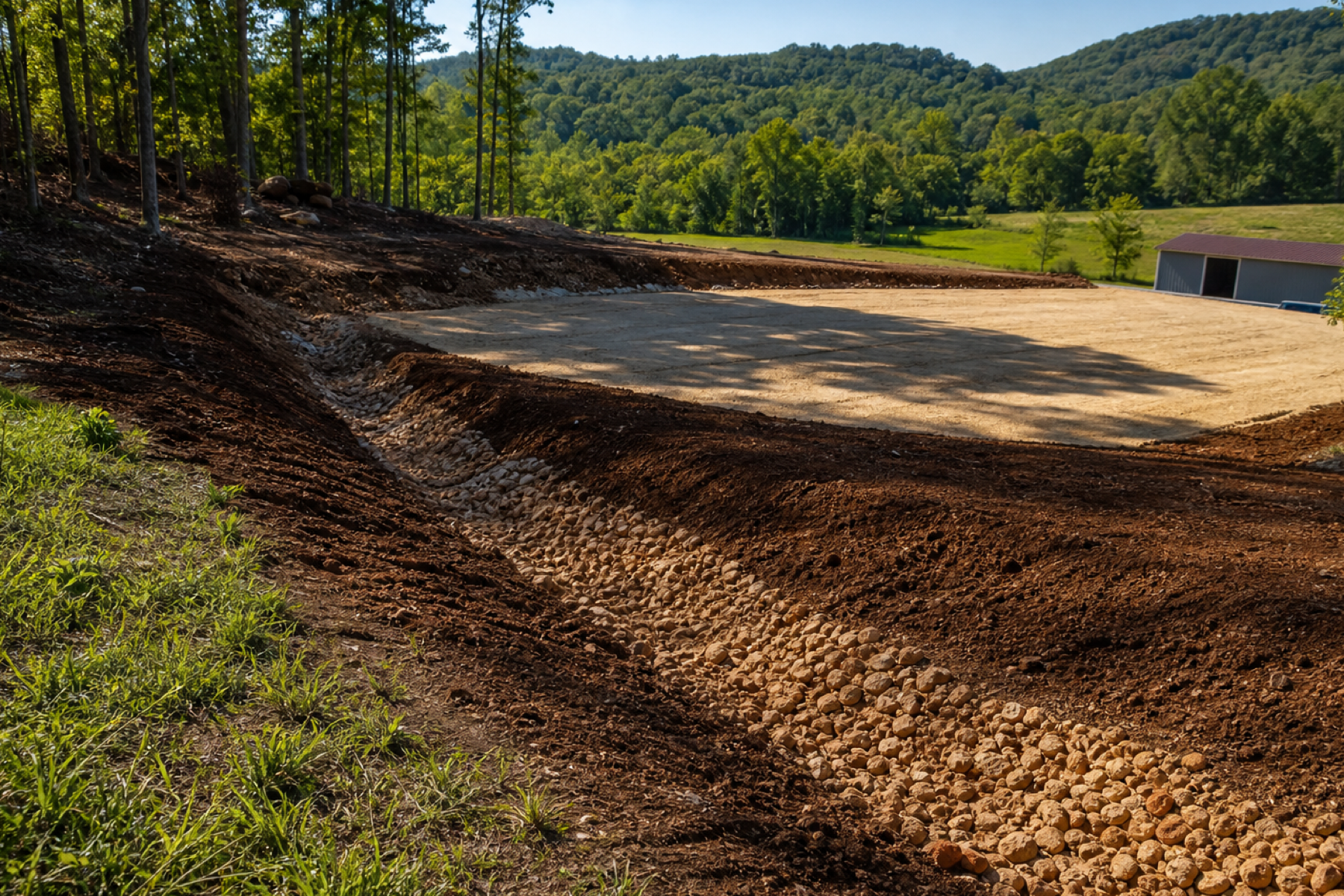
Of all the site-prep steps, drainage is the one people think about last and regret most. Here's the key insight: grading is what decides where water goes on your property, so drainage has to be planned before the grading is done — not discovered afterward when water is running the wrong way. Get this order right and water becomes a non-issue; get it wrong and you fight it for years.
Grading and Drainage Are the Same Decision
Grading shapes the ground — and water goes wherever the shape of the ground sends it. That means every grading decision is also a drainage decision, whether it's made deliberately or by accident. If you grade a pad without thinking about water, you've still decided where water flows; you just didn't choose it on purpose. Planning drainage first means the grading is shaped to send water where you want it, away from structures and toward safe outlets.
What to Figure Out First
- Where water comes from — uphill runoff, roof runoff, and how much during a hard rain.
- Where water should go — a safe outlet, natural drainage, or a managed path off the site.
- What must stay dry — the building pad, driveway, and any low areas that can't flood.
- The existing patterns — how water currently moves across the site before you change it.
The Tools Grading Uses for Water
Once you know where water needs to go, grading shapes the ground to move it there: sloping surfaces so they shed water, crowning a driveway, cutting swales to channel runoff, building up pads above surrounding grade, and directing flow toward culverts or natural outlets. On the sloped ground common in the Upper Cumberland, diverting uphill water around a building is often as important as draining the pad itself. These features only work if they're designed into the grading, which is why the plan comes first.
Why This Order Saves You
Retrofitting drainage after grading — or after building — is expensive and often only partly effective, because you're working against a shape that's already set. Planning it before grading costs little more than thought and gets it right the first time. It's the clearest example of how sequence matters in site prep: water problems are cheap to prevent and costly to fix. Our guides on clearing versus grading and land clearing for a new home site cover how drainage fits the full sequence.
Helpful Guides
This guide is general information for property owners and does not replace an on-site evaluation. Upper Cumberland Land Clearing is an independent referral service; project scope, methods, equipment, pricing and scheduling are determined by the contractor who reviews your property.
Site Preparation Questions
Because grading shapes the ground, and water goes wherever the shape sends it — so grading is a drainage decision whether or not it's made deliberately. Planning drainage first means the grading is shaped to send water where you want it, instead of discovering the flow is wrong afterward.
Where water comes from (uphill and roof runoff), where it should safely go, what must stay dry (the pad, driveway, low areas), and how water currently moves across the site. Those answers drive how the ground gets shaped.
By shaping the ground — sloping surfaces to shed water, crowning driveways, cutting swales, building pads above surrounding grade, and directing flow to culverts or natural outlets. On slopes, diverting uphill water around structures is key. These only work if designed into the grading.
It can be retrofitted, but it's more expensive and often only partly effective, because you're working against a shape that's already set. Planning drainage before grading costs little and gets it right the first time — water problems are cheap to prevent, costly to fix.
Ready to Turn Overgrown Land Into Usable Property?
Share your contact details and you’ll be contacted to discuss where the property is, how much land is involved and what needs to be cleared.