Site Preparation
What Should Happen After a Lot Is Cleared?
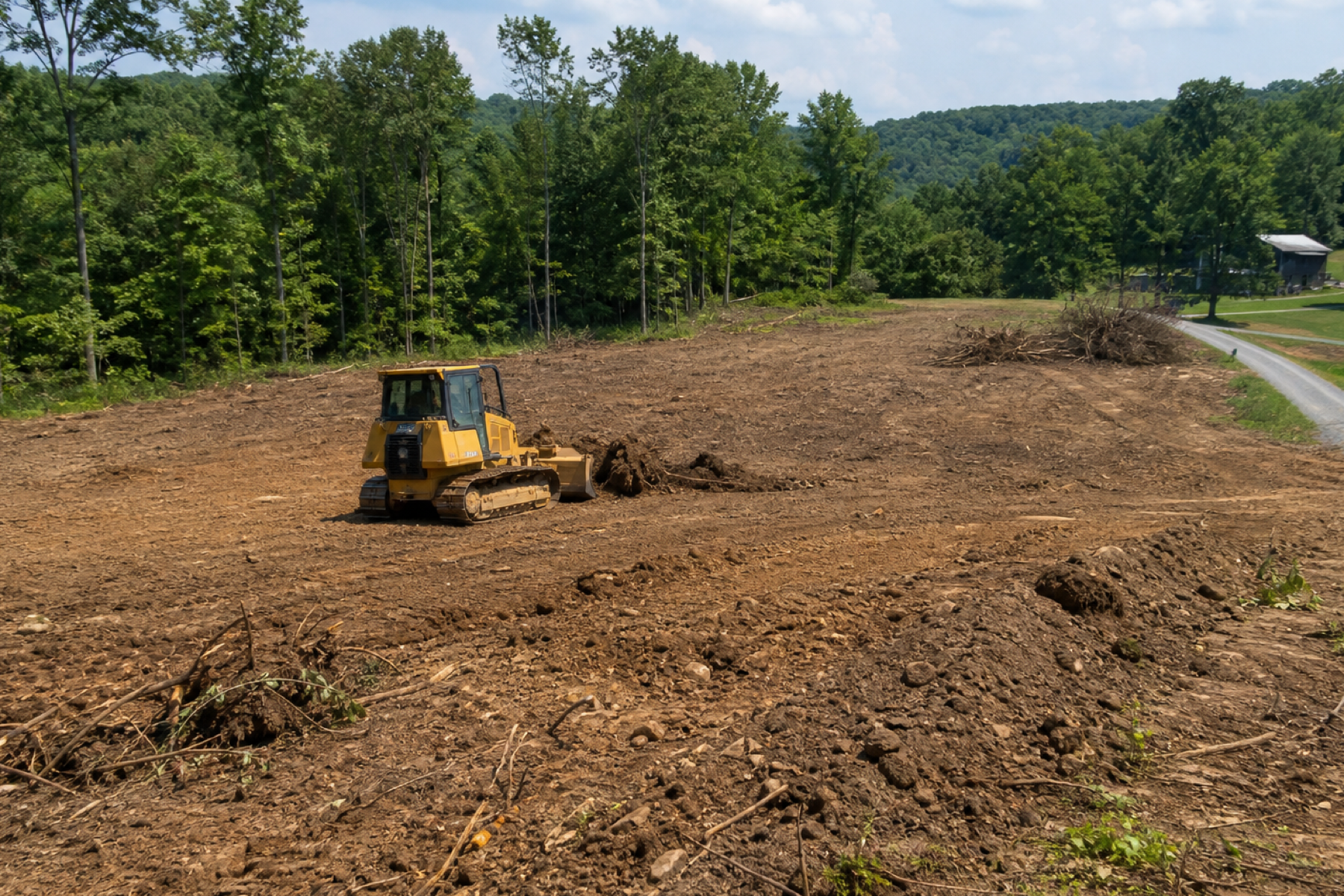
There's a satisfying moment when the trees and brush are gone and you can finally see your land. But a cleared lot is the start of site preparation, not the end — and what happens next depends entirely on what the land is for. Knowing the steps that follow clearing keeps you from being surprised that 'cleared' and 'ready' are two different things.
Cleared vs. Ready
Clearing removes what's growing; it doesn't, by itself, make land ready for its next use. A lot cleared for pasture may be nearly done; a lot cleared for a house has several stages to go. The first thing to do after clearing is get clear on the goal, because that determines everything that follows — and whether you're actually finished or just getting started.
The Usual Next Steps for a Building Lot
- Grubbing — removing stumps and roots from building and load-bearing areas.
- Grading — shaping the pad, driveway, and drainage paths to the needed elevations.
- Drainage — making sure water sheds away from where structures will sit.
- Erosion control — stabilizing disturbed soil, especially on slopes or near water.
- Stabilizing the surface — seeding, mulch, or cover so bare ground doesn't wash.
Don't Leave Bare Ground Exposed
One thing that should happen after clearing, whatever the end use, is dealing with exposed soil. Freshly cleared, bare ground is vulnerable to erosion — a hard Tennessee rain on bare, sloped soil moves a lot of dirt and creates gullies. Stabilizing it (a mulch layer from forestry mulching helps, or seeding and erosion control where needed) protects the investment. Our guide on when a site needs erosion control covers when this becomes essential.
Match the Follow-Through to the Goal
For pasture or open ground, the follow-through may be seeding and a maintenance plan to keep regrowth down. For a building site, it's the grubbing-grading-drainage sequence and coordinating with the builder. For recreational land, it might be establishing and maintaining what you cleared. The point is to plan the whole path from the start, so clearing hands off cleanly to whatever comes next rather than leaving you with a cleared lot that isn't actually usable yet. Our guides on land clearing for a new home site and maintaining land after forestry mulching cover the two most common paths.
Helpful Guides
This guide is general information for property owners and does not replace an on-site evaluation. Upper Cumberland Land Clearing is an independent referral service; project scope, methods, equipment, pricing and scheduling are determined by the contractor who reviews your property.
Site Preparation Questions
Not usually. Clearing removes vegetation, but a building lot still needs grubbing (stumps and roots out), grading, drainage, and often erosion control before it's buildable. 'Cleared' and 'ready' are different stages — how many steps remain depends on the intended use.
First, be clear on the goal, since it sets the next steps. Then handle exposed soil so it doesn't erode, and proceed with the follow-through for your use — grubbing/grading/drainage for a building site, or seeding and a maintenance plan for pasture or open ground.
Yes — freshly exposed soil erodes, especially on slopes or in heavy rain. Stabilize it with a mulch layer (mulching leaves one), seeding, or erosion-control measures where needed, so a hard rain doesn't wash the ground and create gullies.
Grubbing stumps and roots from the footprint, grading the pad and driveway to the right elevations, ensuring drainage sheds water away from structures, erosion control on disturbed soil, and coordinating the finished condition with the builder's requirements.
Ready to Turn Overgrown Land Into Usable Property?
Share your contact details and you’ll be contacted to discuss where the property is, how much land is involved and what needs to be cleared.