Site Preparation
Land Clearing for a New Home Site
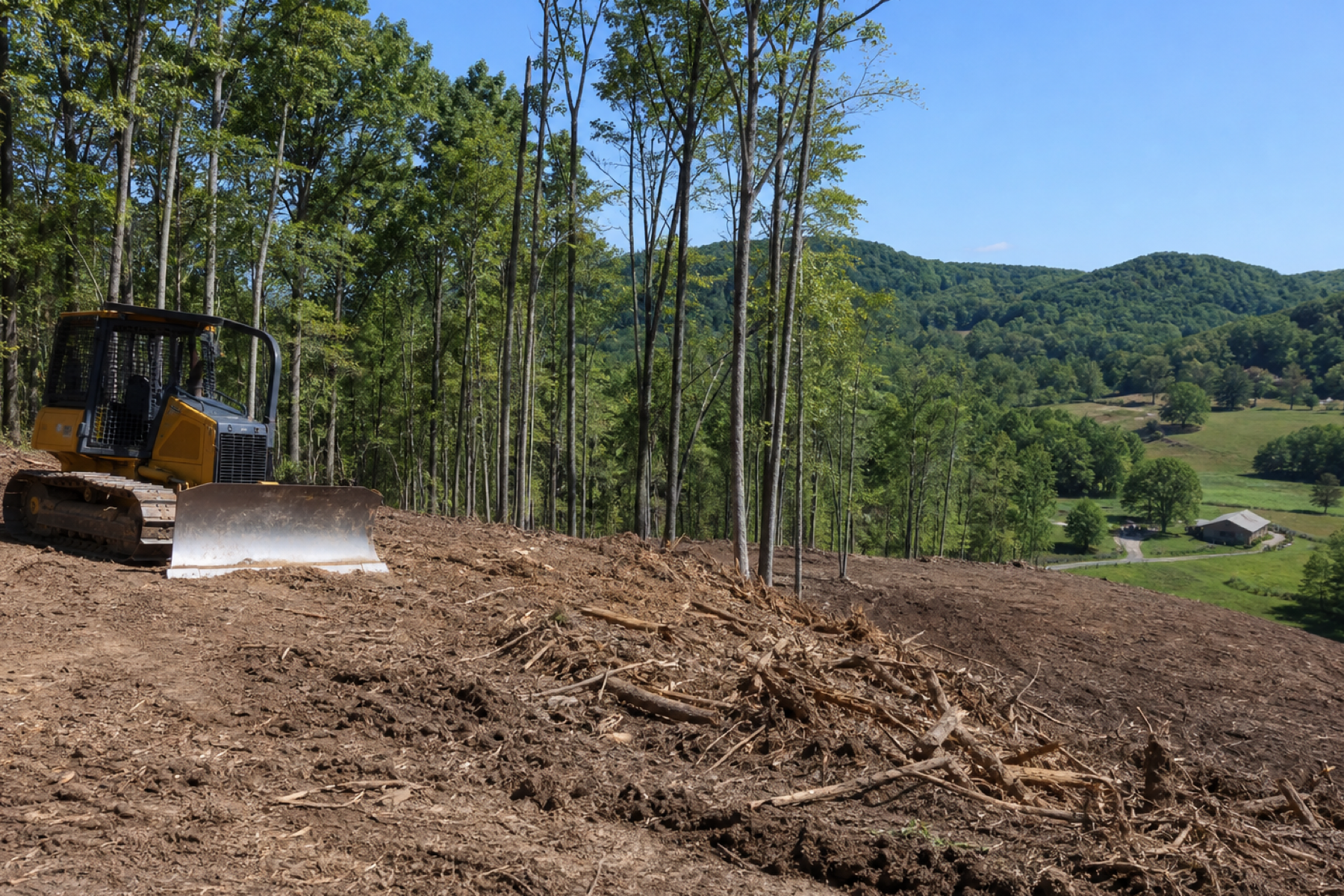
Clearing land for a new home is one of the most common — and most misunderstood — clearing projects. Removing the trees is only the visible part; turning wooded ground into a site a house can actually be built on involves several stages, and skipping any of them tends to cost more later than it saves now.
This guide walks through what building-site clearing really involves, so you can plan the project (and its budget and timeline) around the full picture rather than just 'getting the trees down.'
Clearing Is the First Step, Not the Whole Job
It's tempting to think of home-site prep as 'clear the lot,' but the standing vegetation is just the start. A buildable site needs the footprint cleared, the stumps and roots removed from where the structure and drive will sit, the ground shaped and leveled, and drainage planned so water goes where you want it. Each of those is a distinct stage with its own equipment and considerations.
Understanding this up front matters because it sets realistic expectations: a cleared lot is not the same as a build-ready lot, and the difference is real work.
The Stages, in Order
- Surface clearing — trees, brush, and vegetation removed from the building footprint, driveway, and any septic or utility areas.
- Grubbing — stumps and root systems removed from load-bearing areas so nothing decays and settles under the structure (see our guide on grubbing).
- Rough grading — shaping the pad, driveway, and drainage paths to the elevations the build needs.
- Drainage — deciding where water goes before it decides for you; getting this wrong is a lasting problem.
- Coordination — leaving the site in the condition the foundation crew or next trade expects.
Why Grubbing and Drainage Can't Be Skipped
The two stages people are tempted to cut are the two that cause the worst problems if skipped. Leaving stumps and roots under a foundation or driveway invites voids and settling as they decay — cracking and unevenness that's expensive to fix once concrete is poured. And drainage that isn't planned before grading means water finding its own path, often toward the house. Both are far cheaper to do right during site prep than to remedy afterward.
Keep the Trees Worth Keeping
One of the best decisions in home-site clearing is selective clearing — keeping mature shade trees that add value and comfort while clearing only what the build requires. Mark the keep-trees clearly before work begins, and be aware that construction near a tree's root zone can affect its health, so placement matters. A good contractor will help you balance the building footprint against the trees worth protecting.
Because building requirements come from the build itself — foundation type, driveway route, drainage plan — it pays to involve the builder's expectations early so the site prep matches what's coming. When you're ready, describe the home plans and the lot for a property review.
Helpful Guides
This guide is general information for property owners and does not replace an on-site evaluation. Upper Cumberland Land Clearing is an independent referral service; project scope, methods, equipment, pricing and scheduling are determined by the contractor who reviews your property.
Site Preparation Questions
No. Clearing removes the standing vegetation; a buildable site also needs stumps and roots grubbed out of load-bearing areas, the ground rough-graded, and drainage planned. A cleared lot and a build-ready lot are different things separated by real work.
Because roots and stumps left under a foundation, slab, or driveway decompose over time, creating voids and uneven settling that crack and shift what's built on top. Grubbing them out leaves stable ground — far cheaper than fixing settling after construction.
Yes — selective clearing is common and often smart, keeping mature shade trees while clearing the footprint, drive, and utility areas. Mark keep-trees before work starts, and note that construction near a tree's roots can affect its health, so placement matters.
It helps a lot. Foundation type, driveway route, and drainage requirements come from the build, and they set the site-prep scope. Involving the builder's expectations early keeps clearing, grubbing, and grading aligned with what the construction actually needs.
Ready to Turn Overgrown Land Into Usable Property?
Share your contact details and you’ll be contacted to discuss where the property is, how much land is involved and what needs to be cleared.