Clearing Methods
Stump Grinding Versus Stump Removal
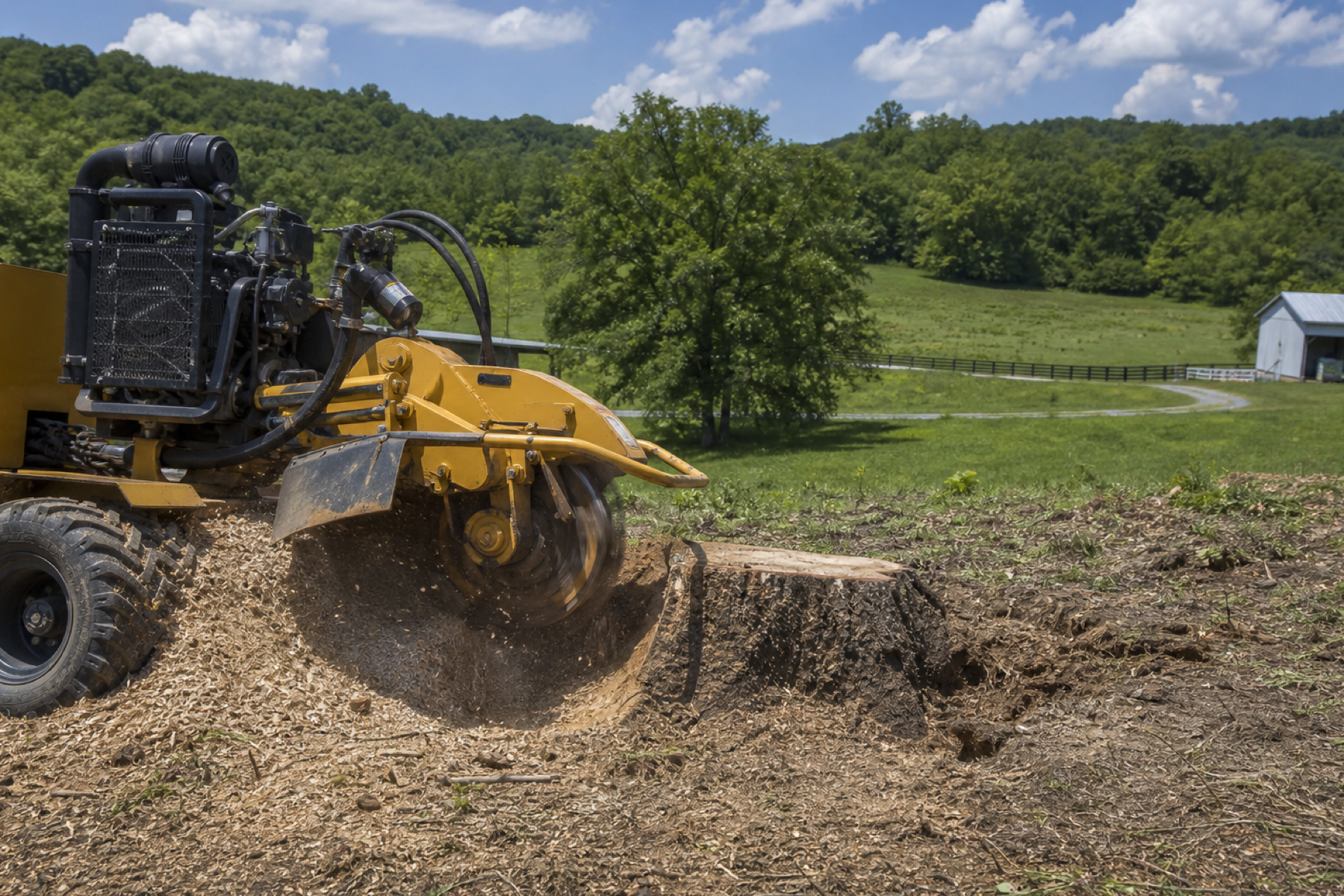
Grinding and removal both get rid of the stump you can see, but they leave very different things in the ground — and that difference is what determines which one your project actually needs. People often ask for one when their goal really calls for the other.
This guide explains what each method does below the surface, and how to match the choice to what you plan to do with the land.
What Stump Grinding Does
Stump grinding uses a rotating cutting wheel to chew the stump down into chips, typically to several inches below ground level. It's fast, contained, and leaves a hole filled with grindings and the surrounding area largely undisturbed. What it does not do is remove the root system — the roots stay in the ground and decompose slowly over the following years.
For most purposes where you simply want the stump gone from view and out of the way — lawns, general property cleanup, replanting nearby — grinding is efficient and sufficient.
What Stump Removal Does
Full stump removal pulls or digs out the stump together with its major root system, usually with an excavator. It leaves a larger hole that needs backfilling, and it disturbs more ground — but it takes the roots out, not just the visible stump. That matters when anything is going to be built, dug, or graded where the stump was.
Removal is the more involved operation, but it's the right call when the roots themselves would be a problem for what comes next.
Which One Your Project Needs
- Building, foundation, driveway, or pad over the spot → removal, so roots don't interfere or leave voids as they rot.
- Grading or excavation across the area → removal, since roots complicate earthwork.
- Lawn, landscaping, or just getting the stump out of sight → grinding is usually enough.
- Replanting a tree elsewhere nearby → grinding the old stump is typically fine.
- Large-scale land clearing for pasture or woods → stumps are often left in place entirely unless a specific use requires otherwise.
Why Roots Matter for Construction
The reason construction areas need removal rather than grinding comes down to what happens as roots decay. Left in the ground under a load-bearing area, decomposing roots create voids and uneven settling over time — exactly what you don't want beneath a foundation, slab, or driveway. Removing them up front avoids problems that are expensive to fix later.
This is also why land clearing for a building site is a different scope than clearing for pasture: the footprint needs grubbing (stump and root removal), even if the rest of the parcel doesn't. Our guide on what grubbing is covers this in detail.
Helpful Guides
This guide is general information for property owners and does not replace an on-site evaluation. Upper Cumberland Land Clearing is an independent referral service; project scope, methods, equipment, pricing and scheduling are determined by the contractor who reviews your property.
Clearing Methods Questions
Grinding chews the visible stump down to below ground level but leaves the roots in place to decay slowly. Removal takes out the stump and its major roots together, leaving a larger hole to backfill. Grinding is faster and less disruptive; removal is more thorough.
For lawns and general use, usually not — they decompose over years. The problem case is construction: roots left under a foundation, slab, or driveway create voids and settling as they rot, which is why building areas need removal, not grinding.
Grinding is typically the lighter, faster operation and removal the more involved one. But the right question isn't which is cheaper — it's which your land use requires, because grinding a spot that needed removal can cost more to fix later.
Not always. On large clearing projects for pasture, trails, or open woods, stumps are frequently left in the ground. They're addressed specifically where a use — like construction — requires it. Deciding this is part of scoping the project.
Ready to Turn Overgrown Land Into Usable Property?
Share your contact details and you’ll be contacted to discuss where the property is, how much land is involved and what needs to be cleared.