Clearing Methods
What Is Grubbing?
Grubbing is one of those industry words that shows up on estimates and permits without much explanation. If you've seen "clearing and grubbing" and wondered what the second half means, this guide is for you — because the distinction matters for what your land can be used for.
In short: clearing removes what's above the ground, and grubbing removes what's in it. Understanding the difference explains why some clearing projects cost more and take longer than others.
Clearing vs. Grubbing
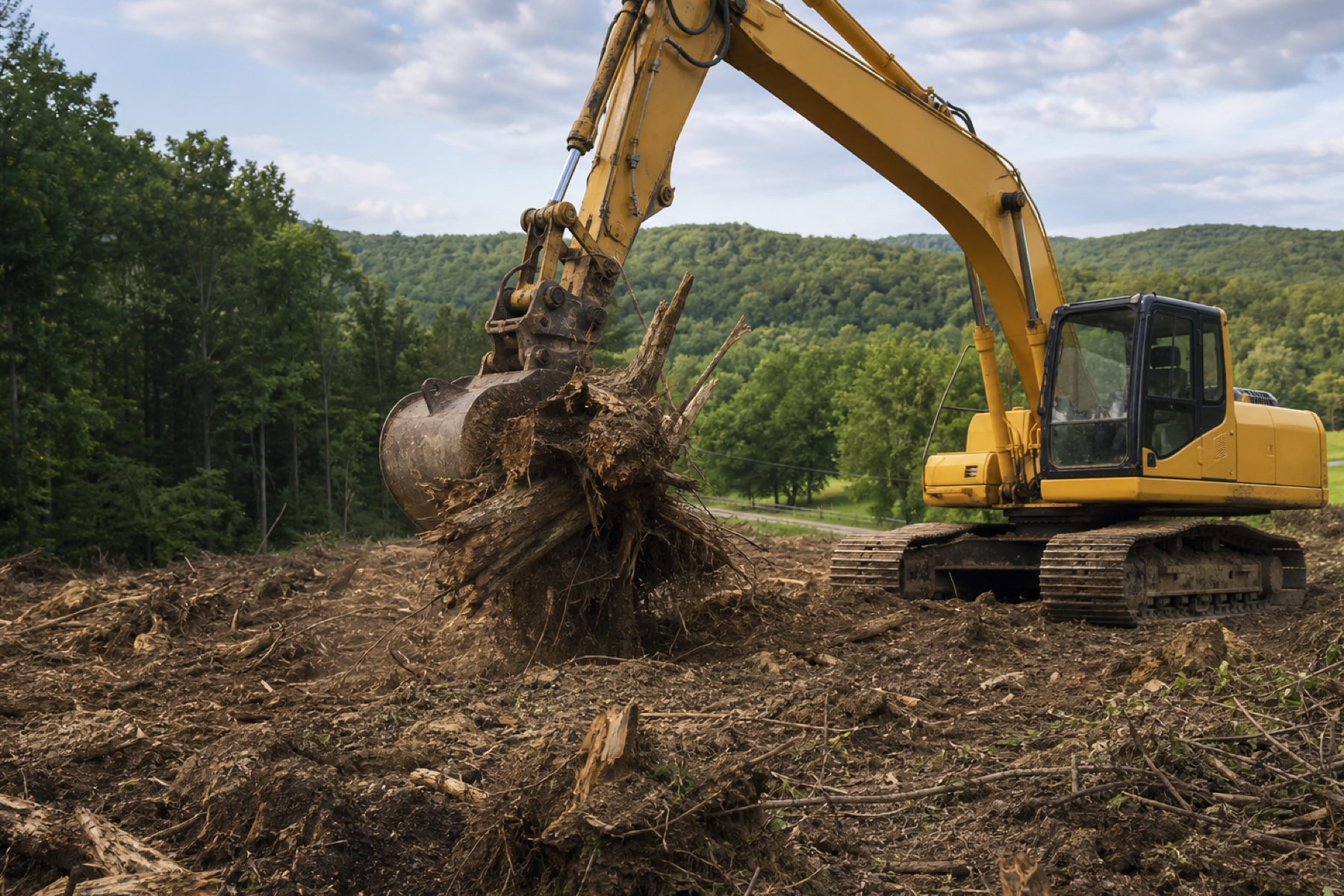
"Clearing" refers to removing the vegetation you can see — trees, brush, and undergrowth off the surface. "Grubbing" refers to removing what's below the surface after that: stumps, root systems, and any buried woody debris or organic material in the soil.
The two are often billed together ("clearing and grubbing") precisely because construction usually needs both. But they're separate operations, and plenty of land-clearing projects do the first without the second.
Why Grubbing Is Done
Grubbing exists because organic material left in the ground causes problems for anything built on it. Stumps and roots decompose over years, and as they do they create voids and uneven settling. Buried organic matter in the soil compresses and rots unpredictably. Under a foundation, slab, driveway, or pad, that means cracking and settling down the road.
Removing that material — grubbing — leaves stable, mineral soil that can be compacted and built on with confidence. It's the step that converts "cleared" land into "buildable" land.
When You Need Grubbing — and When You Don't
- Needed: building sites, foundations, slabs, driveways, and anywhere the ground will bear a structure or be graded.
- Needed: areas that will be excavated or need stable, engineered soil.
- Often skipped: pasture reclamation, where stumps can be left and grass established around them.
- Often skipped: trails, woods thinning, and general access clearing where the surface is what matters.
- Selective: many projects grub only the building footprint and leave the rest of the parcel ungrubbed.
How Grubbing Fits the Overall Project
Grubbing sits between surface clearing and grading in the sequence that turns wooded land into a usable site. First the vegetation comes off, then stumps and roots come out of the load-bearing areas, then the ground is shaped and drained. Skipping grubbing where it's needed doesn't save money — it defers a bigger cost to after the concrete is poured.
Because grubbing is a below-grade operation, it's affected by the same conditions as other earthwork: rock, wet ground, and access all matter. Our site-preparation guides cover how these stages connect.
Helpful Guides
This guide is general information for property owners and does not replace an on-site evaluation. Upper Cumberland Land Clearing is an independent referral service; project scope, methods, equipment, pricing and scheduling are determined by the contractor who reviews your property.
Clearing Methods Questions
Grubbing is the removal of stumps, roots, and buried woody or organic material from the soil after surface vegetation has been cleared. Where clearing takes off what's above ground, grubbing takes out what's in the ground.
No. It's necessary for construction areas — foundations, slabs, driveways, and anywhere that bears load or gets graded — because roots and organic material cause settling as they decay. For pasture, trails, and general clearing, stumps are often left and grubbing is skipped.
Organic material left in the ground decomposes over time, creating voids and uneven settling beneath whatever was built. That can lead to cracking and structural problems, which is why building areas are grubbed before construction.
No. Grubbing removes stumps, roots, and organic material from the soil; grading shapes and levels the ground and manages drainage. Grubbing comes first, then grading, in preparing a site for construction.
Ready to Turn Overgrown Land Into Usable Property?
Share your contact details and you’ll be contacted to discuss where the property is, how much land is involved and what needs to be cleared.