Project Planning
What Underground Utilities Must Be Marked?
Any land-clearing work that disturbs the ground — stump removal, grading, excavation — carries a serious, avoidable risk: striking an underground utility. Hitting a gas, electric, water, or communications line is dangerous and expensive, and it's almost entirely preventable by having lines located and marked first.
This guide explains what needs to be marked, how the process works in Tennessee, and the critical gap most people don't know about — private lines.
Call 811 Before You Dig
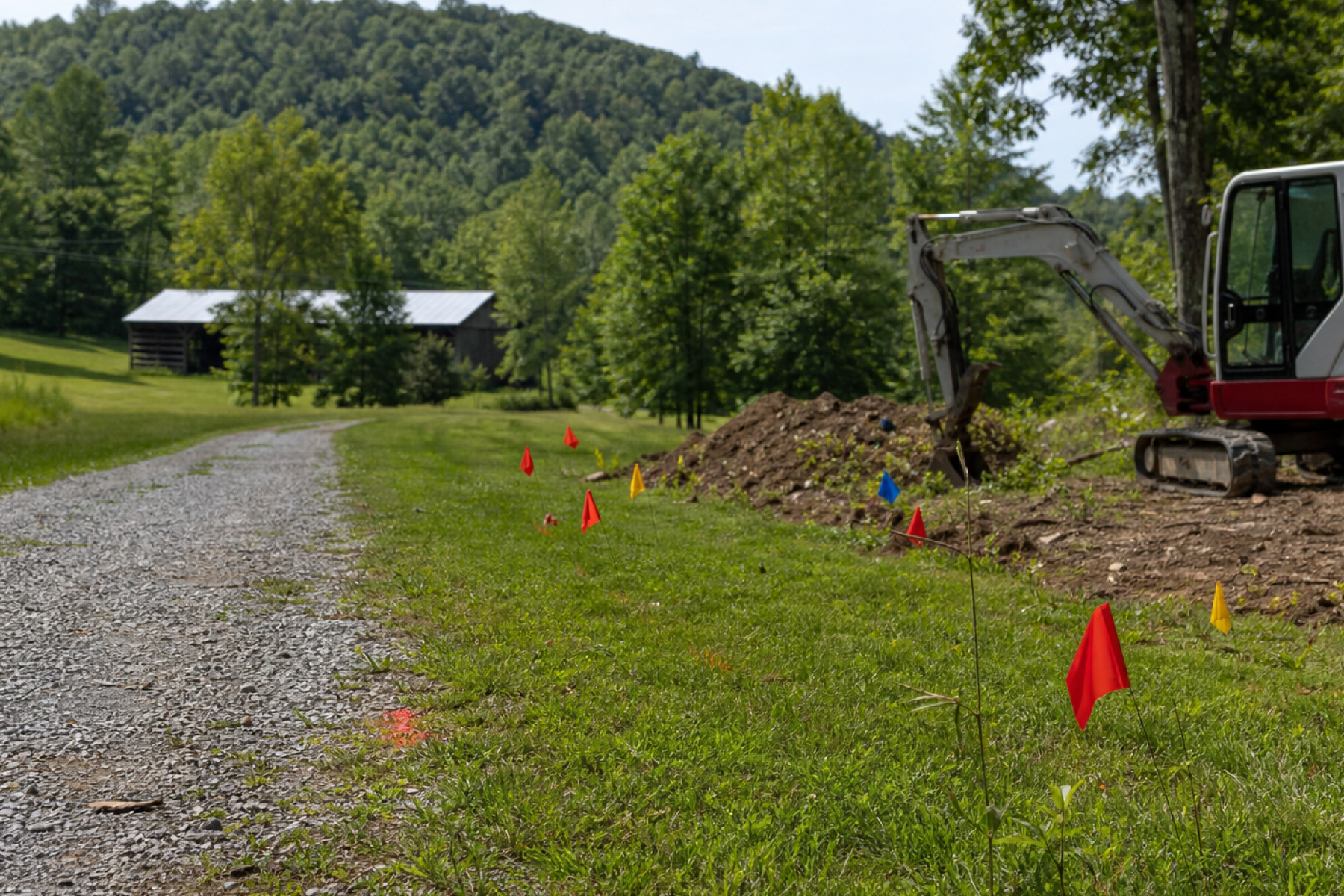
In Tennessee, as nationwide, the starting point is the 811 'call before you dig' service. A single free request to Tennessee 811 notifies the utility companies with public infrastructure in the area, and they send locators to mark their buried lines on the property. This should happen before any ground-disturbing work begins, and there's a required lead time, so it's not a same-day step — plan for it in the project timeline.
Confirm with your contractor who is responsible for placing the 811 request for your project, so it doesn't fall through the cracks.
What 811 Covers
- Public utility lines — the gas, electric, water, sewer, and communications lines owned by utility companies up to the meter or connection point.
- Marking by color-coded flags or paint that indicate the type of utility.
- The lines most likely to cause a catastrophic strike — which is why the free service is worth it every time.
The Hidden Risk: Private Lines
Here's what catches people out: 811 locators generally mark public utilities up to the meter, but they do not locate private underground lines beyond that point — and rural properties are full of them. A private well's electrical line, a water line from the well to the house or barn, a propane line from a tank, a septic system and its lines, buried electrical to an outbuilding, invisible-fence wire, and irrigation lines are all typically the owner's responsibility to identify.
On a rural Upper Cumberland parcel, these private lines are often the real hazard, because no public locator will mark them. Knowing where your own buried lines run — from records, memory, or a private locating service — is an essential part of planning ground-disturbing work.
Putting It Together
Safe clearing that disturbs the ground means both: place the 811 request for public lines with the required lead time, and identify your private lines yourself before work begins. Mark what you know, gather any records, and tell the contractor about anything buried on the property — well, septic, propane, outbuildings. This is the one planning step where cutting corners can be genuinely dangerous, so it's worth doing thoroughly. Our guide on planning a land-clearing project puts this in the full pre-project checklist.
Helpful Guides
This guide is general information for property owners and does not replace an on-site evaluation. Upper Cumberland Land Clearing is an independent referral service; project scope, methods, equipment, pricing and scheduling are determined by the contractor who reviews your property.
Project Planning Questions
For any work that disturbs the ground — stump removal, grading, excavation — yes. Contacting Tennessee 811 is free and prompts utility companies to locate and mark their public buried lines. There's a required lead time, so it's not same-day; build it into the timeline.
Public utility lines — gas, electric, water, sewer, and communications owned by the utilities, generally up to the meter or connection point — marked with color-coded flags or paint. These are the lines most likely to cause a dangerous strike.
Generally no. 811 locators mark public utilities up to the meter, not private lines beyond it — well electrical and water lines, propane lines, septic systems, buried lines to outbuildings, invisible fence, and irrigation. On rural property those private lines are often the real hazard, and identifying them is the owner's responsibility.
That varies by project, so confirm it explicitly with your contractor so it's not missed. Either way, the request must be in before ground-disturbing work starts, and you should separately identify any private buried lines on the property.
Ready to Turn Overgrown Land Into Usable Property?
Share your contact details and you’ll be contacted to discuss where the property is, how much land is involved and what needs to be cleared.