Project Planning
How to Plan a Land-Clearing Project
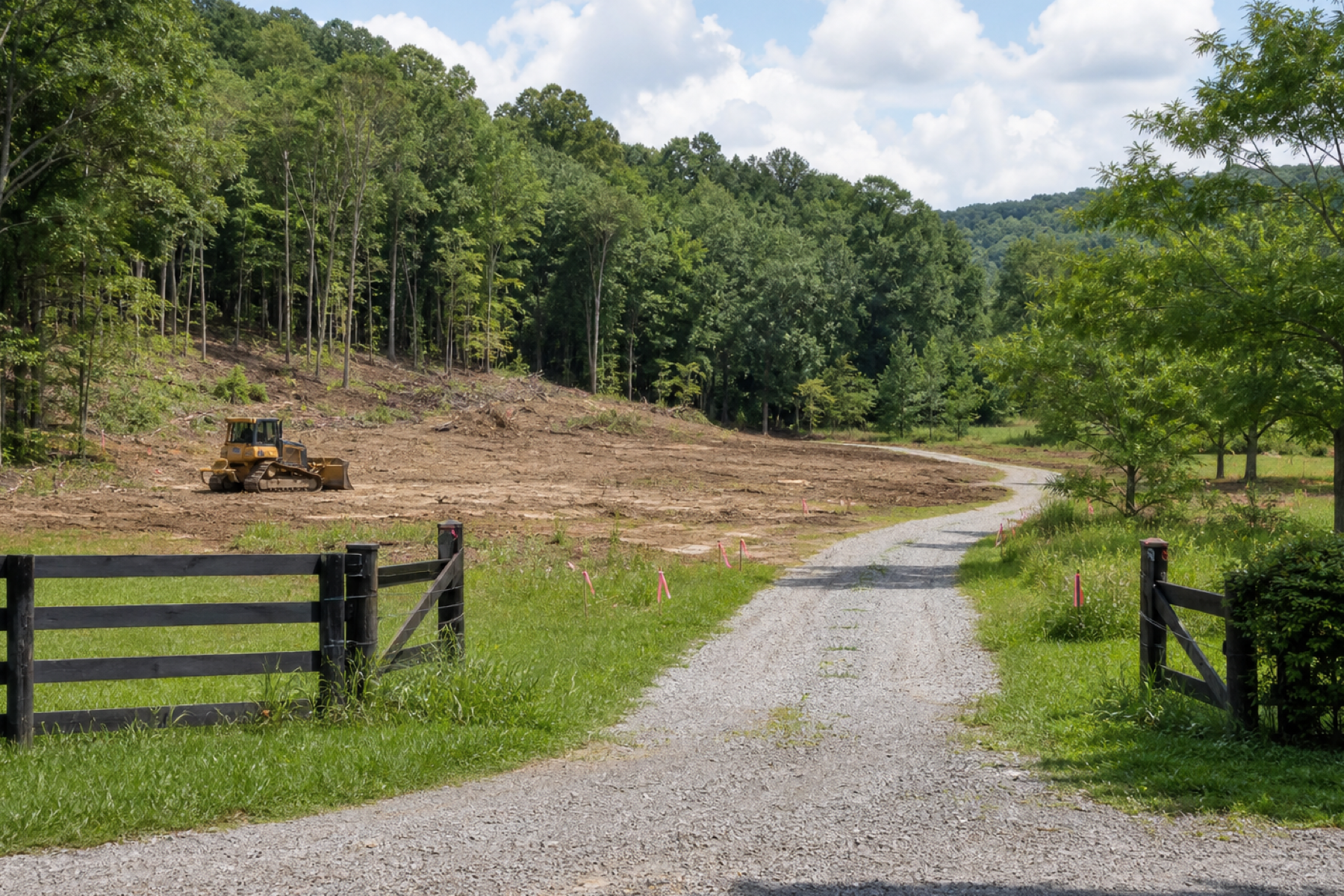
A land-clearing project goes far more smoothly when it's planned before equipment arrives — and the planning isn't complicated, it's mostly about being clear on a few things. Owners who define the scope up front get more useful estimates, avoid mid-project confusion, and end up with the result they actually wanted.
This guide walks through what to identify, mark, and check before you request work, so the contractor understands the job and nothing gets cleared that shouldn't.
Define What You Actually Want Cleared
Start with the goal, because it determines everything else. 'Clear the property' is vague; 'open up the front three acres for pasture, keep the mature oaks, and clear a path to the back' is a scope. Decide what the finished land is for — building, pasture, trails, access, recreation — because the intended use sets the method, the depth of clearing, and whether stumps come out.
Be specific about boundaries too. Where does the work area start and stop? Marking it — with flagging, stakes, or paint — beats describing it, and it prevents the single most common land-clearing regret: something cleared that was meant to stay.
Identify What Must Be Protected
- Mature or specimen trees you want kept — mark them clearly before anyone arrives.
- Structures, wells, septic components, fences, and property corners near the work area.
- Landscaping, gardens, or features that should survive the project.
- Neighboring property lines — know where yours ends, and consider a survey if there's any doubt.
Check Access and Utilities
Equipment has to get to the work, so the entrance and route matter. Note the gate width, any low branches or wires over the entrance, and whether there's room for a truck and trailer to turn and unload. A tight or soft entrance can limit what equipment can be used.
Utilities are the safety item that can't be skipped. Overhead lines, and especially underground utilities, must be identified and marked before ground-disturbing work. In Tennessee, that means contacting the state's 811 one-call service to have public underground lines located — a free step that prevents dangerous and expensive strikes.
Prepare a Useful Request
With the scope, protected features, and access understood, you're ready to request a review. The most useful request includes the property location, an acreage estimate, a description of the vegetation and tree sizes, notes on terrain and access, your goal for the land, and several wide-angle photos. Our guide on what photos to send covers exactly what to capture.
That package lets a contractor evaluate the property, match the method to it, and give you a grounded estimate — and it's the foundation of a project that goes the way you pictured.
Helpful Guides
This guide is general information for property owners and does not replace an on-site evaluation. Upper Cumberland Land Clearing is an independent referral service; project scope, methods, equipment, pricing and scheduling are determined by the contractor who reviews your property.
Project Planning Questions
Decide what the finished land is for, mark the work-area boundaries and any trees or features to protect, check the entrance and access route, and have underground utilities located through Tennessee 811. Then gather the property details and wide photos a contractor needs to scope the job.
Mark them physically — flagging, stakes, or paint for both what to clear and what to keep. Physical marks beat verbal descriptions and prevent the common mistake of clearing something that was meant to stay. Walk the boundaries with the contractor when possible.
For any work that disturbs the ground — stump removal, grading, excavation — yes. Contacting Tennessee 811 to locate public underground utilities is free and prevents dangerous, costly strikes. Confirm with your contractor who is responsible for placing the request.
If there's any uncertainty about where your property lines are — especially near boundaries you plan to clear — a survey is worth considering. Clearing across a line onto a neighbor's land is a serious and avoidable problem.
Ready to Turn Overgrown Land Into Usable Property?
Share your contact details and you’ll be contacted to discuss where the property is, how much land is involved and what needs to be cleared.