Project Planning
How Long Does Land Clearing Take?
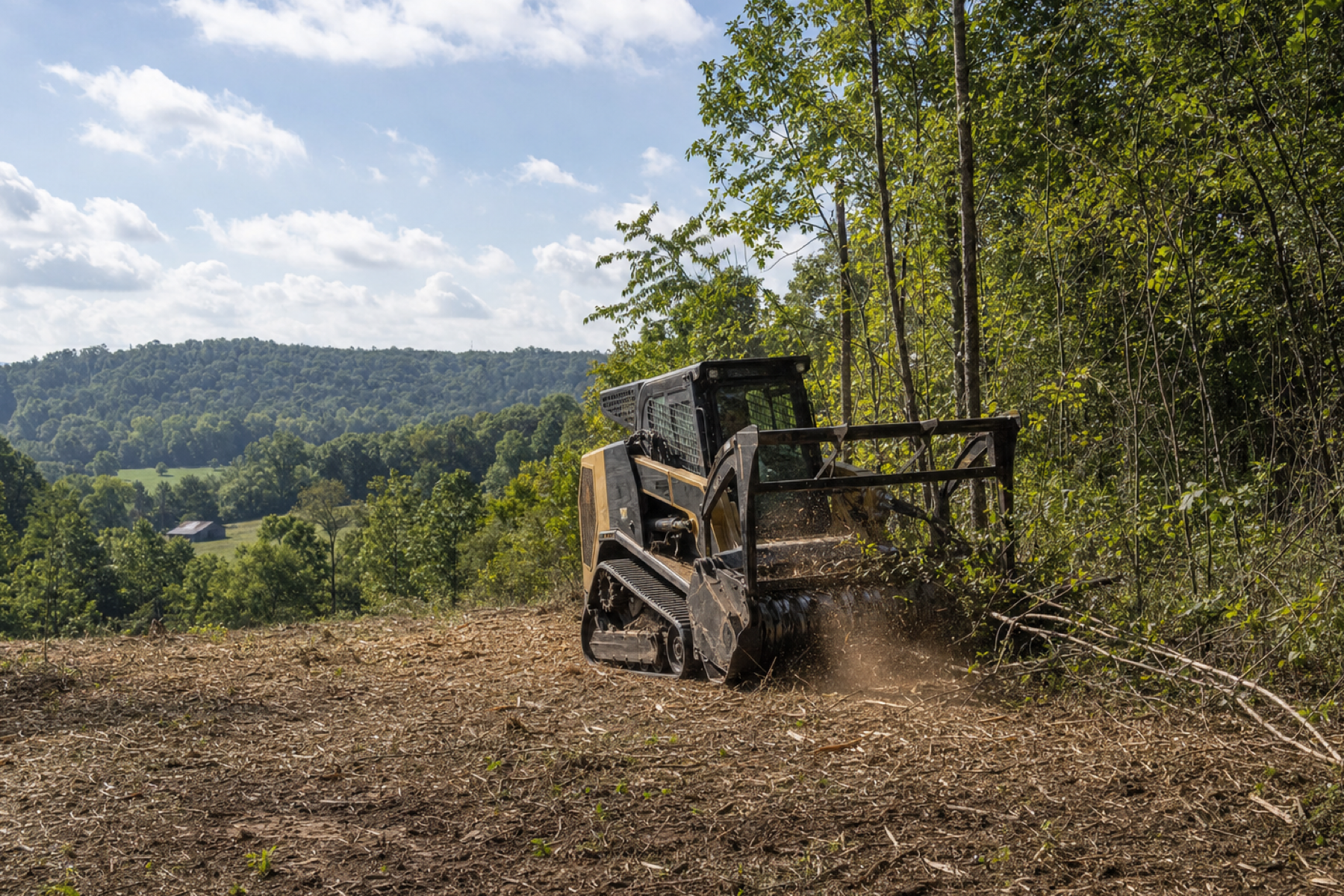
"How long will it take?" is a fair question with an honest answer: it depends on the same things that drive cost — how much there is, how thick it is, what method fits, and what the ground and weather allow. A light-brush acre can be a matter of hours; heavy wooded acreage with stump removal and grading is measured in days.
This guide explains what actually sets a land-clearing timeline so you can plan around it realistically.
The Factors That Set the Timeline
- Acreage and density — more ground and thicker growth both add time; density often matters more than raw size.
- Tree size — large trees are slower to fell and handle than brush a mulcher shreds.
- Method — in-place mulching is fast; traditional clearing with debris handling and hauling takes longer.
- Stumps and grading — adding below-grade work (grubbing, grading) extends the job beyond surface clearing.
- Terrain and access — slopes, rock, and tight access slow production.
- Weather and ground conditions — wet ground can pause heavy equipment entirely.
Why Weather and Ground Conditions Matter So Much
The factor owners underestimate most is the ground itself. Heavy equipment and saturated ground don't mix — working wet ground damages the soil, bogs down machines, and can be unsafe, so contractors often wait for it to dry. In the Upper Cumberland, seasonal moisture opens and closes working windows, and a rainy stretch can push a schedule regardless of how simple the clearing is.
This is why a clearing timeline is best thought of as a range with some weather flexibility built in, rather than a fixed date. Building slack into your plans avoids frustration when the ground needs a few dry days.
Surface Clearing vs. Full Site Prep
It helps to separate two things people both call 'clearing.' Knocking back brush and small trees across a parcel is relatively quick. Turning wooded land into a build-ready site — clearing, then grubbing stumps and roots, then grading and drainage — is a multi-stage process, and each stage adds time. If your project includes site prep, expect a longer timeline than surface clearing alone.
Getting a Realistic Timeline for Your Project
Because the timeline tracks the same conditions as the scope, the way to get a real answer is the same as getting a real estimate: a property review. With the acreage, vegetation, method, terrain, and goal understood, a contractor can give you a realistic timeframe — and note the weather flexibility to keep in mind. Describe the property and your target timing when you request a review, and factor in that ground conditions have the final say.
Helpful Guides
This guide is general information for property owners and does not replace an on-site evaluation. Upper Cumberland Land Clearing is an independent referral service; project scope, methods, equipment, pricing and scheduling are determined by the contractor who reviews your property.
Project Planning Questions
It varies widely — light brush might be cleared in hours, while a densely wooded acre with large trees, stump removal, and grading can take much longer. Density, tree size, method, terrain, and weather all set the pace, so a per-acre time estimate needs the property's specifics.
Significantly. Heavy equipment can't safely or effectively work saturated ground, so wet weather often pauses projects until the ground dries. In the Upper Cumberland, seasonal moisture opens and closes working windows, so timelines are best planned with some flexibility.
Because it's multiple stages. Surface clearing removes vegetation; site prep adds grubbing stumps and roots, then grading and drainage. Each stage takes its own time, so a build-ready site is a longer project than knocking back brush.
A contractor can give a realistic timeframe from a property review, but ground and weather conditions have the final say, especially in wetter seasons. Planning around a range with some flexibility is more reliable than a fixed date.
Ready to Turn Overgrown Land Into Usable Property?
Share your contact details and you’ll be contacted to discuss where the property is, how much land is involved and what needs to be cleared.