Site Preparation
Preparing Rural Land for Septic Installation
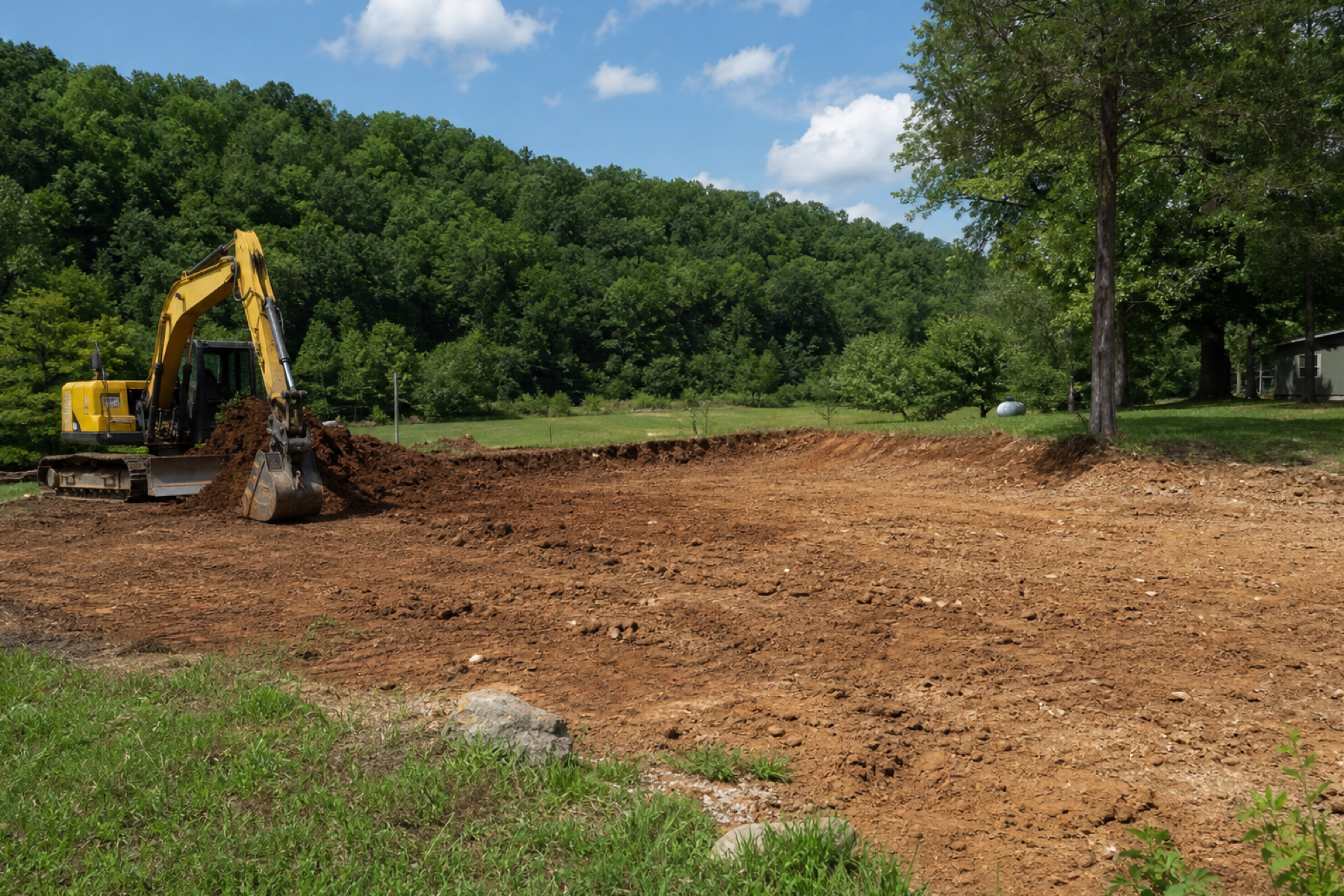
On rural property without a sewer connection, a septic system is how wastewater is handled — and installing one needs suitable, accessible, cleared ground to work with. Land clearing often plays a supporting role in a septic project: opening up the area for the tank and drain field, providing equipment access, and getting the ground ready for the soil evaluation and installation.
This guide explains where clearing fits in preparing rural land for septic, and what to keep in mind so the two projects work together.
Why the Septic Area Needs Clearing
A septic system — a tank plus a drain field of buried lines — needs a specific area of ground that's accessible to installation equipment and suitable for the field. On wooded or overgrown rural land, that area often has to be cleared first: the vegetation removed so the site can be evaluated, and stumps and roots taken out of where the system will sit, since they'd interfere with excavation and the field.
Clearing also opens access for the equipment that installs the system, which is a real consideration on back acreage or heavily grown lots.
Clearing Supports the Soil Evaluation
A septic system's design depends entirely on the soil — a percolation test and site evaluation determine what kind of system the ground can support. That evaluation needs access to the soil, so clearing the candidate area beforehand can be part of making the site assessable. The septic provider and the soil evaluation drive the actual design and placement; clearing prepares the ground so that process can happen.
Coordinating the Two Projects
- Clearing opens and accesses the area; the septic provider evaluates soil and designs the system.
- Stumps and roots come out of where the tank and field will sit — a grubbing consideration.
- Keep heavy traffic and clearing debris off the intended drain-field area, which needs undisturbed, healthy soil.
- Sequence matters — clearing and access first, then the soil evaluation, then installation.
Where Land Clearing Ends and Septic Begins
It's worth being clear on roles: land clearing prepares the ground — removing vegetation, grubbing where needed, and providing access — while the septic system itself is designed, permitted, and installed by septic professionals based on the soil evaluation and the applicable approvals. Coordinating the clearing with the septic installer's requirements (where they need the area cleared, how much access, what to avoid disturbing) makes both go smoothly. If you're planning a rural build that needs a septic system, describe the whole project when you request a review so the clearing supports what comes next.
Helpful Guides
This guide is general information for property owners and does not replace an on-site evaluation. Upper Cumberland Land Clearing is an independent referral service; project scope, methods, equipment, pricing and scheduling are determined by the contractor who reviews your property.
Site Preparation Questions
Often, on wooded or overgrown rural property — the area for the tank and drain field needs to be cleared and accessible, with stumps and roots removed from where the system will sit. Clearing also opens access for the installation equipment and makes the site assessable for the soil evaluation.
No — the soil evaluation and septic provider determine the system's design and placement based on what the ground can support. Clearing prepares and provides access to the candidate area so that evaluation and installation can happen; it doesn't set the design.
Yes. A drain field needs healthy, undisturbed soil to work, so keep heavy equipment traffic and piled clearing debris off the intended field area. Coordinating with the septic installer on what to protect is part of doing the clearing right.
Clearing handles the ground — removing vegetation, grubbing, and access — and septic professionals design, permit, and install the system based on the soil evaluation. Coordinating the two (where to clear, how much access, what to protect) keeps both projects on track.
Ready to Turn Overgrown Land Into Usable Property?
Share your contact details and you’ll be contacted to discuss where the property is, how much land is involved and what needs to be cleared.