Clearing Methods
What Is Selective Land Clearing?
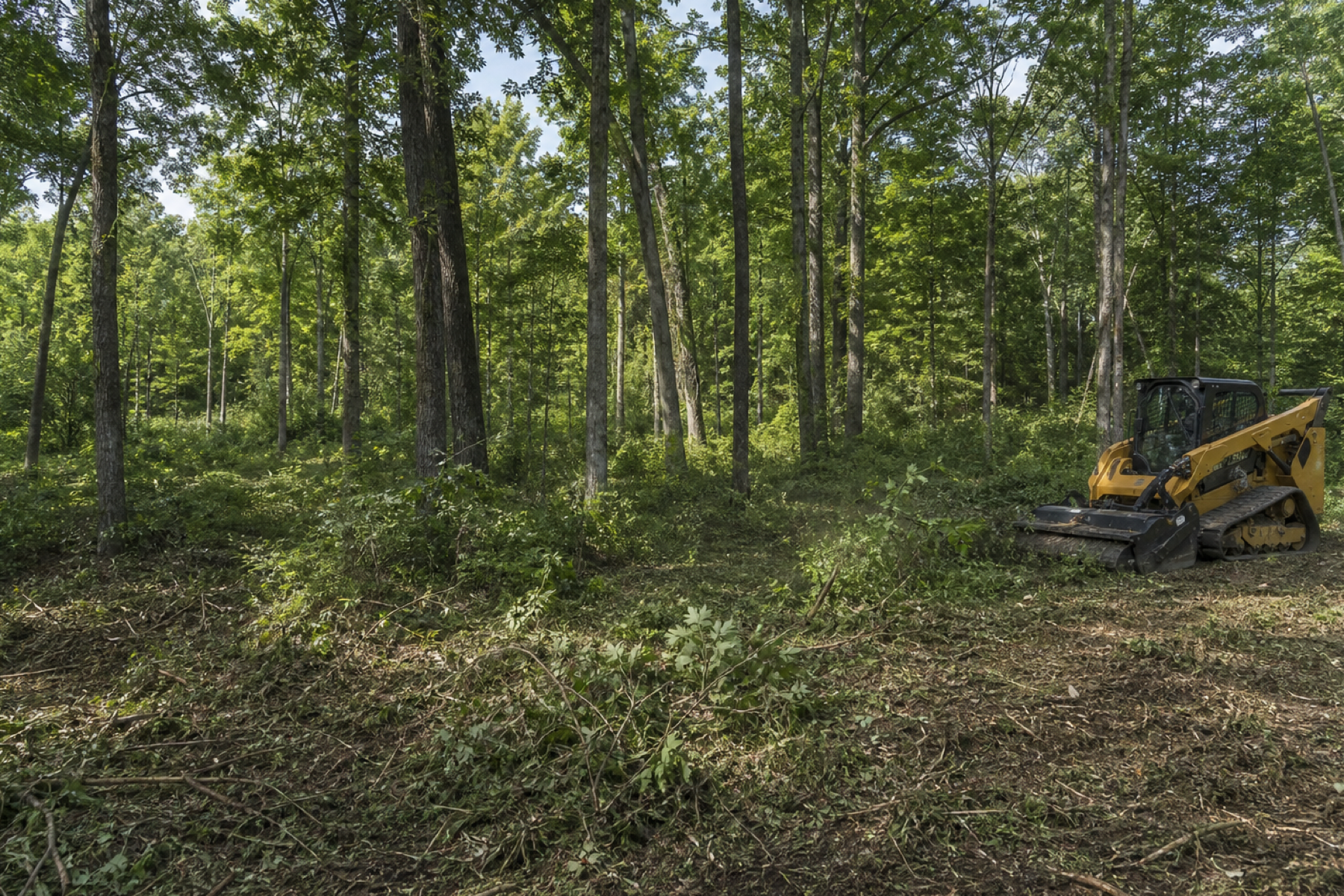
Not every clearing project means taking everything down. Selective clearing removes only what you choose — dense underbrush, invasive growth, small or unwanted trees — while preserving the mature trees and features you want to keep. It's one of the most valuable and underused approaches, especially for homesites and recreational property.
This guide explains what selective clearing is, when it's the right call, and how to plan it so the right things stay standing.
Clearing With a Scalpel, Not a Bulldozer
Selective clearing is exactly what it sounds like: a targeted approach that opens up a property while leaving chosen trees and features intact. Instead of clearing everything to bare ground, a crew removes the understory brush, invasive species, and unwanted small trees, keeping mature shade trees, specimen hardwoods, and anything else you designate. The result is a 'park-like' or usable wooded setting rather than a stripped lot.
When Selective Clearing Fits
- Homesites where you want mature shade trees kept for value, comfort, and curb appeal.
- Recreational and hunting property where you're improving access and sightlines but keeping the woods.
- Reclaiming overgrown ground around desirable trees that have been swallowed by brush.
- Thinning dense woods to improve the health and growth of the trees left standing.
- Anywhere the goal is 'usable and open' rather than 'bare and cleared.'
Why Marking Is Everything
The success of selective clearing lives or dies on communication before the work starts. Because the crew is making keep-or-remove decisions across the property, the trees and features to protect must be clearly marked — flagging or paint — and walked with the contractor when possible. This is the one project type where a vague scope causes real regret, because a removed mature tree can't be put back. Marking removes the guesswork.
How It's Done
Forestry mulching is often ideal for selective work because it can process underbrush and small growth precisely while working around the trees you're keeping, leaving a clean mulched surface beneath them. Larger unwanted trees are removed separately. Because it's more careful and deliberate than clearing everything, selective clearing can take more time per acre — but it produces a result that's often far more valuable than bare ground. Our guide on clearing around desirable mature trees covers protecting the keepers, and land clearing for a new home site shows how selective clearing fits a build.
Helpful Guides
This guide is general information for property owners and does not replace an on-site evaluation. Upper Cumberland Land Clearing is an independent referral service; project scope, methods, equipment, pricing and scheduling are determined by the contractor who reviews your property.
Clearing Methods Questions
It means removing only chosen vegetation — underbrush, invasives, and unwanted small trees — while preserving the mature trees and features you want to keep. The result is open, usable ground that keeps its best trees rather than a bare, stripped lot.
When you want to open up or reclaim property but keep mature shade trees, specimen hardwoods, or a wooded character — common for homesites, recreational land, and thinning overgrown woods around desirable trees.
Mark them clearly with flagging or paint before work begins, and walk the property with the contractor if possible. Selective clearing depends on clear keep-or-remove decisions, and a removed mature tree can't be replaced, so marking is essential.
Per acre it can, because it's more careful and deliberate work around the trees being kept. But it often produces a more valuable result — usable ground that retains its best trees — which is worth more than bare, cleared land for many uses.
Ready to Turn Overgrown Land Into Usable Property?
Share your contact details and you’ll be contacted to discuss where the property is, how much land is involved and what needs to be cleared.