Upper Cumberland Land Guide
Seasonal Ground Conditions for Land Clearing
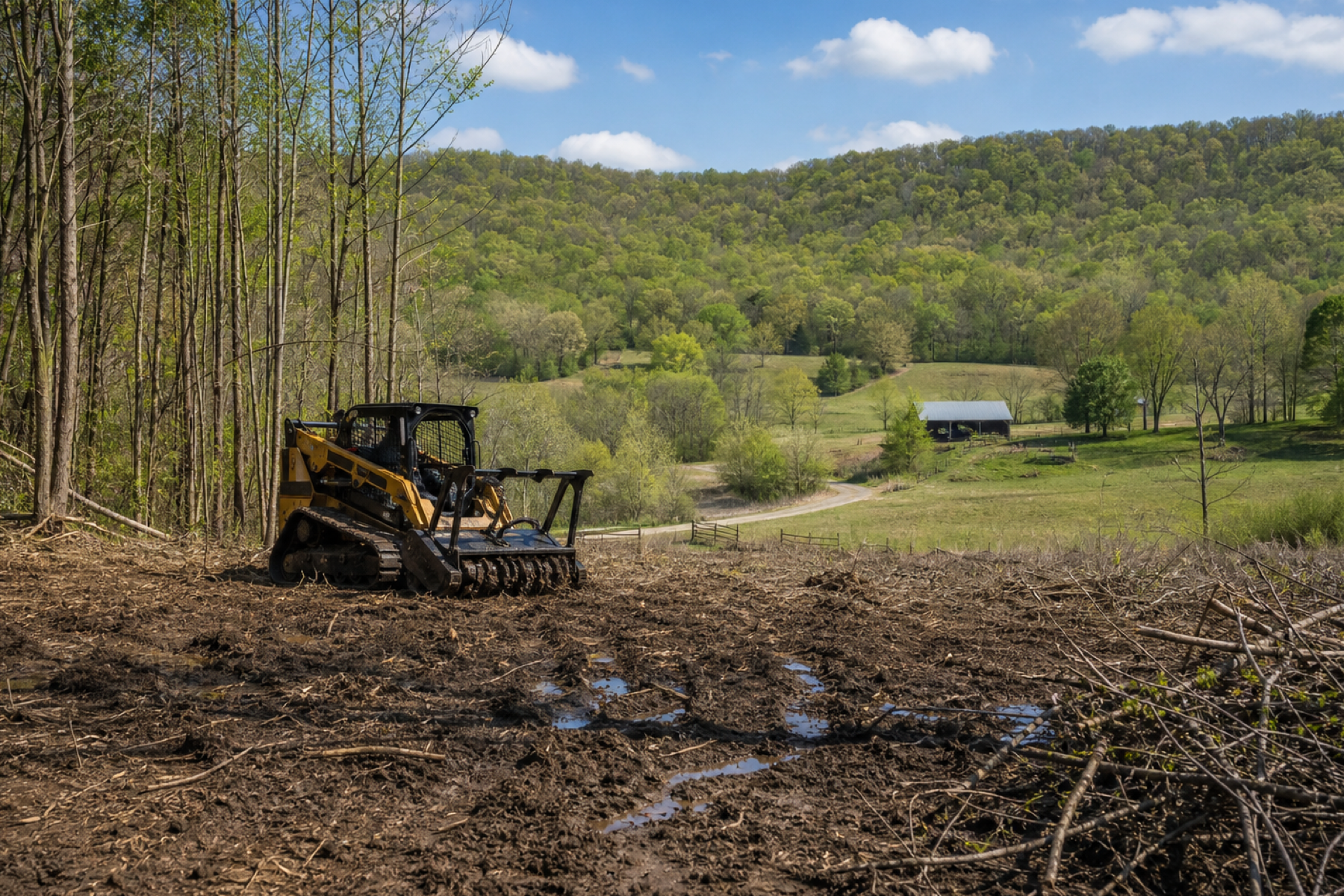
In the Upper Cumberland, the calendar matters less than the ground — and the ground swings hard with the seasons. Wet stretches close working windows; dry spells open them. Understanding the region's seasonal rhythm helps you plan a clearing project around the conditions that actually determine when work can happen here.
The Region's Wet and Dry Rhythm
Middle Tennessee gets ample rainfall, and it's not evenly spread. Late winter and spring tend to be the wettest, saturating the ground and creating the softest conditions of the year. Summer and early fall are usually drier and firmer, though summer storms happen. This rhythm means the ground's workability rises and falls through the year — and since heavy equipment needs firm ground, the season strongly influences when a project can run cleanly.
Winter and Spring: Wet, but Visible
- Wettest, softest ground of the year — the most weather delays, especially in low and clay-heavy spots.
- But leaves are down, so visibility and assessment are excellent.
- Frozen or firm cold snaps can briefly make winter ground very workable.
- Spring growth is fastest, so spring-cleared ground regrows soonest without follow-up.
Summer and Fall: Firm and Productive
Summer and early fall usually bring the firmest, most reliable ground for heavy equipment, and long days help. Full summer foliage reduces visibility and puts vegetation at its densest, but the ground conditions are typically the best of the year for below-grade work like grubbing and grading. Early fall is often the regional sweet spot — dry, firm ground, still-long days, and leaves beginning to thin. Dry spells in any season are good working windows.
Planning Around the Ground
The regional reality is that ground conditions have the final say, so clearing timelines here are best treated as flexible ranges with weather slack built in. A contractor may wait for the ground to firm up rather than rut and damage your property — a sign of doing the job right. If your project has a target, aim for the drier windows and stay flexible through wet stretches. Our guides on how wet ground affects heavy equipment and whether clearing can be done after heavy rain cover the mechanics; describe your timing goals when you request a review.
Helpful Guides
This guide is general information for property owners and does not replace an on-site evaluation. Upper Cumberland Land Clearing is an independent referral service; project scope, methods, equipment, pricing and scheduling are determined by the contractor who reviews your property.
Upper Cumberland Land Guide Questions
Often summer through early fall, when the ground is firmest and most reliable for equipment, and firm winter spells with leaves down for visibility. Late winter and spring are wettest and see the most weather delays. Dry spells in any season are good windows.
Because heavy equipment needs firm ground, and the ground's workability swings with rainfall regardless of the month. A dry week in spring can be better than a soggy week in fall. That's why the actual ground condition, not the calendar date, determines when work can run cleanly.
It's the wettest and softest time, so it sees the most weather delays, and spring growth means cleared ground regrows fastest without follow-up. But leaves are down for good visibility, and dry spring windows still work. It's about the ground on the day more than the season.
Treat the timeline as a flexible range with weather slack, aim for drier windows (summer to early fall, firm winter spells), and expect that a contractor may wait for the ground to firm up rather than damage your property by working it wet.
Ready to Turn Overgrown Land Into Usable Property?
Share your contact details and you’ll be contacted to discuss where the property is, how much land is involved and what needs to be cleared.