Project Planning
What Time of Year Is Best for Land Clearing?
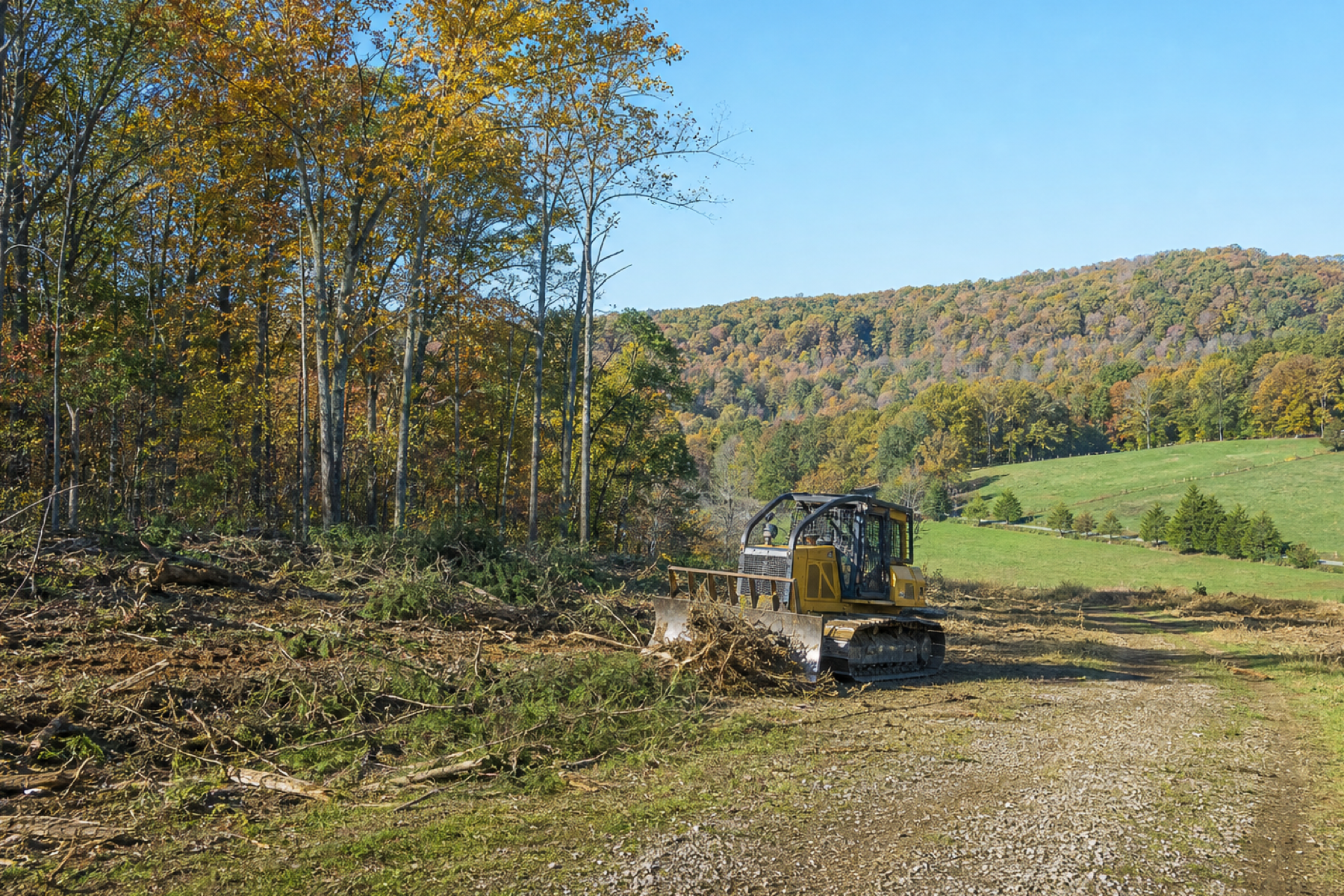
People often ask whether there's a best season to clear land, and the honest answer is that each part of the year has trade-offs — the 'best' time depends on your property and priorities. What matters most isn't the calendar month but the ground conditions on the day, which the seasons strongly influence.
This guide walks through how timing affects a land-clearing project in the Upper Cumberland, so you can plan around the realities rather than a myth about the one perfect season.
Winter and the Dormant Season
Late fall through winter has real advantages. With leaves down, visibility is far better — you and the contractor can actually see the terrain, the tree structure, and what's on the ground. Frozen or firm winter ground can support equipment well and reduce soil disturbance. And with vegetation dormant, there's less mess. The trade-offs are shorter working days and the chance of weather delays from snow or extended wet spells.
Spring and Wet-Season Cautions
Spring brings the region's wettest ground, and that's the main timing concern. Saturated soil can't safely support heavy equipment, so spring projects are the most prone to weather delays — a stretch of rain can pause work regardless of how simple it is. Spring is also when growth explodes, so ground cleared in spring will show regrowth fastest without follow-up. That said, dry spring windows exist and can be productive.
Summer and Fall
- Summer — typically drier, firmer ground and long working days; full foliage reduces visibility, and dense growth is at its peak.
- Early fall — often a sweet spot: ground is usually dry and firm, days are still long, and leaves are beginning to thin.
- Any season — a dry spell is a good working window, and a wet stretch is not, which matters more than the month.
Ground Conditions Beat the Calendar
The through-line is that ground conditions — dry and firm versus wet and soft — matter more than which month it is. A dry week in spring can be better than a soggy week in fall. This is why land-clearing timelines are best planned with some flexibility, and why a contractor may wait for the ground rather than force a date, as our guide on how long clearing takes explains. If your project has a target season, share it when you request a review, and build in a little weather slack.
Helpful Guides
This guide is general information for property owners and does not replace an on-site evaluation. Upper Cumberland Land Clearing is an independent referral service; project scope, methods, equipment, pricing and scheduling are determined by the contractor who reviews your property.
Project Planning Questions
It's often one of the best. Leaves are down so visibility is much better, frozen or firm ground supports equipment and reduces soil disturbance, and dormant vegetation means less mess. The trade-offs are shorter days and possible weather delays.
Not bad, but it's the wettest season, and saturated ground can't safely support heavy equipment — so spring projects face the most weather delays. Growth is also fastest in spring, so cleared ground regrows soonest without follow-up. Dry spring windows still work well.
Ground conditions matter more than the calendar. Dry, firm ground is workable in any season; wet, soft ground pauses work in any season. A dry spell is the real 'best time,' which is why flexibility beats fixing an exact date.
Drier periods — often late summer through early fall, and firm winter stretches — tend to offer the most reliable ground. But plan with some flexibility regardless, since a wet spell can push any schedule and contractors may wait for the ground to be safe.
Ready to Turn Overgrown Land Into Usable Property?
Share your contact details and you’ll be contacted to discuss where the property is, how much land is involved and what needs to be cleared.