Property Conditions
How Wet Ground Affects Heavy Equipment
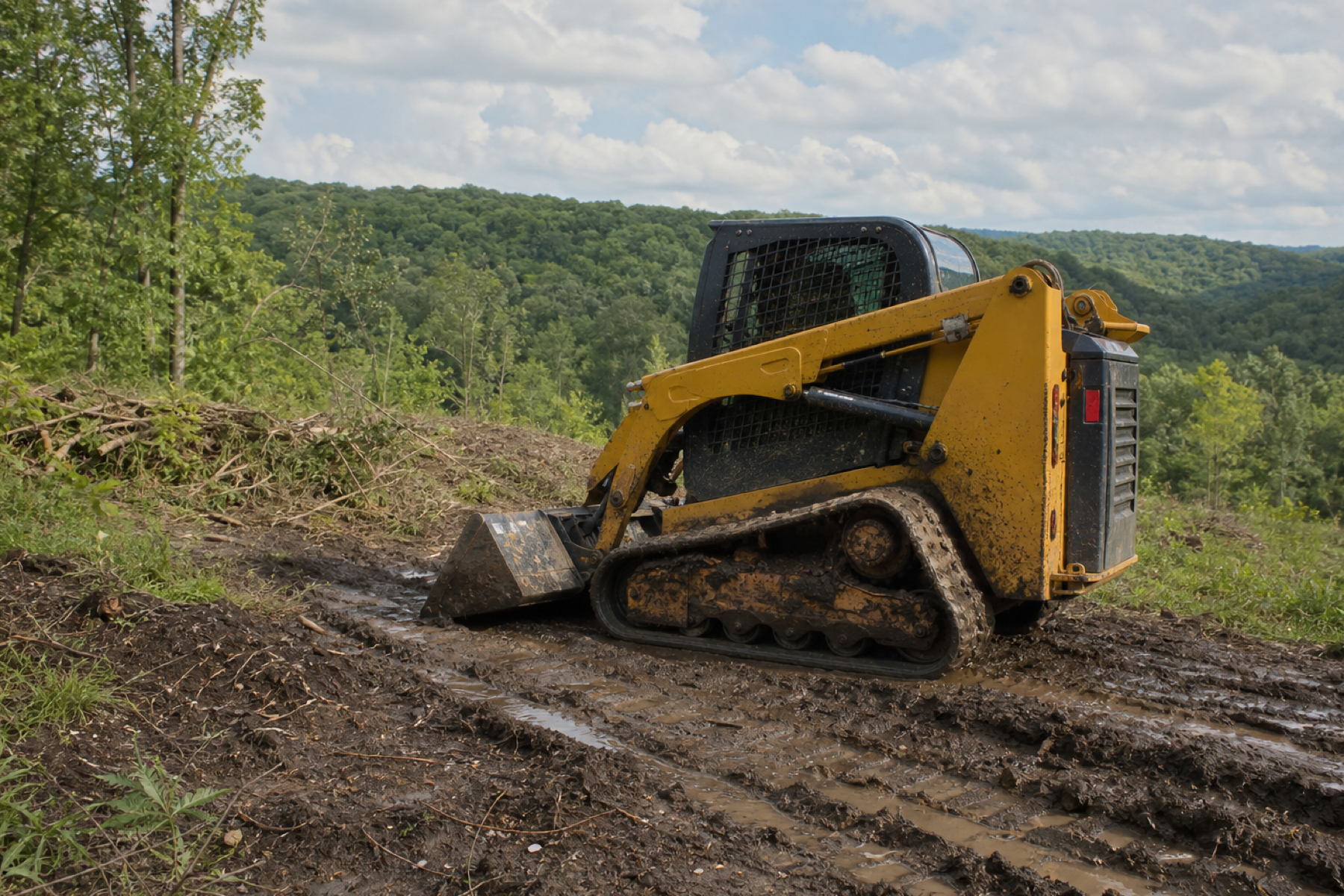
Weather is one of the most underestimated factors in land clearing, and it comes down to a simple reality: heavy equipment and saturated ground don't mix. When the ground is wet, even a straightforward clearing job can grind to a halt — not because a contractor is being difficult, but because working wet ground damages the property, risks the equipment, and can be genuinely unsafe.
This guide explains what wet ground actually does to heavy equipment and why waiting for it to dry is usually the right call.
Traction and Getting Stuck
Even tracked machines built for soft conditions have limits. As ground saturates, traction drops, and a heavy machine can lose grip, slide on slopes, or sink and become stuck. Getting a bogged machine out is time-consuming and can cause more damage than the clearing itself. On the sloped ground common in the Upper Cumberland, reduced traction on wet soil is also a real safety concern, not just an inconvenience.
Rutting and Soil Damage
The most lasting problem with working wet ground is what it does to the soil. Heavy machines on saturated ground carve deep ruts, compact the soil, and churn the surface into a mess — damage that outlasts the project and can harm the very ground you're trying to make usable. Compacted, rutted soil drains poorly, grows poorly, and may need repair. Waiting for firmer ground protects the property's long-term condition.
Why Crews Wait
- Safety — reduced traction on wet or sloped ground raises the risk of slides and rollovers.
- Property protection — avoiding ruts, compaction, and churned soil that outlast the job.
- Equipment — preventing stuck, strained, or damaged machines.
- Quality — dry ground lets the work be done cleanly and to the finish you want.
Planning Around It
Because wet ground is a when-not-if factor in Tennessee, the practical response is flexibility. Timelines are best planned with some weather slack, and a contractor may reschedule to wait for the ground rather than force it — which is a sign of doing the job right, not a delay tactic. Drier seasons and dry spells are the reliable working windows. Our guides on whether clearing can be done after heavy rain and the best time of year for clearing cover the timing side in detail.
Helpful Guides
This guide is general information for property owners and does not replace an on-site evaluation. Upper Cumberland Land Clearing is an independent referral service; project scope, methods, equipment, pricing and scheduling are determined by the contractor who reviews your property.
Property Conditions Questions
Saturated ground reduces traction (risking stuck or sliding machines), and heavy equipment on it carves deep ruts and compacts the soil — lasting damage to the property. It can also be unsafe, especially on slopes. Waiting for firmer ground protects the land, the equipment, and safety.
Yes — it's the main reason to avoid it. Heavy machines on saturated soil create ruts, compaction, and churned ground that drain and grow poorly and may need repair, outlasting the clearing project itself. Dry ground produces a far cleaner result.
No — waiting for the ground to firm up is doing the job right. Forcing wet ground risks stuck equipment, unsafe conditions on slopes, and lasting soil damage. Reputable crews reschedule around ground conditions to protect your property and the result.
Build weather flexibility into the timeline and aim for drier seasons or dry spells. Ground conditions have the final say on scheduling, so a target range with some slack is more realistic than a fixed date, especially in wetter parts of the year.
Ready to Turn Overgrown Land Into Usable Property?
Share your contact details and you’ll be contacted to discuss where the property is, how much land is involved and what needs to be cleared.