Upper Cumberland Land Guide
Rocky Ground and Land Preparation
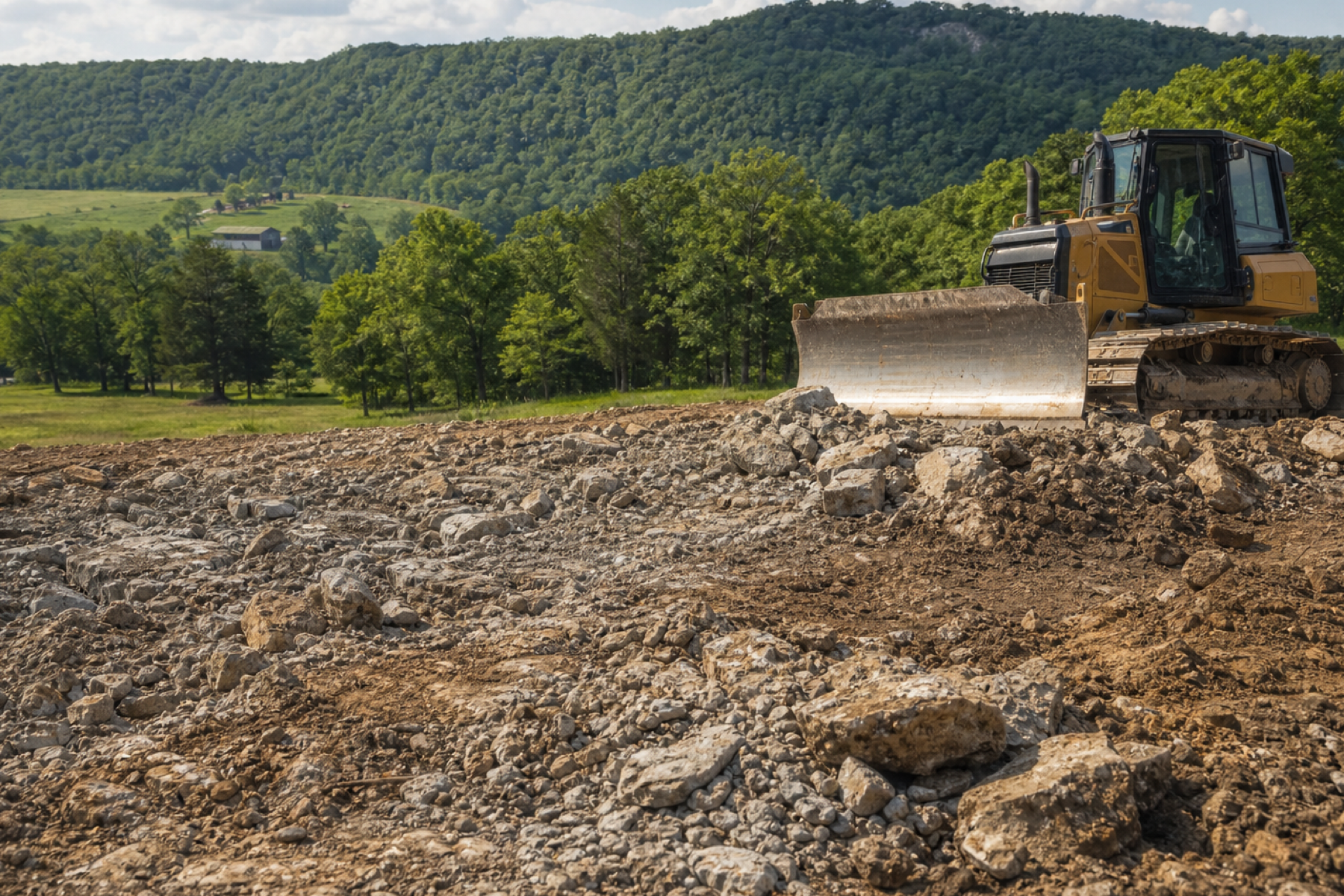
Rock is a fact of life for land preparation across the Upper Cumberland — sandstone on the plateau, limestone and karst in the valleys, and shallow, rocky soils in between. It rarely stops you from clearing the surface, but it shapes nearly everything that happens below grade. This regional guide focuses on how rocky ground affects the site-preparation side of land work here.
Two Kinds of Rock in the Region
The Upper Cumberland has two dominant rock stories. Up on the Cumberland Plateau, hard sandstone caps the ground, often shallow. Down in the valleys and the Highland Rim, limestone dominates, sometimes as karst — with sinkholes, springs, and cavities. Both mean rock near the surface in many places, but they behave differently for site work: sandstone is hard and blocky, while limestone can bring drainage quirks and voids. Knowing which you're dealing with is part of planning below-grade work.
Where Rock Governs Site Prep
- Stump and root removal — limited or impractical where roots wrap or sit on rock; grinding may substitute.
- Grading — shallow rock caps how deep you can cut and shape the ground.
- Foundations — building on or near rock affects excavation and foundation design.
- Ponds — rock and porous or fractured ground affect whether a site holds water.
- Drainage and trenching — how deep lines can go, and where water actually moves.
Working With Rock, Not Against It
The experienced approach to rocky ground is to design around it rather than fight it. Placing a building pad where the soil is deeper, routing a driveway to avoid a rock shelf, choosing grinding over removal for a stump on rock, siting a pond where the ground will actually hold water — these adjustments turn rock from a roadblock into a constraint you plan for. Breaking rock is possible but costly, so working with the site usually wins. An on-site assessment of how shallow and what kind of rock you have is the starting point.
Assess Before You Commit
The practical rule for rocky regional ground: get the rock question answered before committing to any below-grade plan. Surface clearing (mulching, brush work) proceeds regardless, but building, grading, ponds, and stump removal all hinge on what's beneath. A contractor evaluating the property can read the signs and advise what's realistic — and often suggest a plan that works with the rock. Our guides on how rocky ground affects clearing and considerations on the Cumberland Plateau go deeper; describe your ground when you request a review.
Helpful Guides
This guide is general information for property owners and does not replace an on-site evaluation. Upper Cumberland Land Clearing is an independent referral service; project scope, methods, equipment, pricing and scheduling are determined by the contractor who reviews your property.
Upper Cumberland Land Guide Questions
It rarely affects surface clearing, but it governs below-grade work: stump removal, grading depth, foundations, ponds, and drainage all depend on how shallow and what kind of rock is present. In the Upper Cumberland that's usually plateau sandstone or valley limestone/karst.
Two mainly — hard sandstone capping the Cumberland Plateau (often shallow), and limestone in the valleys and Highland Rim, sometimes as karst with sinkholes, springs, and voids. Both mean near-surface rock in many spots, and they behave differently for site work and drainage.
Often yes, but the rock shapes how — it caps grading depth and affects foundations and excavation. The experienced approach is to design around it (place pads where soil is deeper, route drives around rock shelves) rather than break rock, which is costly. An on-site assessment guides the plan.
It depends on the site — porous, fractured, or rocky ground may not hold water without special measures, while suitable clay-bearing soil will. Assessing whether a location will hold water is essential before building a pond, since a pond that leaks is an expensive disappointment.
Ready to Turn Overgrown Land Into Usable Property?
Share your contact details and you’ll be contacted to discuss where the property is, how much land is involved and what needs to be cleared.