Upper Cumberland Land Guide
Land-Clearing Considerations on the Cumberland Plateau
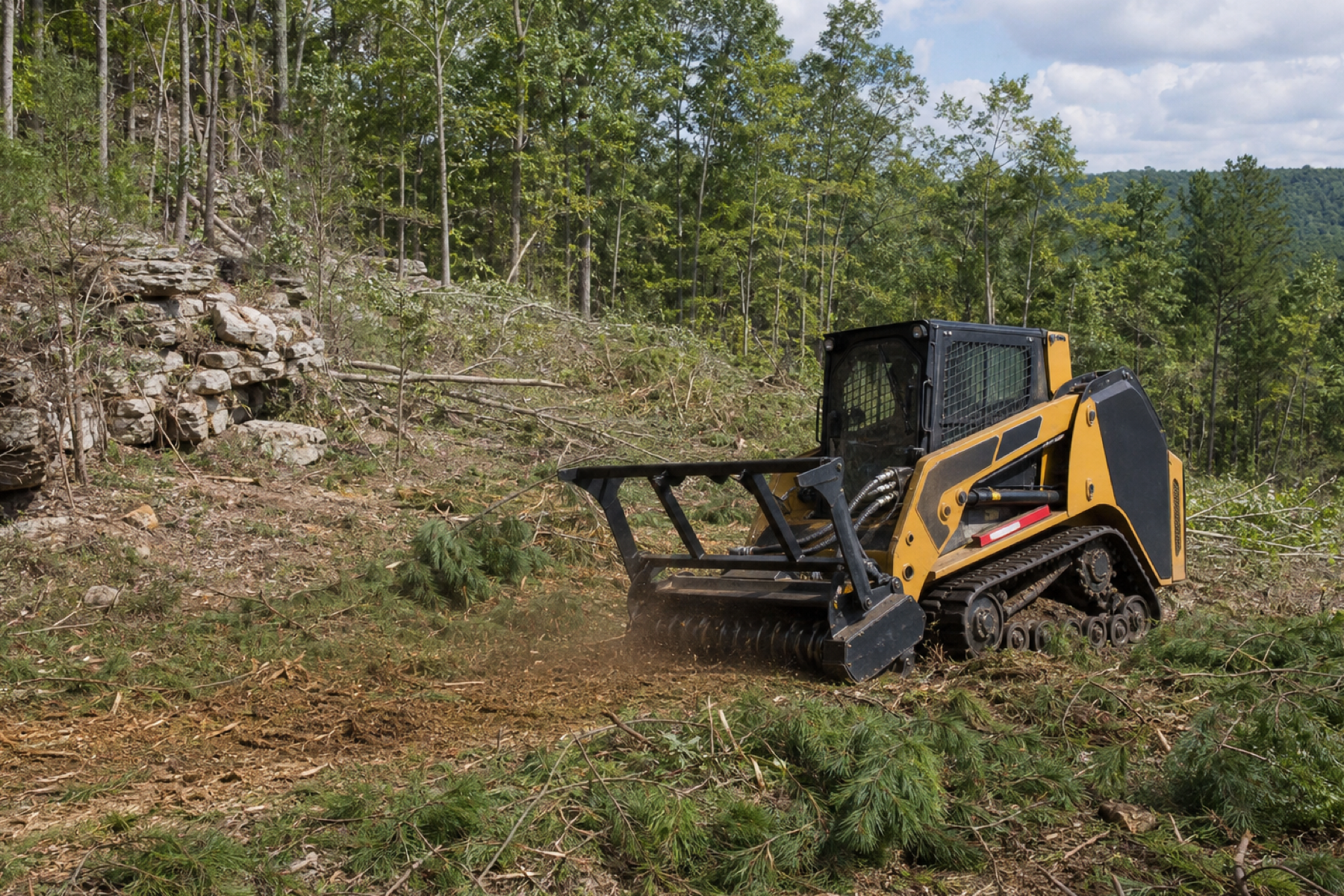
The Cumberland Plateau — the high, forested tableland running through Cumberland County around Crossville and up onto the plateau edges of neighboring counties — has geology all its own, and it shapes land clearing in specific ways. If your property sits up on the plateau, a few characteristics are worth understanding before you plan a project.
Sandstone Near the Surface
The plateau is capped by sandstone, and it's often at or near the surface. This is the defining consideration for plateau clearing. For surface work — mulching brush and small trees — it barely matters. But for anything below grade, the rock governs: stump and root removal can be limited where roots sit on or in sandstone, grading depth is constrained, and excavation for foundations, ponds, or drainage runs into rock sooner than in valley ground. Our guide on how rocky ground affects clearing covers the mechanics.
Thin Soils and Drainage
Plateau soils tend to be thinner and often more acidic and less fertile than the deeper valley soils, sitting on top of that rock. That affects a few things: what will regrow and how readily grass establishes after clearing, how much soil there is to grade and shape, and how water behaves — thin soil over rock can drain oddly, staying wet in flats and shedding fast on slopes. Reclaiming plateau ground for pasture or food plots often means planning for soil and cover, not just clearing the brush.
Terrain and Vegetation
- Large forested tracts are common — the plateau carries a lot of timber and wooded acreage.
- Plateau tops can be relatively flat, with steep, rocky terrain at the escarpments and gorges.
- Vegetation is heavy woods and, on cleared-then-neglected ground, dense brush and cedar.
- Gorges, bluffs, and rock features constrain where and how equipment can work.
Planning Plateau Projects
The through-line for plateau ground is that surface clearing is straightforward, but below-grade work needs the rock question answered first. If you're just opening up wooded or brushy ground, mulching handles the plateau well. If you're building, grading, putting in a pond, or removing stumps, an on-site look at how shallow the rock is should come before you commit to a plan — sometimes the answer is adjusting the plan to work with the rock rather than through it. Our guides on rocky ground and land preparation and how terrain affects cost go deeper; describe your plateau parcel when you request a review.
Helpful Guides
This guide is general information for property owners and does not replace an on-site evaluation. Upper Cumberland Land Clearing is an independent referral service; project scope, methods, equipment, pricing and scheduling are determined by the contractor who reviews your property.
Upper Cumberland Land Guide Questions
Its sandstone is often at or near the surface, which barely affects surface clearing (mulching brush and small trees) but governs below-grade work — stump removal, grading, excavation, and ponds all hit rock sooner than in valley ground. Thinner plateau soils also affect regrowth and drainage.
Sometimes, but it's limited where roots sit on or in the shallow sandstone — grinding may be the practical option instead of full removal. Whether stumps can be pulled depends on how shallow the rock is, which an on-site look determines.
It can be, but plateau soils are often thinner and less fertile than valley ground, so reclaiming for pasture or food plots often means planning for soil and cover — seeding and establishing grass — not just clearing the brush. Drainage over shallow rock can also behave unevenly.
How shallow the rock is where you want to build, grade, or excavate — it constrains foundations, grading depth, drainage, and ponds. An on-site evaluation of the rock should come before committing to a plan, since the answer sometimes means working with the rock rather than through it.
Ready to Turn Overgrown Land Into Usable Property?
Share your contact details and you’ll be contacted to discuss where the property is, how much land is involved and what needs to be cleared.