Property Conditions
Reclaiming Property Overgrown With Saplings
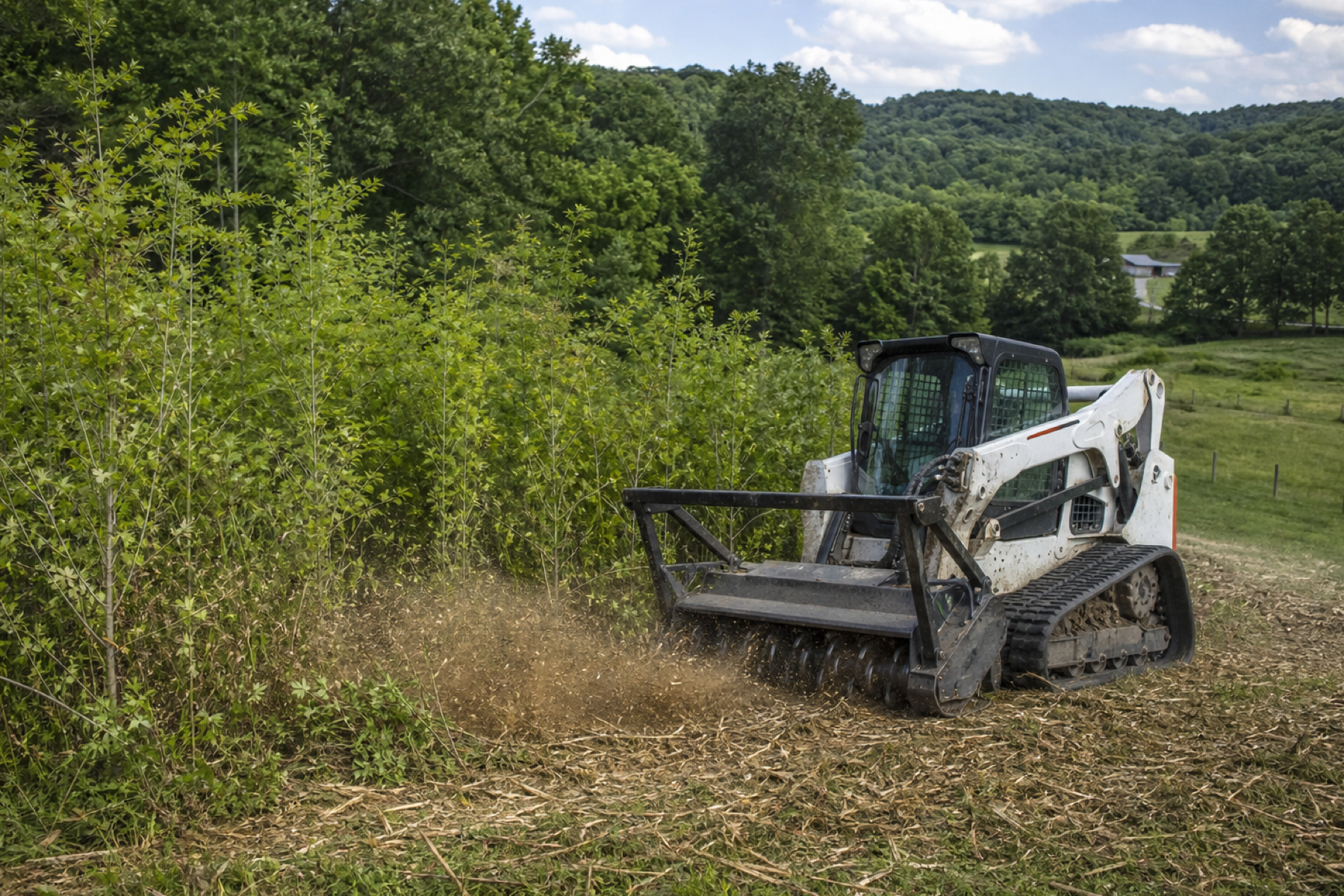
Land that's been left alone for a few years often grows up not in big trees but in a dense stand of saplings — young, thin trees packed close together, sometimes so thick you can't walk through them. It's one of the most common reclamation situations, and also one of the most satisfying, because saplings are almost the ideal thing to clear with modern equipment.
This guide explains why sapling-choked ground reclaims so well, and how to keep it from simply growing back.
Why Saplings Take Over
When a field, pasture, or cleared lot stops being maintained, nature reclaims it in stages — grasses and weeds first, then brush, then a flush of tree seedlings that shoot up into a dense sapling stand within a few seasons. In the Upper Cumberland, cedar, sweetgum, and other fast colonizers do this readily. Left longer, those saplings become established trees, so reclaiming while it's still sapling-sized is easier and cheaper than waiting.
Saplings Are Ideal for Forestry Mulching
This is where forestry mulching shines. A mulcher grinds through dense saplings quickly and in a single pass, turning a wall of young growth into a clean mulched surface — no felling, piling, or hauling, because the small-diameter material processes easily. Compared to reclaiming ground full of large trees, a sapling stand is fast work, which usually makes it one of the more economical reclamation projects. The result is open, usable ground with a protective mulch layer.
What's Left Afterward
- Open ground with a layer of mulch from the ground-up saplings.
- Sapling stumps at ground level — fine for pasture, trails, and most uses; removed only if construction requires.
- A clean slate that's ready to be maintained, seeded, or put back into use.
Keeping the Saplings From Coming Back
Here's the catch that defines every reclamation: mulching the saplings doesn't kill the roots or clear the seed bank, so without follow-up, a new flush of saplings returns. The ground stays open only with a maintenance plan — grazing, mowing, or periodic bush-hogging keeps young growth knocked back before it re-establishes. This is exactly why reclaimed ground that's put back into active use (pasture, mowed field, maintained trail) stays clear, while ground that's cleared and forgotten grows up again. Our guides on maintaining land after forestry mulching and reclaiming an overgrown pasture cover the follow-up.
Helpful Guides
This guide is general information for property owners and does not replace an on-site evaluation. Upper Cumberland Land Clearing is an independent referral service; project scope, methods, equipment, pricing and scheduling are determined by the contractor who reviews your property.
Property Conditions Questions
Forestry mulching — it grinds dense sapling stands quickly in a single pass, turning young growth into a mulched surface with nothing to haul. Small-diameter saplings are almost ideal for mulching, making it one of the faster, more economical reclamation jobs.
Yes, without follow-up. Mulching processes the growth but leaves roots and the seed bank, so a new flush returns unless the ground is maintained with grazing, mowing, or periodic bush-hogging. Reclaimed ground stays open only when it's kept up.
Usually not. For pasture, trails, and most uses, sapling stumps left at ground level are fine and grass grows around them. Removal is generally only needed for construction areas, which adds a grubbing step.
Generally yes. Small-diameter saplings process quickly through a mulcher in a single pass, while mature trees must be felled and handled. Reclaiming while growth is still sapling-sized is easier and cheaper than waiting for it to become established trees.
Ready to Turn Overgrown Land Into Usable Property?
Share your contact details and you’ll be contacted to discuss where the property is, how much land is involved and what needs to be cleared.