Property Conditions
How to Clear Land Covered in Dense Brush
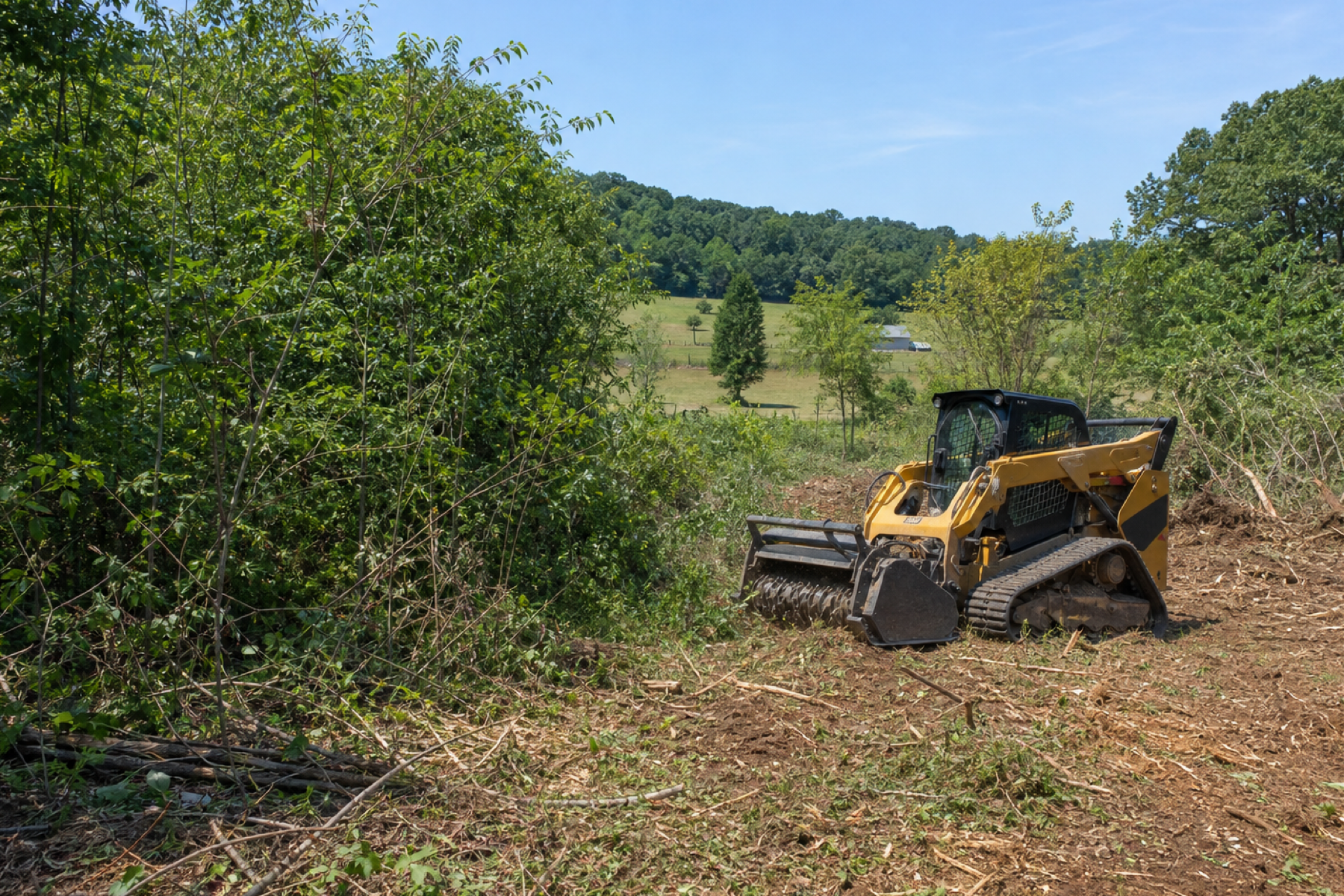
Land that's grown up in dense brush — thickets of saplings, briars, privet, and tangled undergrowth — is one of the most common clearing situations in the Upper Cumberland, and one where the right method makes a big difference. Overgrowth like this is often too thick to walk through, let alone assess, which is exactly why people put the project off.
This guide explains how dense brush actually gets cleared, why forestry mulching tends to shine in these conditions, and what to think about so the ground stays clear afterward.
Why Dense Brush Is Its Own Kind of Job
Thick brush isn't just 'small trees' — it's a dense, interwoven mass of stems, vines, and roots that slows machines and hides what's underneath. Rocks, old fencing, dropped limbs, and uneven ground all lurk in it. The density is what drives the work: a machine's production rate falls as the material gets thicker and more tangled, so an acre of impenetrable thicket takes far longer than an acre of open woods.
Why Forestry Mulching Fits Overgrowth So Well
For brush and saplings, forestry mulching is often the ideal tool. The mulcher grinds the tangled growth in place, turning it into a mulch layer without the felling-piling-hauling sequence traditional clearing would require for the same material. In one pass, an impassable thicket becomes open, walkable ground with a protective layer of chips over the soil.
Because there's nothing to haul and the soil surface stays intact, mulching handles the sheer volume of brushy material efficiently — which is usually why it's the economical choice for this condition.
What to Expect Underneath
- Surprises revealed — old fence lines, debris, wet spots, and rock often turn up once the brush is gone.
- Stumps remain unless removal is specifically requested; mulching leaves them at ground level.
- Uneven ground that the brush was hiding may want grading depending on the intended use.
- A mulch layer over the soil that decomposes over time and helps hold the surface.
Keeping It Cleared
The honest part most people don't hear: clearing dense brush once doesn't keep it gone forever. Fast-growing species regrow from roots and seed, so reclaimed ground stays reclaimed only with a maintenance plan — periodic mowing, mulching, or grazing depending on the use. Building that into the plan from the start is the difference between a lasting result and a repeat project in a few seasons.
For land you intend to keep open, discuss the maintenance approach with the contractor during the review, and see our guide on maintaining land after forestry mulching once you're ready.
Helpful Guides
This guide is general information for property owners and does not replace an on-site evaluation. Upper Cumberland Land Clearing is an independent referral service; project scope, methods, equipment, pricing and scheduling are determined by the contractor who reviews your property.
Property Conditions Questions
For most overgrown ground, forestry mulching — it grinds dense brush and saplings in place in a single pass with nothing to haul, turning impassable thicket into open ground efficiently. Heavier conditions with large trees may need traditional equipment alongside it.
Not unless you ask for it. Mulching leaves stumps at or near ground level. If the land is headed for construction or you want the stumps gone, that's a separate removal step.
It can, and often does, from roots and seed — especially fast-growing species. Keeping ground clear takes a maintenance plan such as periodic mowing, mulching, or grazing. Building that in from the start prevents a repeat project.
Not fully — dense overgrowth hides rock, old fencing, debris, and uneven ground. Wide photos and a description help a contractor anticipate conditions, but some things only surface once the brush is down, which good crews plan for.
Ready to Turn Overgrown Land Into Usable Property?
Share your contact details and you’ll be contacted to discuss where the property is, how much land is involved and what needs to be cleared.