Rural Property Projects
How to Reclaim an Overgrown Pasture
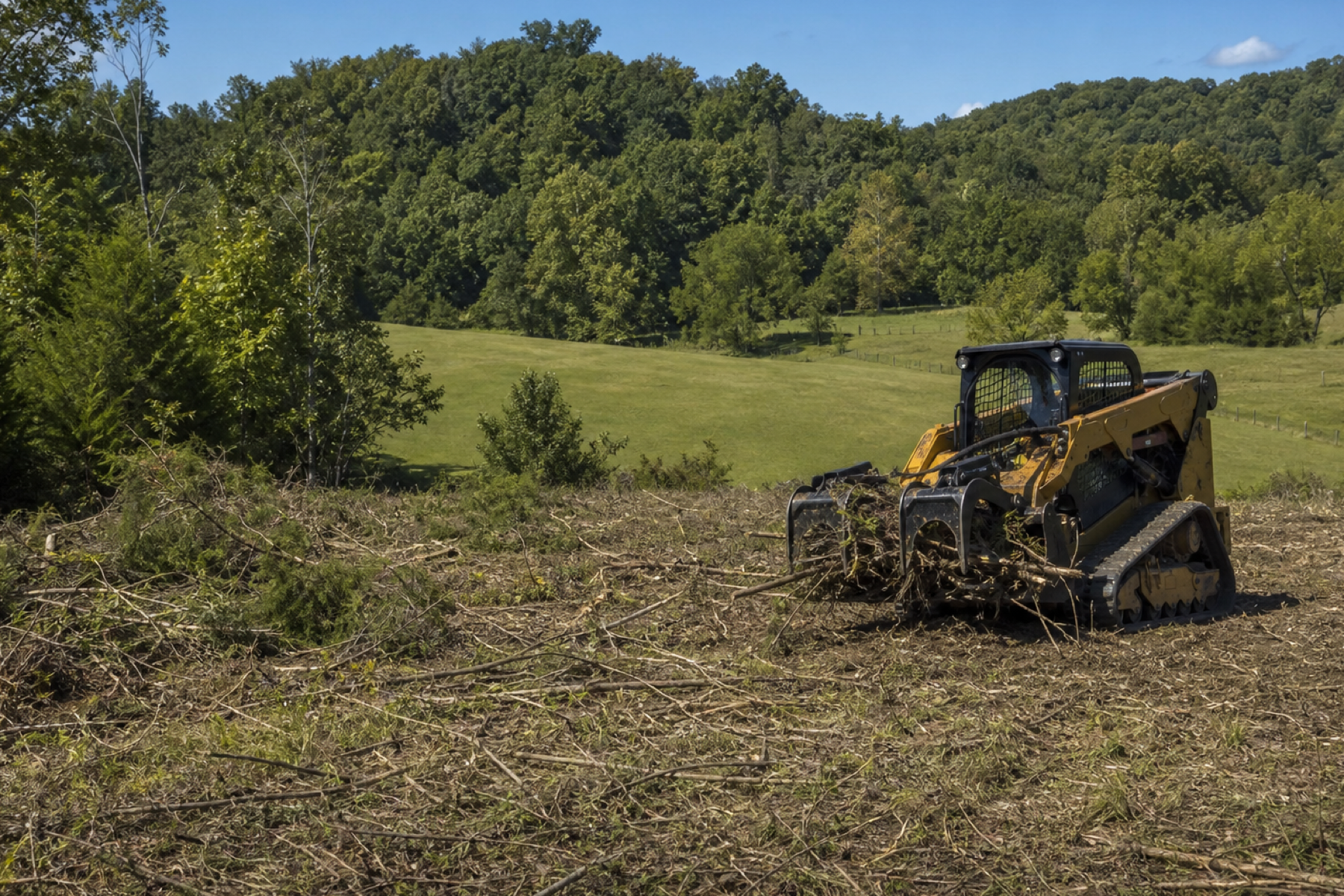
Across the Upper Cumberland, fields that once grew hay or carried livestock have grown up in cedar, brush, and briars — a few seasons of no maintenance is all it takes. Reclaiming that ground back to usable pasture is one of the most common rural clearing projects, and one where the method and the follow-up both matter.
This guide explains how pasture reclamation works, what to expect from the process, and — the part that determines whether it lasts — how to keep reclaimed ground from growing right back.
How Pastures Get Overgrown
Open ground doesn't stay open on its own. Without grazing, mowing, or bush-hogging, pastures are reclaimed by nature quickly: cedar seedlings, blackberry and briars, sumac, and brush move in from the edges and spread. In the Upper Cumberland, cedar encroachment on pasture edges is especially common, and what starts as a few saplings becomes a thicket within a handful of seasons.
The good news is that this kind of overgrowth — brush and small-to-medium trees — is exactly what clearing handles well.
How Reclamation Works
For most overgrown pasture, forestry mulching is the natural fit. It grinds the cedar, brush, and saplings in place, turning them into a mulch layer that stays on the field — no piling, no burning, no hauling. In a pass or two, a choked field becomes open ground again with the soil surface intact and a decomposing layer of mulch that returns organic matter to the soil.
Stumps are typically left at ground level, which is fine for pasture — grass establishes around them, and there's no need for the below-grade removal a building site would require. That's part of why pasture reclamation is usually more economical than construction clearing.
What to Expect Afterward
- Open, walkable ground with a mulch layer that breaks down over the following seasons.
- Cedar and brush stumps at ground level; grass can be established around them.
- Possible bare or thin spots where heavy growth was — these may need seeding.
- A real need for follow-up, because roots and seed remain and will try to regrow.
Why the Maintenance Plan Is the Whole Game
Here's the part that separates a lasting reclamation from a repeat project: clearing the pasture once doesn't keep it clear. Cedar and brush regrow from seed and roots, so reclaimed ground stays reclaimed only with follow-up — regular grazing, mowing, or bush-hogging keeps regrowth from re-establishing. Reintroducing grazing or a mowing schedule promptly after reclamation is what protects the investment.
Plan the maintenance before the reclamation, not after. Deciding how you'll keep the field open — livestock, haying, periodic mowing — shapes both the reclamation approach and whether the ground needs seeding to get competitive grass established. Describe the field and your plans for it when you request a review.
Helpful Guides
This guide is general information for property owners and does not replace an on-site evaluation. Upper Cumberland Land Clearing is an independent referral service; project scope, methods, equipment, pricing and scheduling are determined by the contractor who reviews your property.
Rural Property Projects Questions
For most fields overgrown with cedar, brush, and saplings, forestry mulching — it grinds the growth in place into a mulch layer with nothing to haul or burn, reopening the field efficiently while leaving the soil surface intact. Stumps are typically left at ground level, which is fine for pasture.
Yes, if the ground isn't maintained. Cedar and brush regrow from seed and roots, so reclaimed pasture stays open only with follow-up — grazing, mowing, or bush-hogging on a regular schedule. Planning that maintenance is what makes reclamation last.
Usually not. For grazing and hay, stumps left at ground level are fine — grass establishes around them, and you avoid the cost of below-grade removal. Stump removal is generally reserved for construction areas, not open field.
Sometimes. Heavy overgrowth can leave bare or thin spots, and establishing competitive grass helps crowd out returning brush. Whether to seed depends on the field's condition and your plans for it, which is worth discussing during the review.
Ready to Turn Overgrown Land Into Usable Property?
Share your contact details and you’ll be contacted to discuss where the property is, how much land is involved and what needs to be cleared.