Project Planning
How to Mark the Area You Want Cleared
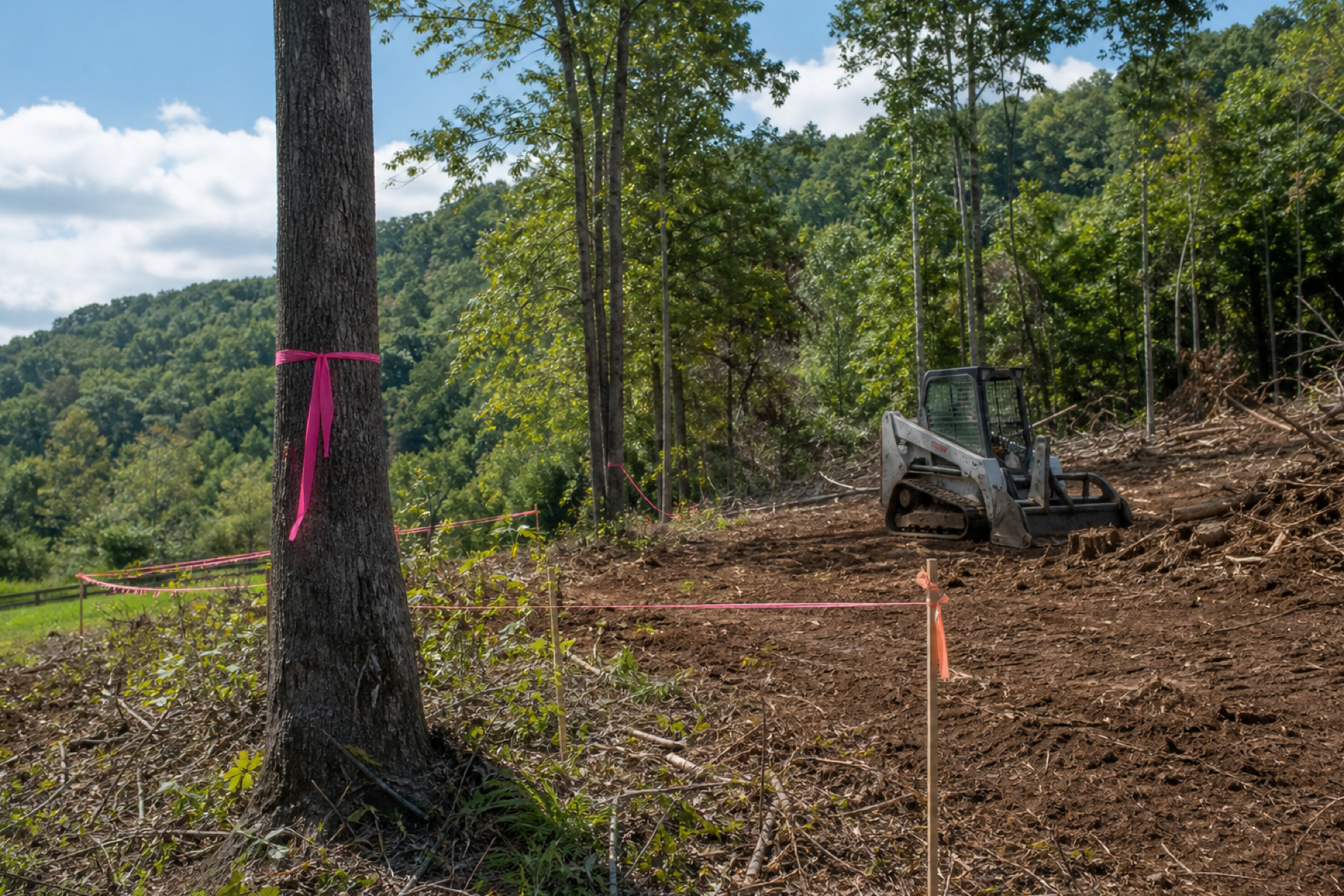
The single most common land-clearing regret is something cleared that was meant to stay — or a boundary crossed that shouldn't have been. Almost all of it is preventable with clear physical marking. A machine operator can only see what's marked, so good marking is how you turn 'what you meant' into 'what actually happens.'
This guide covers how to mark a clearing project so the crew clears exactly what you intend.
Why Marking Beats Describing
Words are ambiguous and memory is unreliable; a flag on a tree is not. Once equipment is running, an operator is making fast decisions and can't stop to interpret a verbal description. Physical marks on the ground remove the guesswork and give everyone — you, the contractor, and the operator — the same unmistakable reference. This is especially critical for selective clearing, where the crew is constantly deciding keep-or-remove.
Use a Simple, Consistent System
- Pick a clear convention and tell the contractor — for example, one flagging color for 'keep,' another for the work-area boundary.
- Flag keep-trees at eye level, wrapping the trunk so it's visible from all directions.
- Mark the boundary continuously enough to read as a line — not one flag every hundred feet.
- Flag hazards and buried features (well caps, septic lids, lines) distinctly so they're avoided.
- Use durable materials — flagging tape, stakes, or marking paint that will survive weather until the work.
Mark the Boundary Like a Line, Not a Point
The work-area edge is where mistakes happen, so make it unmistakable. Run flagging or stakes closely enough along the boundary that the operator can see the line from wherever they're working — corners especially need clear marks. If the boundary follows a property line you're not certain of, that uncertainty needs resolving first, which is where identifying property lines and, if needed, a survey come in.
Confirm It on a Walkthrough
Marking is most reliable when you and the contractor walk it together before work starts. A walkthrough lets you confirm the boundary reads clearly, the keep-trees are all flagged, and both of you share the same understanding of the scope. It also catches the flag that fell off or the corner that's ambiguous. Marking plus a walkthrough is the combination that prevents the clearing regret almost entirely. Our guides on what to do before clearing and identifying property lines cover the surrounding steps.
Helpful Guides
This guide is general information for property owners and does not replace an on-site evaluation. Upper Cumberland Land Clearing is an independent referral service; project scope, methods, equipment, pricing and scheduling are determined by the contractor who reviews your property.
Project Planning Questions
Use a simple, consistent system and tell the contractor: for example, one flagging color for keep-trees and another for the work-area boundary. Flag keep-trees at eye level so they're visible from all sides, mark the boundary continuously enough to read as a line, and flag hazards distinctly.
Wrap flagging tape (in your agreed 'keep' color) around the trunk at eye level so it's visible from every direction, and flag every keeper — not just a sample. Then walk them with the contractor so there's no ambiguity about which trees stay.
Run flagging or stakes closely enough along the edge that an operator can see the line from where they're working, with clear marks at the corners. Don't rely on one flag every hundred feet — the boundary should read as a continuous line.
Resolve that before marking the boundary — an incorrectly placed boundary can lead to clearing onto a neighbor's land. Identify the line using your deed and corner pins, or get a survey if there's real uncertainty, then mark from the confirmed line.
Ready to Turn Overgrown Land Into Usable Property?
Share your contact details and you’ll be contacted to discuss where the property is, how much land is involved and what needs to be cleared.