Land-Clearing Costs
How Terrain Affects Land-Clearing Cost
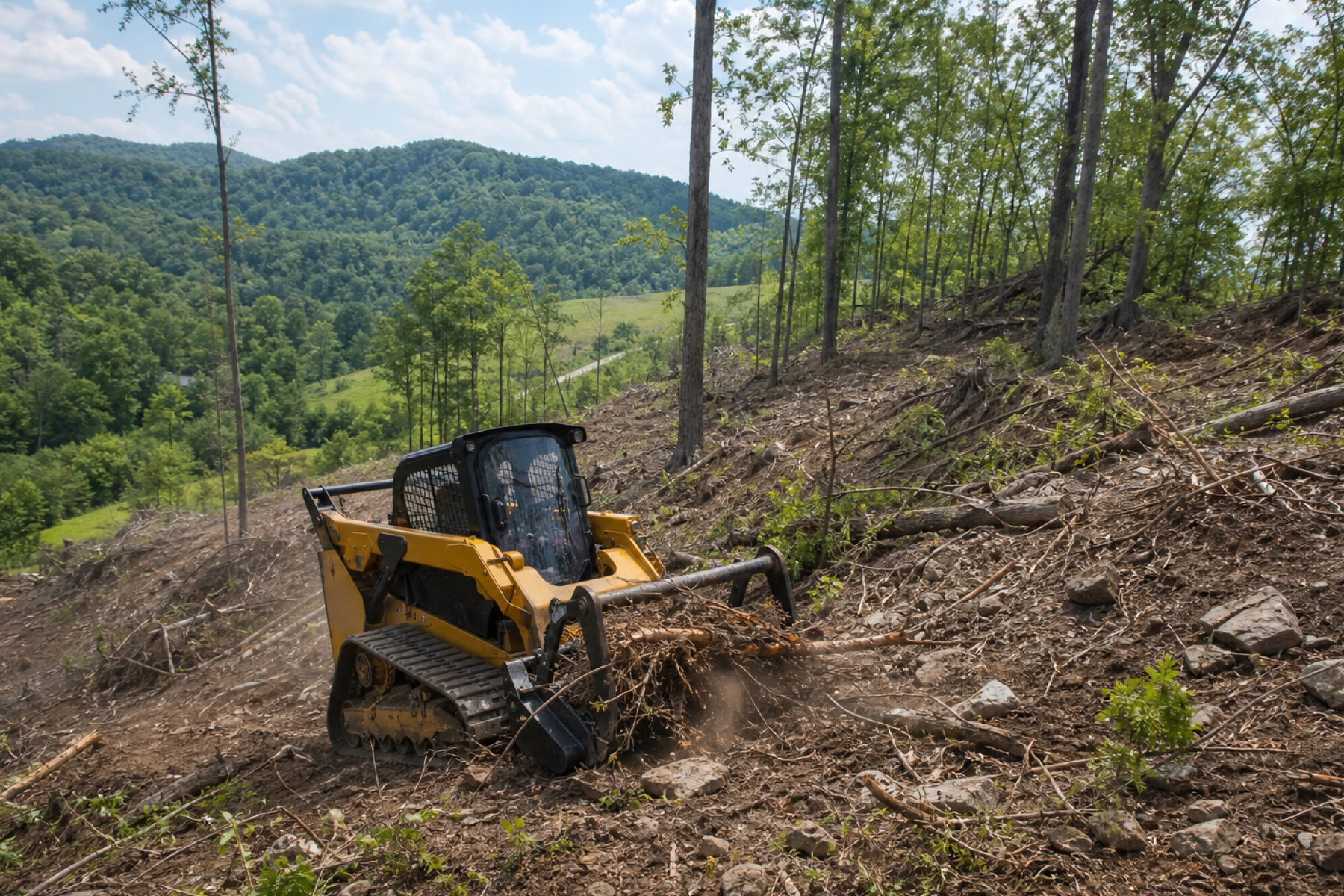
Two properties with identical vegetation can carry very different clearing costs for one reason: the ground they sit on. Terrain — slope, rock, soil moisture, and elevation change — decides how fast machines can work, which machines can work at all, and what's realistic below the surface. In the Upper Cumberland, where flat creek bottoms and steep plateau ground can sit a mile apart, terrain is one of the biggest cost variables there is.
This guide explains how each terrain factor moves an estimate, so an 'easy-looking' acre that quotes high makes sense.
Slope: The Production-Rate Factor
Flat, stable ground lets equipment work at full production — the number of acres a machine covers per hour. Slope cuts into that immediately. Machines work slower and more carefully on grade, some equipment can't safely operate past a certain steepness at all, and steep ground may require a different, more capable (and costlier) machine. Because cost tracks production rate, slower work on slopes means higher cost per acre even when the vegetation is light.
Rock and Soil
Rock rarely affects surface clearing, but it governs anything below grade. Where stump removal, grading, or excavation is needed, shallow sandstone — common on the Cumberland Plateau — limits or stops the work and can force plan changes. Soil type matters too: firm, dry ground supports equipment well, while soft or organic soils slow it down. Our guide on how rocky ground affects clearing covers this in depth.
Wet Ground and Drainage
- Saturated ground stops heavy equipment — working it damages soil, bogs machines, and is unsafe, so crews wait for it to dry.
- Low spots, springs, and poor drainage create soft areas that slow or reroute work.
- Wet-weather timing can push a schedule regardless of how simple the clearing is, adding indirect cost.
- Valley and hollow ground in the region is more prone to these conditions than plateau tops.
Why 'Easy-Looking' Can Still Cost More
The reason a light-brush acre sometimes quotes high is that terrain, not vegetation, is setting the price. A gentle field is quick; a steep, rocky, or wet acre with the same brush takes longer, needs different equipment, and may limit what can be done below grade. When you request a review, describing the terrain honestly — and sending photos that show slope and any wet or rocky areas — is what lets a contractor price it accurately rather than padding for the unknown. See our guide on what photos to send.
Helpful Guides
This guide is general information for property owners and does not replace an on-site evaluation. Upper Cumberland Land Clearing is an independent referral service; project scope, methods, equipment, pricing and scheduling are determined by the contractor who reviews your property.
Land-Clearing Costs Questions
Generally yes. Machines work slower and more cautiously on slopes, some equipment can't operate safely past a certain grade, and steeper ground may need a more capable machine. Since cost tracks how fast the work goes, slope raises per-acre cost even with light vegetation.
Often because of terrain factors the vegetation hides — shallow rock limiting below-grade work, soft or wet ground slowing equipment, or drainage issues. Terrain can set the price more than the trees do, which is why a property-specific review matters.
It can, mainly through timing and productivity. Heavy equipment can't safely work saturated ground, so wet conditions slow production or pause a project until it dries — an indirect but real cost, especially in wetter seasons.
Describe the slope, any rock outcrops, and wet or low areas, and send photos that show them. The more clearly a contractor can see the terrain, the more accurate the estimate — and the less they have to pad for unknowns.
Ready to Turn Overgrown Land Into Usable Property?
Share your contact details and you’ll be contacted to discuss where the property is, how much land is involved and what needs to be cleared.