Upper Cumberland Land Guide
Clearing Sloped Tennessee Property
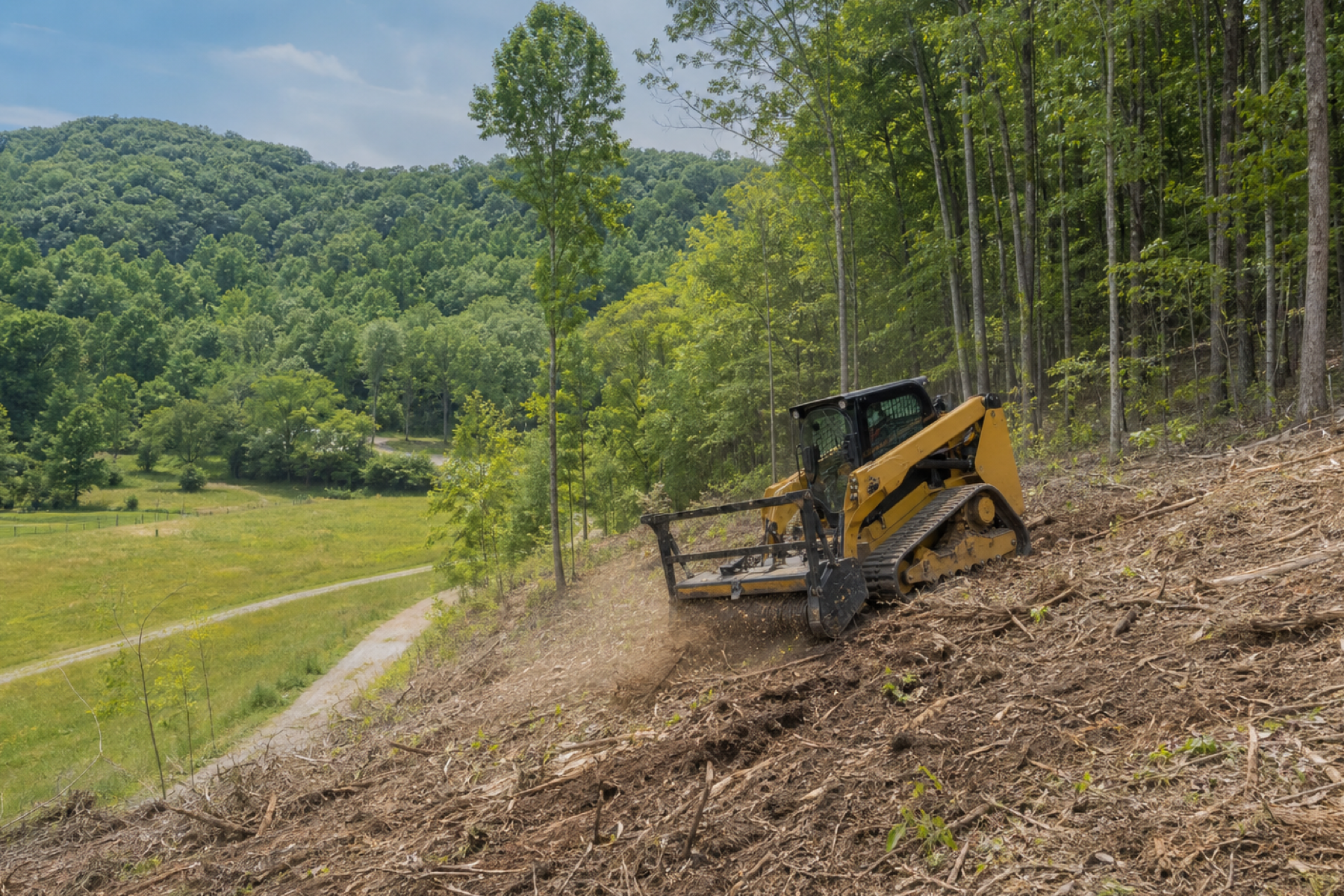
Flat ground is the exception across much of the Upper Cumberland — hillsides, ridges, and hollows are the norm. Clearing sloped property is routine here, but slope changes what's safe, what equipment fits, how the work is priced, and, importantly, how the ground is protected afterward. This regional guide pulls those slope-specific considerations together.
Slope Changes What Equipment Can Do
Tracked machines like forestry mulchers handle moderate slopes well thanks to their stability and low ground pressure, and for opening up wooded or brushy hillsides, mulching is often the go-to method here. But every machine has a safe working limit, and past a certain steepness — or on wet ground where traction drops — operating becomes unsafe regardless of the equipment. The safe limit depends on the specific slope, the ground conditions, and the operator's judgment, which is why steep ground benefits from an on-site look. Our guide on whether mulching can be used on steep land covers this in detail.
Slope and Cost
Slope raises cost because it slows production and can require more capable equipment. Machines work slower and more carefully on grade, and steeper ground may rule out the most efficient machine for the vegetation. So a hillside acre generally costs more to clear than the same vegetation on flat ground — a normal reality of the region's terrain, not a markup. Our guide on how terrain affects cost explains the mechanics.
Erosion Is the Slope-Specific Risk
- Cleared slopes are far more erosion-prone than flat ground — bare, sloped soil washes fast in a hard rain.
- The mulch layer from forestry mulching helps hold a slope's surface, a real advantage on hillsides.
- Steeper or disturbed slopes, especially near water, may need dedicated erosion control (seeding, matting).
- Re-establishing cover quickly is the key to keeping a cleared slope stable.
Clearing Slopes the Right Way
For most sloped ground in the region, the right approach is low-impact clearing that keeps the soil protected — mulching in place, leaving the chip layer, and re-establishing cover — rather than stripping a hillside bare. Where the slope is too steep to work safely, that's a limit set by safety, and a responsible contractor won't cross it. If you're building on a slope, expect extra site-prep considerations for the pad, drainage, and diverting uphill water. Describe the slope honestly and send photos that show the grade when you request a review. Our guides on erosion control and how wet ground affects equipment cover the related risks.
Helpful Guides
This guide is general information for property owners and does not replace an on-site evaluation. Upper Cumberland Land Clearing is an independent referral service; project scope, methods, equipment, pricing and scheduling are determined by the contractor who reviews your property.
Upper Cumberland Land Guide Questions
Yes — it's routine in the Upper Cumberland, and tracked mulchers handle moderate slopes well. But slope has safety limits: past a certain steepness, or on wet ground with reduced traction, it becomes unsafe regardless of equipment. The safe limit is judged on-site based on the specific slope and conditions.
Generally yes — slope slows production and can require more capable equipment, so a hillside acre usually costs more than the same vegetation on flat ground. It's a normal reflection of the region's terrain, not a markup, and a property review prices it accurately.
Yes — bare, sloped soil is far more erosion-prone than flat ground and can wash quickly in a hard rain. The mulch layer from forestry mulching helps hold the surface, and steeper or disturbed slopes, especially near water, may need dedicated erosion control like seeding or matting.
Low-impact clearing that keeps the soil protected — mulching in place, leaving the chip layer, and re-establishing cover — rather than stripping it bare. Where a slope is too steep to work safely, that's a limit set by safety, and a good contractor won't cross it.
Ready to Turn Overgrown Land Into Usable Property?
Share your contact details and you’ll be contacted to discuss where the property is, how much land is involved and what needs to be cleared.