Property Conditions
Clearing Around Desirable Mature Trees
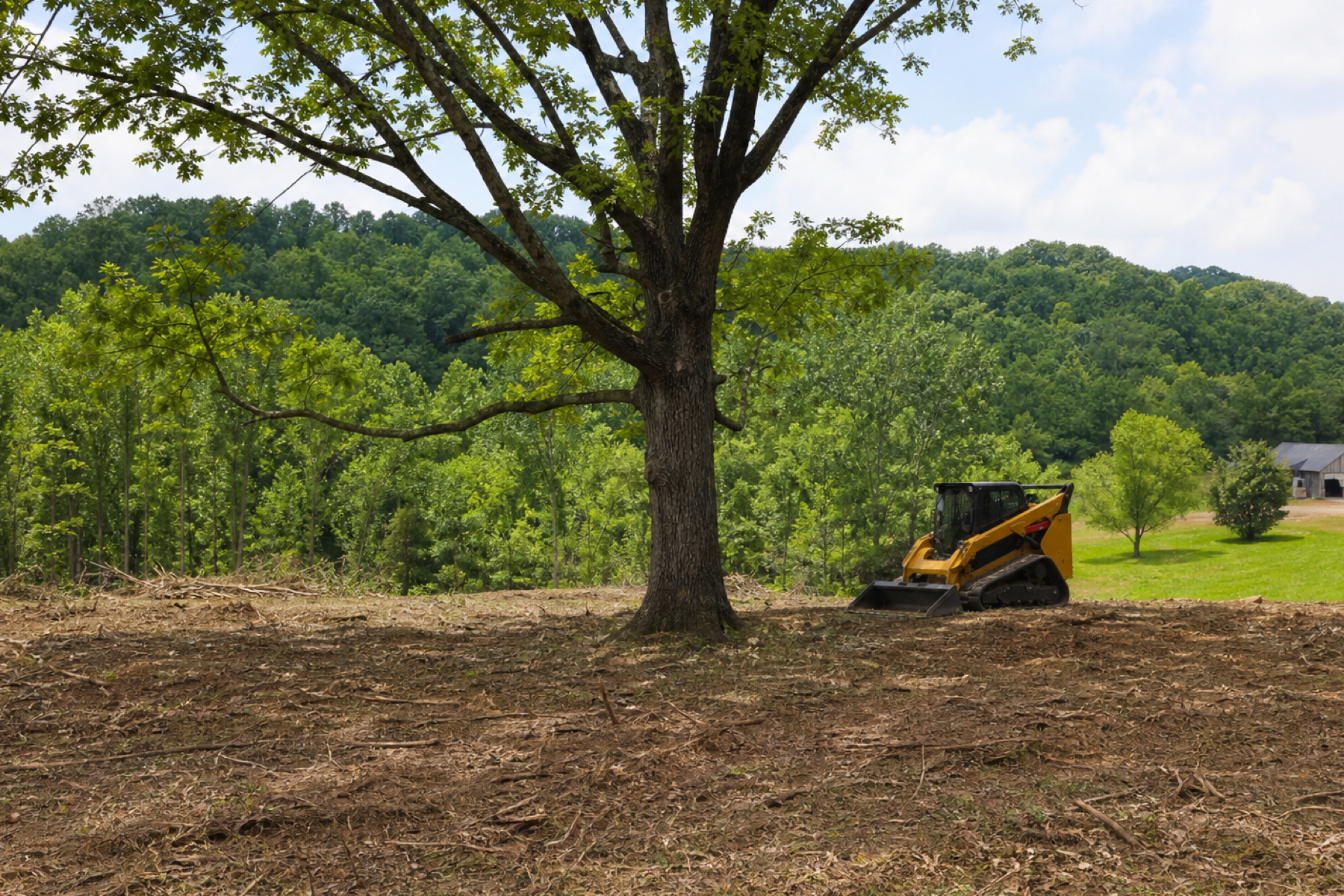
Keeping a few mature trees when you clear a property is one of the best decisions you can make — they add value, shade, and character that take decades to grow back. But protecting a tree during clearing takes more than just not cutting it down. The damage that kills kept trees usually isn't from the saw; it's from what happens around the roots.
This guide explains how to genuinely protect desirable mature trees during clearing, so the ones you keep survive the project.
The Real Threat Is the Root Zone
A tree's roots extend far wider than most people think — often well beyond the branch spread — and they sit surprisingly shallow. That root zone is the tree's lifeline, and it's what's most at risk during clearing. A mature tree can be left perfectly intact above ground and still slowly die over the following years because its roots were damaged during the work. Understanding this is the difference between keeping a tree and just delaying its death.
How Kept Trees Get Damaged
- Soil compaction — heavy equipment driving over the root zone compresses the soil and suffocates roots.
- Root severing — grubbing, grading, or trenching near the tree cuts the roots it depends on.
- Grade changes — adding or removing soil over the root zone changes how the roots breathe and drink.
- Bark wounds — machines bumping the trunk create entry points for disease.
- Fill and debris — piling soil or material against the trunk and over roots.
How to Protect Them
Protecting a kept tree means protecting its root zone. Establish and mark a protection area around each keeper — generously, out toward the drip line and beyond — and keep equipment traffic, grade changes, and material storage out of it. Forestry mulching helps here, because clearing underbrush around a tree with a mulcher disturbs the soil far less than dozer work. Clear communication is essential: mark the keepers and their protection zones before work starts, and walk them with the contractor.
Plan Keepers Into the Layout
On a building site especially, think about kept trees early, because construction near a tree's root zone is one of the surest ways to lose it. Placing the pad, driveway, and utilities away from the trees you want to keep — and accepting that a tree too close to the build may not survive it — is part of realistic planning. A good contractor will help you balance the footprint against the trees worth protecting. Our guides on selective land clearing and land clearing for a new home site cover fitting keepers into the plan.
Helpful Guides
This guide is general information for property owners and does not replace an on-site evaluation. Upper Cumberland Land Clearing is an independent referral service; project scope, methods, equipment, pricing and scheduling are determined by the contractor who reviews your property.
Property Conditions Questions
Protect their root zones, not just their trunks. Mark a generous protection area around each keeper (out to and beyond the drip line), keep equipment, grade changes, and material storage out of it, and use low-impact methods like mulching to clear underbrush nearby. Mark keepers before work begins.
Almost always root-zone damage — soil compaction from equipment, severed roots from grubbing or grading, grade changes over the roots, or fill piled against the trunk. The damage is below ground and the decline is gradual, so the tree may not show it for a season or two.
Generously — at least out to the drip line (the edge of the branches) and ideally beyond, since roots extend wider than the canopy. Keep equipment traffic, digging, grade changes, and storage out of that zone during the work.
Sometimes, but construction near a root zone is one of the surest ways to lose a tree. Plan the pad, driveway, and utilities away from keepers where possible, and be realistic that a tree very close to the build may not survive it.
Ready to Turn Overgrown Land Into Usable Property?
Share your contact details and you’ll be contacted to discuss where the property is, how much land is involved and what needs to be cleared.