Upper Cumberland Land Guide
Cedar and Brush Encroachment on Pastureland
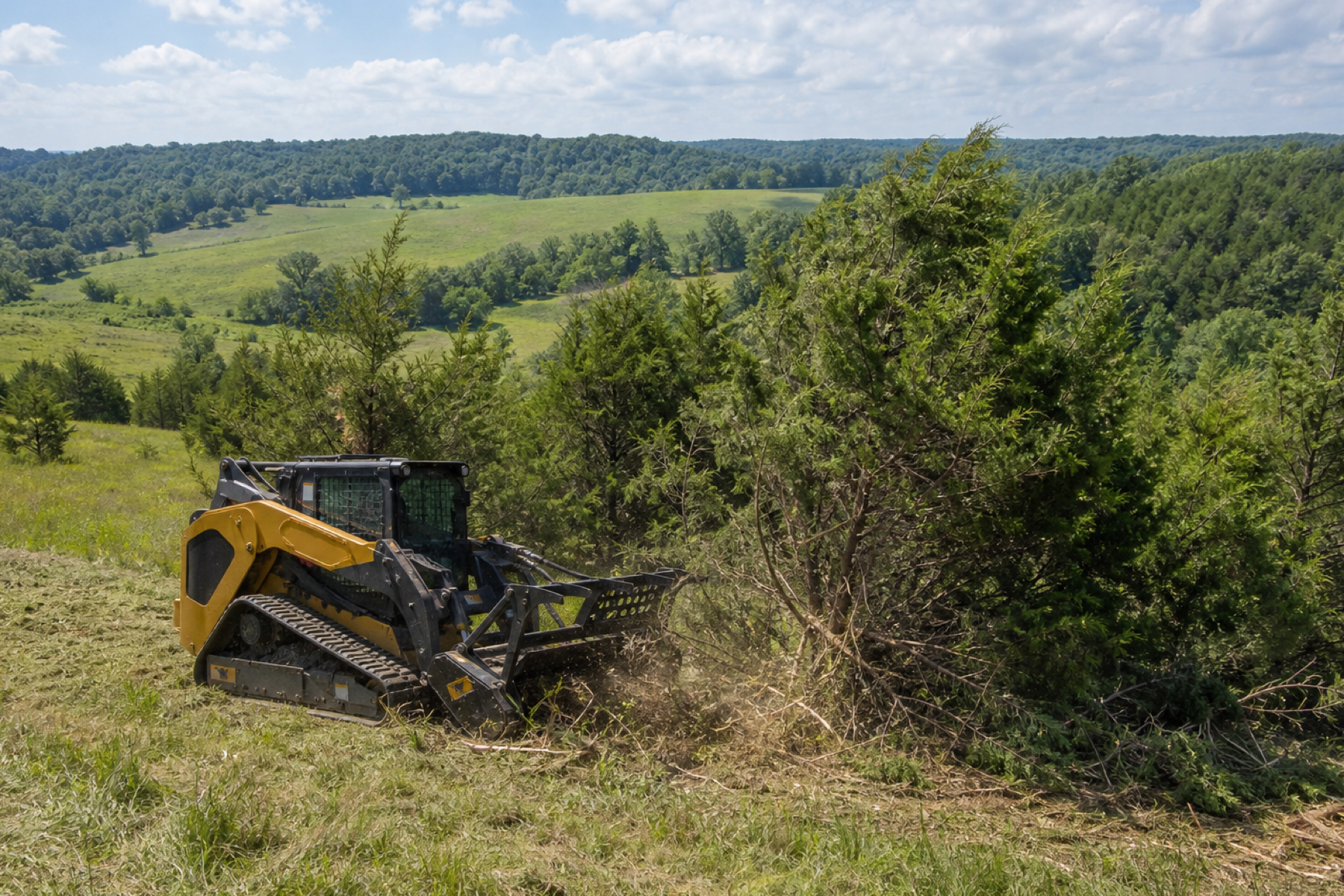
If you farm or own pasture in the Upper Cumberland, you know the pattern: leave a field alone for a few seasons and eastern red cedar and brush start taking it over from the edges. Cedar encroachment is one of the most common land issues in Middle Tennessee, and reversing it — and keeping it reversed — is a recurring reason property owners clear land here. This guide covers why it happens and what to do about it.
Why Cedar Takes Over
Eastern red cedar is superbly adapted to reclaim open ground in this region. It's drought-tolerant, thrives on the thin and rocky soils common here, isn't bothered by the limestone glade ground of the valleys, and spreads readily from seed — birds carry it everywhere. Left unchecked by grazing, mowing, or fire, cedar moves into pasture edges and open fields and, within a handful of years, turns productive ground into a cedar thicket. Brush, blackberry, and sumac ride along with it.
What Encroachment Costs You
- Lost grazing and hay ground — every acre of cedar is an acre not producing.
- Shrinking pasture — encroachment works inward from edges and fence lines, steadily reducing usable area.
- Harder management — thickets block access, harbor pests, and make the whole field harder to work.
- It compounds — the longer it's left, the larger and more established the cedars, and the bigger the reclamation.
Reversing It With Mulching
Forestry mulching is the natural fit for cedar and brush reclamation. It grinds the cedars, brush, and saplings in place into a mulch layer — no piling, no burning, no hauling — reopening the field efficiently while leaving the soil surface intact. Cedar's dense wood is well within what a mulcher handles, and because the material stays on the field as mulch, the organic matter returns to the ground. In a pass or two, a cedar-choked field becomes open pasture again. Our guide on reclaiming an overgrown pasture covers the reclamation in full.
Keeping Pasture Open
Here's the part that matters most in cedar country: clearing once doesn't keep cedar out. It returns from seed and, for brush, from roots, so reclaimed pasture stays open only with follow-up — grazing, regular mowing or bush-hogging, and staying ahead of the seedlings before they establish. Fields kept in active use resist encroachment; fields left idle invite it back. Planning that ongoing management is what makes reclamation a lasting investment rather than a recurring expense. Our guides on maintaining land after forestry mulching and clearing a fence line cover the upkeep and the edges where cedar starts.
Helpful Guides
This guide is general information for property owners and does not replace an on-site evaluation. Upper Cumberland Land Clearing is an independent referral service; project scope, methods, equipment, pricing and scheduling are determined by the contractor who reviews your property.
Upper Cumberland Land Guide Questions
Eastern red cedar is drought-tolerant, thrives on the region's thin, rocky, and limestone soils, and spreads readily from bird-carried seed. Without grazing, mowing, or fire to check it, it moves into pasture edges and open fields and turns productive ground into thicket within a few years.
Forestry mulching — it grinds cedars, brush, and saplings in place into a mulch layer with nothing to haul or burn, reopening the field efficiently while returning organic matter to the soil. Cedar's dense wood is well within what a mulcher handles.
Yes, without follow-up — it returns from seed (and brush from roots). Reclaimed pasture stays open only with ongoing management: grazing, regular mowing or bush-hogging, and staying ahead of seedlings. Fields kept in active use resist encroachment; idle ones invite it back.
Fast — a field left unmanaged can go from scattered seedlings to a young cedar thicket in just a few seasons, and it compounds: the longer it's left, the larger and more established the cedars and the bigger the eventual reclamation. Staying ahead of it is far easier than catching up.
Ready to Turn Overgrown Land Into Usable Property?
Share your contact details and you’ll be contacted to discuss where the property is, how much land is involved and what needs to be cleared.