Clearing Methods
Can Land Be Cleared Without Removing Every Tree?
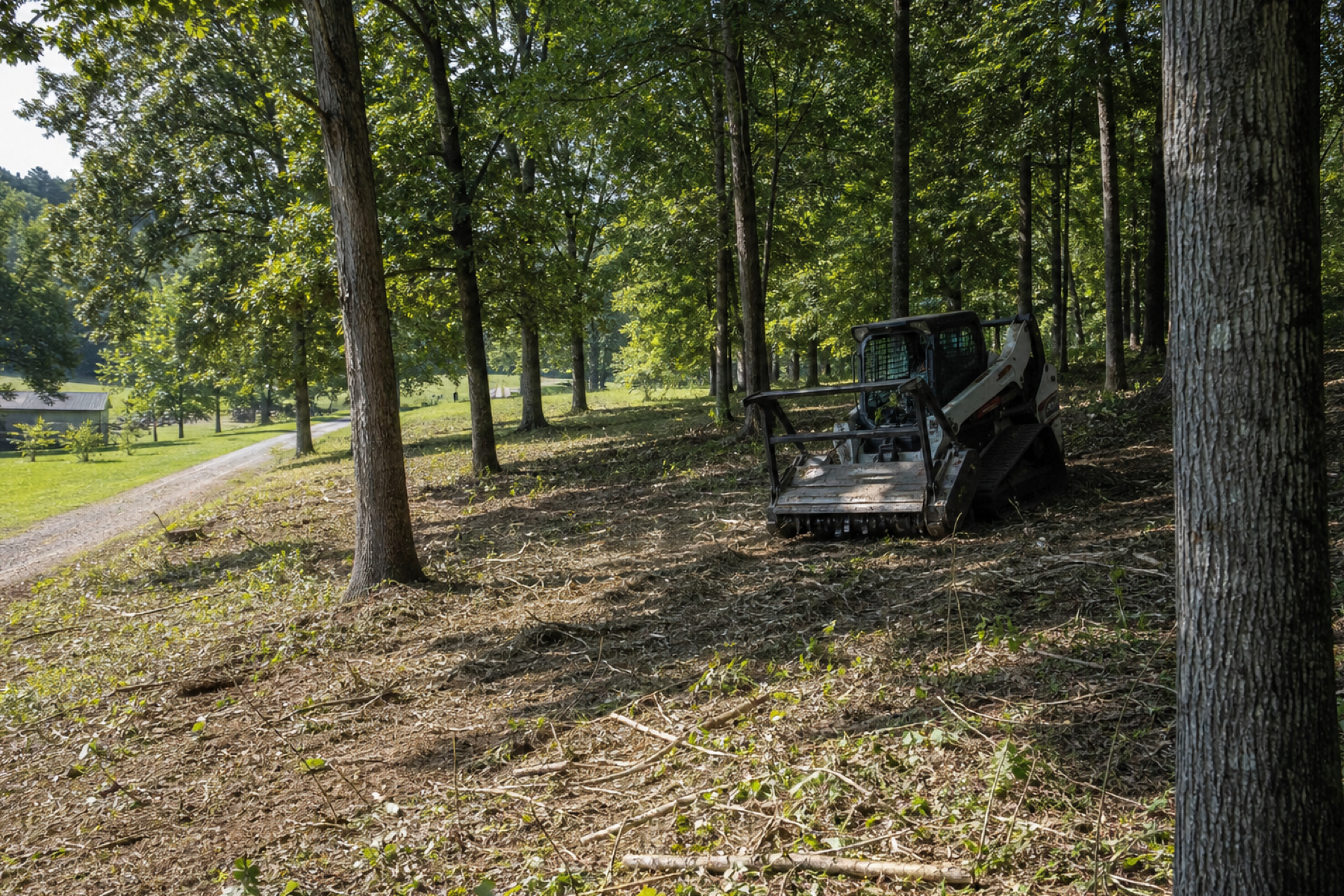
It's a common worry: does clearing land mean stripping it to bare dirt? The answer is no — clearing absolutely can be done while keeping the trees you want. In fact, for a lot of properties, removing everything is the wrong call, and a more selective approach produces a more valuable result.
This guide explains how partial clearing works, why keeping the right trees is often smarter than a clean sweep, and how to make sure it's done the way you intend.
Clearing Is a Choice, Not All-or-Nothing
The image of a bulldozer flattening everything is only one version of clearing. Just as often, the goal is to open up a property — remove the tangled underbrush, the invasive growth, the crowded small trees — while leaving mature shade trees, healthy hardwoods, and anything else worth keeping. This is selective clearing, and it turns unusable overgrown land into open, park-like, usable ground without sacrificing its best features.
Why Keeping Trees Is Often the Better Call
- Mature shade trees add real value, comfort, and curb appeal to a homesite — they take decades to replace.
- Selective thinning can improve the health of the trees left standing by reducing competition.
- Wooded character is a feature for recreational and residential property, not a problem to erase.
- Windbreaks, privacy screens, and creek-side trees serve a purpose worth preserving.
How Partial Clearing Is Done
Forestry mulching is well suited to keeping trees, because it can process underbrush and small growth precisely while working around the trees you're keeping — leaving a clean, mulched surface beneath a retained canopy. Larger unwanted trees are removed selectively. The work is more deliberate than clearing everything, so it can take a bit more time per acre, but the payoff is ground that's open and usable while keeping what took decades to grow.
Mark What Stays
The one requirement for partial clearing is clear communication about what to keep. Because the crew is making keep-or-remove decisions, mark the trees and features to protect with flagging or paint, and walk the property with the contractor when you can. A removed mature tree can't be put back, so marking removes the guesswork. Our guide on selective land clearing covers the approach in depth, and clearing around desirable mature trees covers protecting the keepers during the work.
Helpful Guides
This guide is general information for property owners and does not replace an on-site evaluation. Upper Cumberland Land Clearing is an independent referral service; project scope, methods, equipment, pricing and scheduling are determined by the contractor who reviews your property.
Clearing Methods Questions
Yes. Selective (partial) clearing removes underbrush, invasives, and unwanted small trees while keeping mature shade trees and anything else worth preserving. It's a common and often smarter approach than clearing everything to bare ground.
Per acre it can be slightly more, because working carefully around retained trees is more deliberate than clearing everything. But the result — usable ground that keeps decades-old trees — is often more valuable than bare land, especially for homesites.
Mark them clearly with flagging or paint before work starts, and walk the property with the contractor if possible. Selective clearing depends on clear keep-or-remove decisions, and a removed mature tree can't be replaced.
Forestry mulching works well for selective clearing because it processes underbrush and small growth precisely around retained trees, leaving a clean surface beneath the canopy. Larger unwanted trees are removed separately.
Ready to Turn Overgrown Land Into Usable Property?
Share your contact details and you’ll be contacted to discuss where the property is, how much land is involved and what needs to be cleared.