Clearing Methods
Brush Cutting Versus Forestry Mulching
Brush cutting and forestry mulching are often mentioned together because both deal with overgrowth, but they're different operations that leave different results. Choosing between them — or knowing when each fits — comes down to what you want the ground to look like afterward and how long you need it to stay that way.
This guide compares the two so you can match the method to your goal instead of assuming they're interchangeable.
What Brush Cutting Does
Brush cutting (often a rotary cutter or 'bush hog,' or a brush-cutter attachment) cuts standing brush and small growth off at or near ground level. It's fast and effective for knocking back lighter overgrowth, grass, and small saplings, and it's well suited to routine maintenance of ground you're keeping open. What it leaves is cut material on the surface and the root systems intact, so regrowth returns relatively quickly.
What Forestry Mulching Does
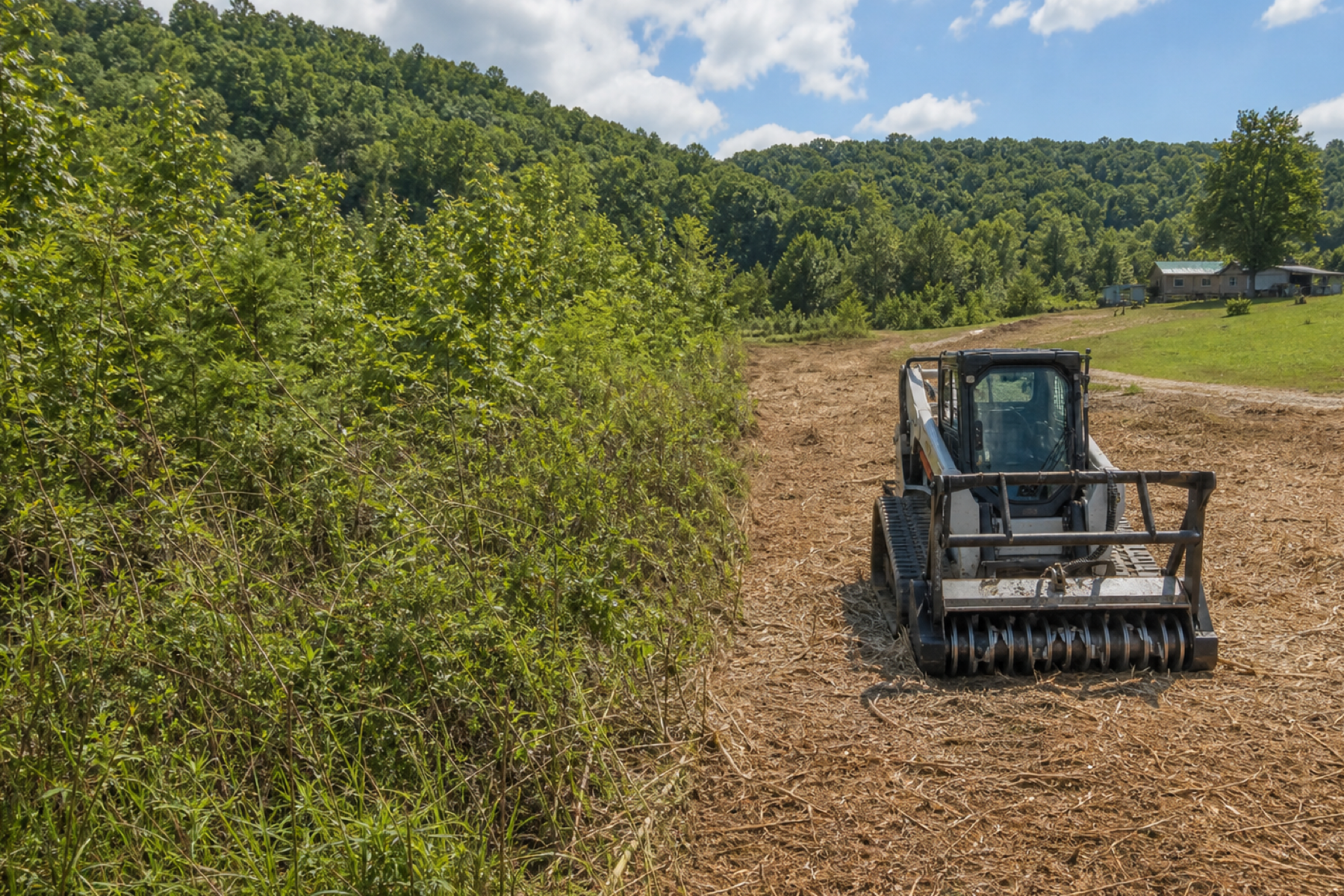
Forestry mulching grinds vegetation — including larger, woodier growth than brush cutting handles — into a mulch layer, processing material more thoroughly and top-down. It manages denser brush and bigger saplings than a brush cutter, and it leaves a protective mulch layer rather than loose cuttings. It's more of a clearing operation than a maintenance one, though the roots remain and, as with any method, regrowth eventually returns without follow-up.
Which Fits Your Situation
- Routine maintenance of already-open ground, fields, or light brush → brush cutting is often the efficient choice.
- Reclaiming heavily overgrown ground with dense brush and larger saplings → forestry mulching handles it better.
- Wanting a protective mulch layer and a more finished look → mulching.
- Frequent, low-cost knock-back of fast-growing growth → brush cutting on a schedule.
They Often Work Together
In practice these methods complement each other across a property's life. Forestry mulching does the heavy reclamation of overgrown ground, and brush cutting maintains it afterward on a regular schedule. Thinking about both — reclaim, then maintain — is exactly the mindset that keeps ground open long-term, as our guide on clearing dense brush explains. Describe the current condition of the ground and how you plan to keep it, and a contractor can recommend the right approach.
Helpful Guides
This guide is general information for property owners and does not replace an on-site evaluation. Upper Cumberland Land Clearing is an independent referral service; project scope, methods, equipment, pricing and scheduling are determined by the contractor who reviews your property.
Clearing Methods Questions
Brush cutting cuts standing brush and small growth off near ground level, leaving cuttings on the surface and roots intact — great for maintenance. Forestry mulching grinds denser, woodier vegetation into a mulch layer, handling heavier overgrowth — more of a clearing operation.
If it's heavily overgrown with dense brush and larger saplings, forestry mulching handles it better and leaves a cleaner result. For lighter, more open ground or routine knock-back, brush cutting is often the efficient choice.
No — both leave root systems in the ground, so regrowth returns without follow-up. The lasting approach is usually to reclaim with mulching, then maintain with periodic brush cutting or grazing.
Yes, and that's a common pairing. Mulching does the initial heavy clearing, and brush cutting on a regular schedule keeps regrowth in check afterward, which is far cheaper than re-clearing.
Ready to Turn Overgrown Land Into Usable Property?
Share your contact details and you’ll be contacted to discuss where the property is, how much land is involved and what needs to be cleared.