Site Preparation
What Is a Building Pad?
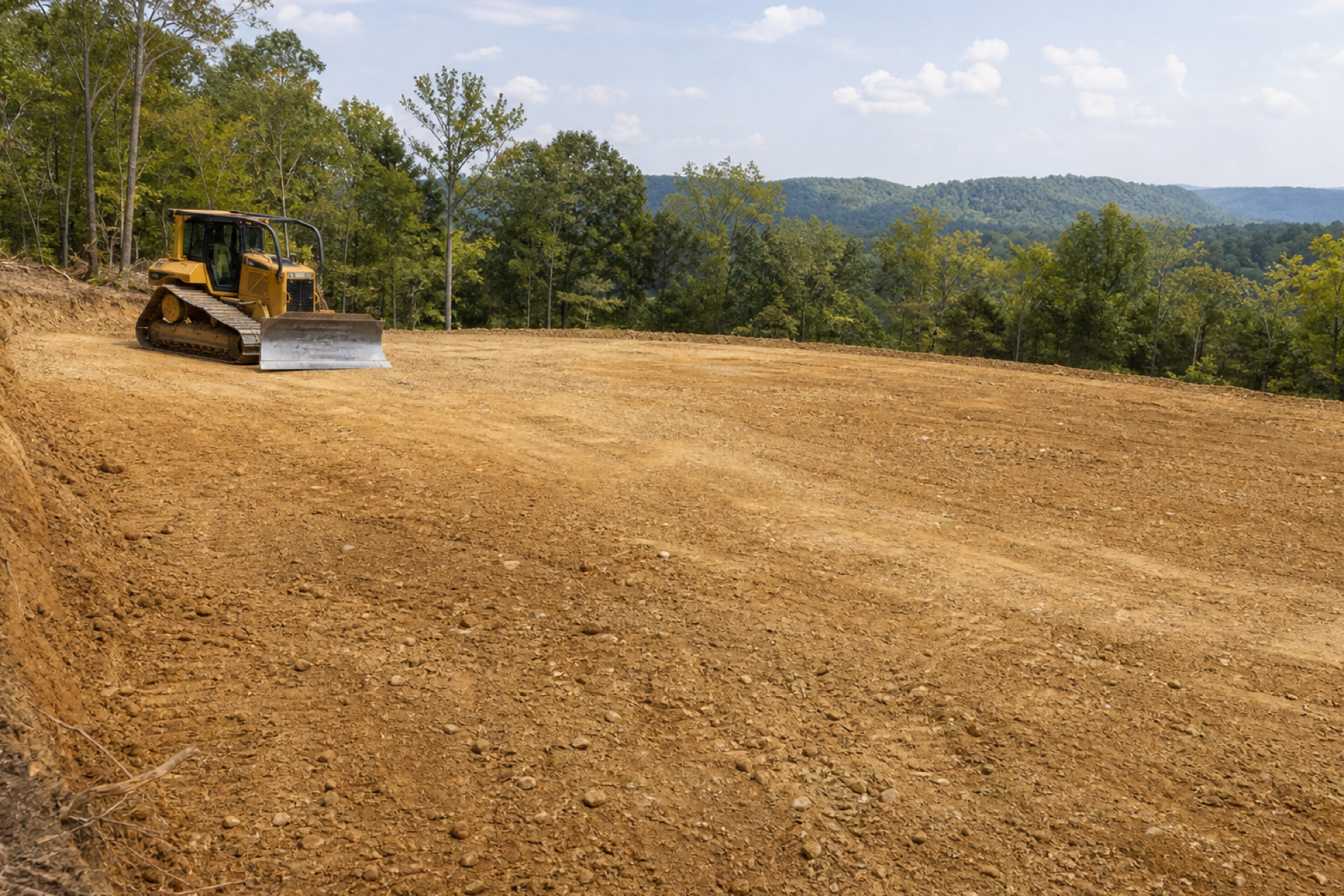
"Building pad" is a term you'll hear as soon as you start planning to build on rural land, and it's worth understanding because the pad is literally the foundation under your foundation. Get it right and everything above it sits stable and dry for decades; get it wrong and you're fighting settling and water problems from day one.
This guide explains what a building pad is, what goes into a good one, and why it's a critical step, not a formality.
What a Building Pad Is
A building pad is the prepared, level, compacted area of ground that a structure is built on. It's the transition between raw or cleared land and a stable base ready for a foundation, slab, or piers. A proper pad is shaped to the right elevation, built from suitable compacted material, and graded so water drains away from where the building will sit. It's the difference between setting a structure on 'the ground' and setting it on ground that's been engineered to carry it.
What Goes Into a Good Pad
- Cleared and grubbed ground — vegetation, stumps, roots, and organic topsoil removed from the footprint.
- Suitable base material — organic and unstable soil replaced with fill that compacts well.
- Compaction — the material compacted in layers so it won't settle under load.
- Correct elevation and level — shaped to the height and grade the building needs.
- Drainage — the pad and surroundings sloped so water sheds away, not toward, the structure.
Why Compaction and Drainage Matter Most
Two things separate a pad that lasts from one that fails: compaction and drainage. Loose or organic material under a structure settles unevenly, cracking what's built on it — which is why the footprint is grubbed and the pad built from properly compacted fill. And water is the other enemy: a pad that sits where water collects, or that isn't sloped to drain, undermines the structure over time. A good pad is both solid and dry.
Where the Pad Fits in Site Prep
Building a pad is one stage in the sequence that turns wooded land into a buildable site: clear the footprint, grub the stumps and roots, then shape and compact the pad and its drainage. It follows clearing and grubbing and overlaps with grading. Because the pad's requirements come from the building — foundation type, size, and loads — it's worth coordinating with the builder early. Our guides on land clearing for a new home site and clearing versus grading show how the pad fits the whole process.
Helpful Guides
This guide is general information for property owners and does not replace an on-site evaluation. Upper Cumberland Land Clearing is an independent referral service; project scope, methods, equipment, pricing and scheduling are determined by the contractor who reviews your property.
Site Preparation Questions
It's the prepared, level, compacted area of ground a structure is built on — the stable base beneath the foundation. A proper pad has the footprint cleared and grubbed, is built from suitable compacted fill, shaped to the right elevation, and graded so water drains away from the building.
Because loose or organic material settles unevenly under the weight of a structure, cracking slabs and foundations. Compacting suitable fill in layers creates ground that won't settle, so what's built on top stays stable over time.
Yes — water is one of the main threats to a structure. A good pad is shaped, and sited, so water sheds away from the building rather than collecting under or around it. A solid but poorly drained pad still leads to problems.
It's part of the site-prep sequence: clear the footprint, grub out stumps and roots, then build and compact the pad and shape its drainage (part of grading). The pad's specs come from the building, so coordinate with the builder early.
Ready to Turn Overgrown Land Into Usable Property?
Share your contact details and you’ll be contacted to discuss where the property is, how much land is involved and what needs to be cleared.