Clearing Methods
What Happens to Trees and Brush After Clearing?
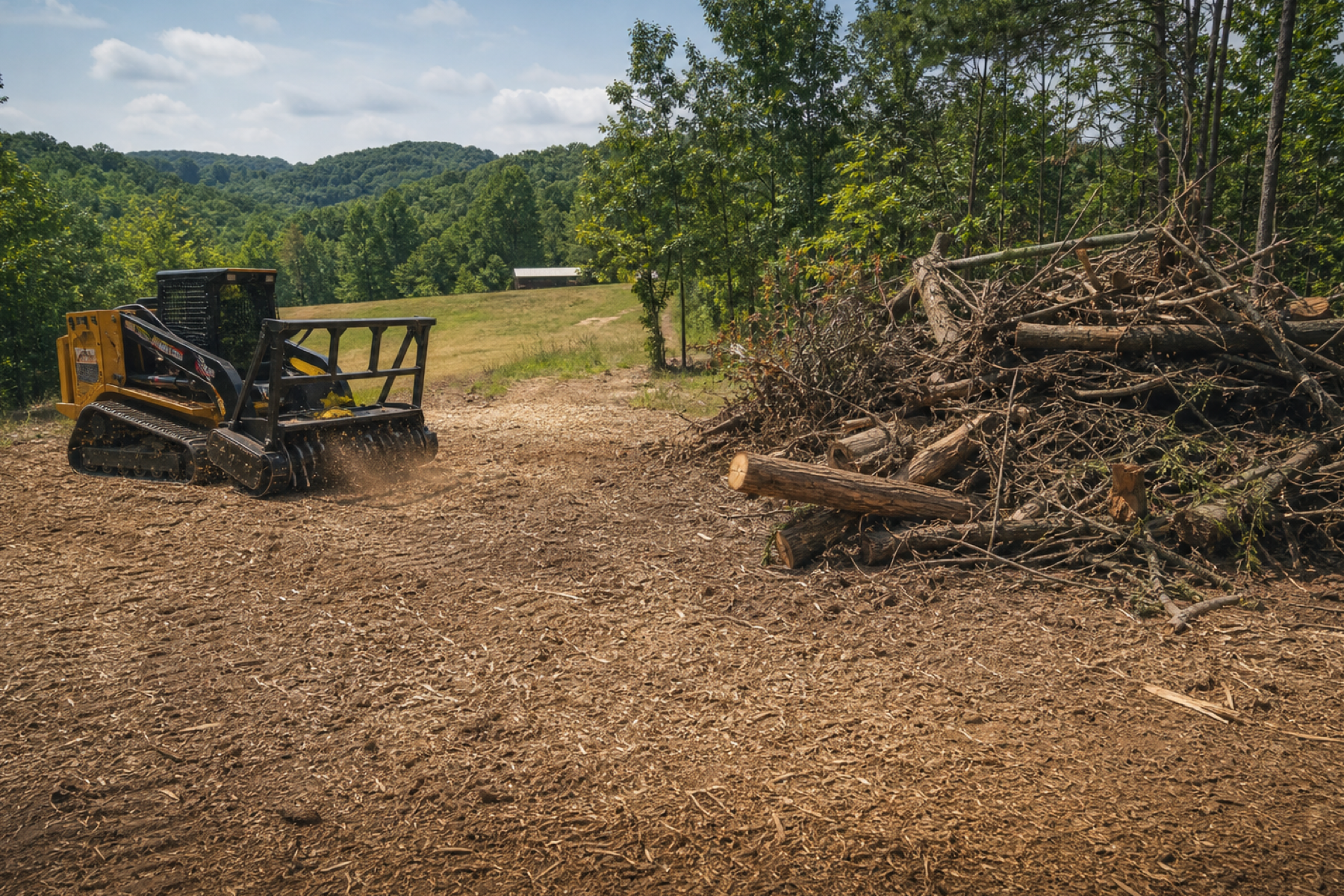
Clearing a property generates a lot of material — and one of the most practical questions owners have is simply: where does it all go? The answer depends entirely on the method and what you've agreed to, and it determines what your land looks like when the work is done.
This guide walks through the ways cleared trees and brush are handled, so you know what to expect on the ground afterward.
It Depends on the Method
The single biggest factor is whether the project uses forestry mulching or traditional clearing. Mulching converts vegetation into a mulch layer that stays on-site, so there's essentially nothing to 'go' anywhere. Traditional clearing pushes material out whole, which then has to be dealt with — piled, burned, or hauled. Knowing which method your project uses tells you most of what will happen to the material.
The Ways Material Is Handled
- Mulched in place — ground into wood chips left as a protective layer that decomposes over time and returns nutrients to the soil.
- Piled — pushed into piles on the property, left for later burning or removal.
- Burned — where permitted and safe, reducing piles on-site under local rules.
- Hauled off-site — loaded and trucked away for disposal, leaving the ground clean.
The Mulch Layer: Feature, Not Waste
When material is mulched in place, the resulting layer isn't debris to get rid of — it's genuinely useful. It protects the soil surface from erosion, suppresses some regrowth initially, holds moisture, and breaks down over the following seasons to feed the soil. For pasture reclamation, trails, and reclaimed woods, that layer is a benefit. The main thing to know is that the ground won't be bare dirt — it'll have that chip layer, which is normal and intended.
Matching the Outcome to Your Goal
What you want the finished ground to look like should drive the debris decision. If you want a natural, low-impact result and don't mind mulch on the ground, in-place mulching is ideal and economical. If you need bare, clean ground — for construction, or simply by preference — that points toward traditional clearing with hauling, which costs more. Deciding this up front, and confirming it in the quote, avoids surprises. Our guide on whether pricing includes debris removal covers the cost side.
Helpful Guides
This guide is general information for property owners and does not replace an on-site evaluation. Upper Cumberland Land Clearing is an independent referral service; project scope, methods, equipment, pricing and scheduling are determined by the contractor who reviews your property.
Clearing Methods Questions
It depends on the method. Forestry mulching grinds it into a mulch layer left on the ground. Traditional clearing pushes material out whole, which is then piled, burned where permitted, or hauled off-site. The approach determines what's left on your property.
No — it's usually a benefit. Mulch protects the soil from erosion, holds moisture, initially suppresses some regrowth, and decomposes to feed the soil. Just know the ground will have a chip layer rather than being bare dirt, which is normal for mulched clearing.
Yes, but that generally means traditional clearing with the material hauled off-site, which costs more than in-place mulching. If bare, clean ground is the goal — for construction or preference — specify it so the quote reflects the hauling.
A properly processed mulch layer lies flat and decomposes; large debris piles left long-term are more of a concern and are why many owners choose mulching or arrange removal. Discuss handling with the contractor based on your property and preferences.
Ready to Turn Overgrown Land Into Usable Property?
Share your contact details and you’ll be contacted to discuss where the property is, how much land is involved and what needs to be cleared.