Project Planning
Should You Get a Survey Before Land Clearing?
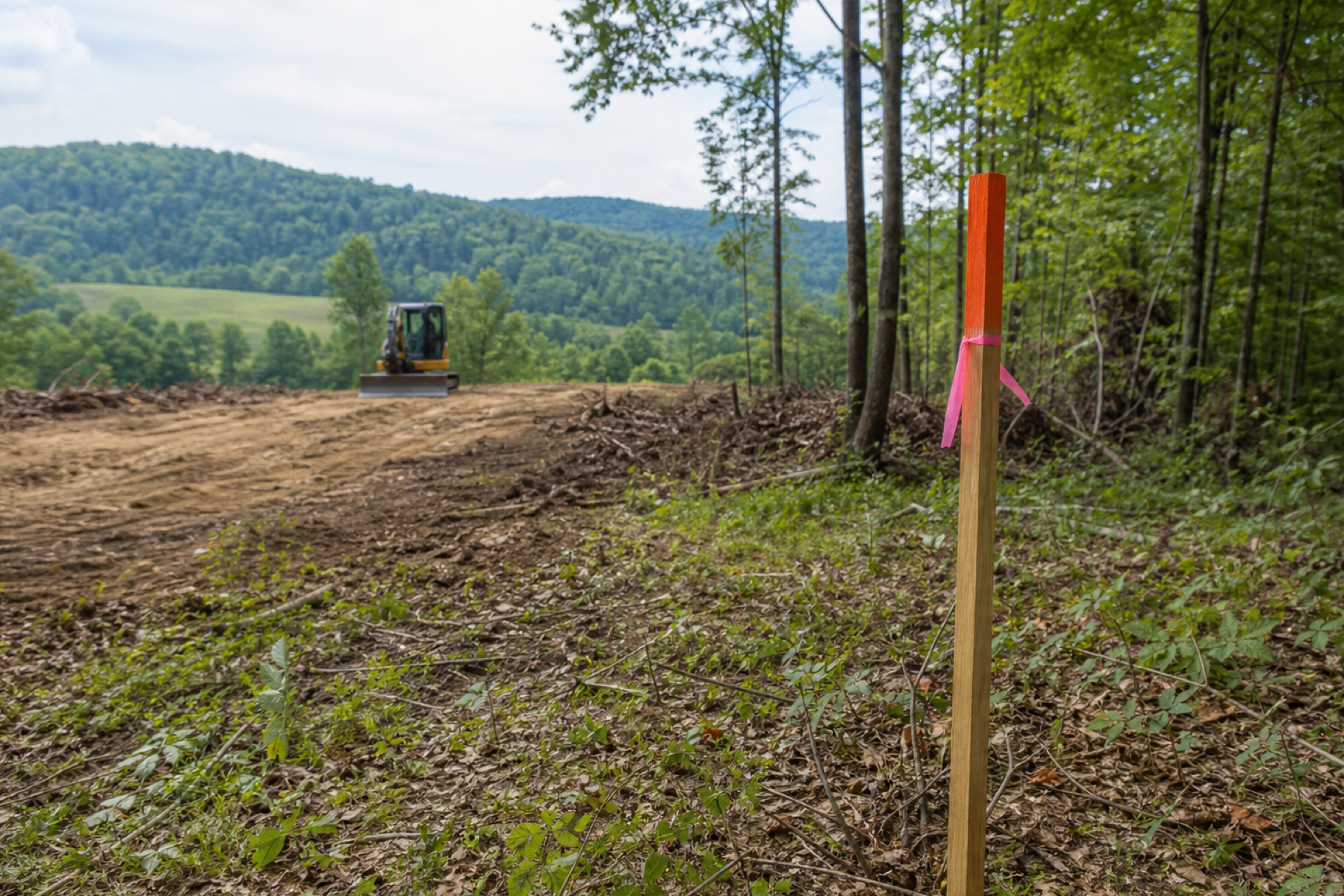
A land survey isn't required for every clearing project, but skipping one in the wrong situation can turn into an expensive, neighbor-souring mistake. The question is really about risk: how sure are you where your lines are, and how close to them are you clearing? This guide helps you weigh whether a survey is worth it before you start.
What a Survey Actually Gives You
A professional boundary survey establishes exactly where your property lines are, marked on the ground. That certainty matters for clearing because a machine following an assumed line can clear across a real one — onto a neighbor's property or across a setback — and cleared trees can't be un-cleared. A survey replaces assumption with fact right where the risk lives.
When a Survey Is Worth It
- You're clearing near a boundary and aren't certain exactly where it runs.
- You can't locate the corner pins, or the overgrowth hides them.
- The property is newly purchased and you're relying on a rough idea of the lines.
- There's any history of boundary disagreement with a neighbor.
- You're clearing to a fence line you're not sure sits on the actual boundary.
When You Can Probably Skip It
Not every project needs one. If you're clearing well inside your property — a homesite, pasture, or woods far from any line — and there's no ambiguity about staying on your own land, a survey may be unnecessary. The deciding factor is proximity to the boundary and your confidence in where it is: clearing the middle of a large parcel is low-risk; clearing right up to an uncertain edge is not.
Weighing the Cost Against the Risk
A boundary survey has a real cost, but it's modest next to the cost of clearing a neighbor's trees by mistake — which can mean liability, damages, and a lasting dispute. When you're clearing near an uncertain line, a survey is cheap insurance. If you're confident and staying well clear of boundaries, that risk is low. Our guide on identifying property lines covers what you can determine yourself first, which sometimes answers the question without a full survey.
Helpful Guides
This guide is general information for property owners and does not replace an on-site evaluation. Upper Cumberland Land Clearing is an independent referral service; project scope, methods, equipment, pricing and scheduling are determined by the contractor who reviews your property.
Project Planning Questions
Not always — it depends on how close to a boundary you're clearing and how sure you are where it runs. Clearing well inside a large parcel is low-risk; clearing near an uncertain line, to a questionable fence, or on newly bought land is where a survey is worth it.
Because a machine following an assumed line can clear across the real one — onto a neighbor's land or across a setback — and cleared trees can't be restored. A survey establishes exactly where your lines are, replacing a risky assumption with certainty right where it counts.
When you're clearing well inside your own property with no ambiguity about staying on your land — a homesite or field far from any boundary. The risk rises with proximity to the line and uncertainty about where it is.
Next to the cost of mistakenly clearing a neighbor's trees — liability, damages, and a lasting dispute — a survey is modest insurance when you're clearing near an uncertain boundary. If you're confident and staying well clear of lines, it may be unnecessary.
Ready to Turn Overgrown Land Into Usable Property?
Share your contact details and you’ll be contacted to discuss where the property is, how much land is involved and what needs to be cleared.