Upper Cumberland Land Guide
Rural Equipment Access in the Upper Cumberland
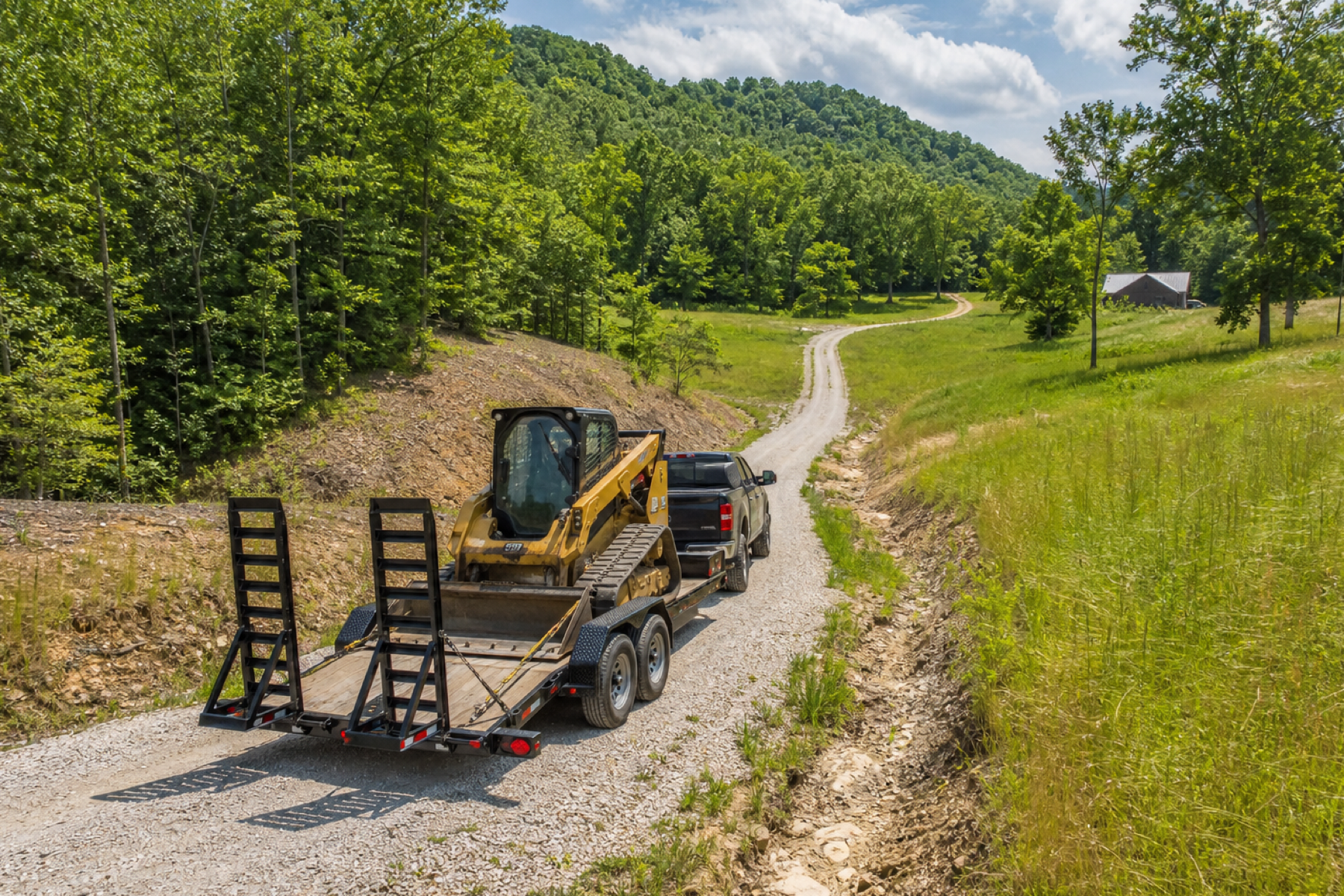
Across the Upper Cumberland, getting equipment to the work is often the first real challenge of a clearing project — sometimes a bigger factor than the vegetation itself. The region's rural property comes with long drives, farm gates, ridge-and-hollow terrain, and back acreage that can be genuinely hard to reach. This guide covers the local access realities and how to plan for them.
Why Access Is a Regional Theme
This isn't suburban lot clearing. Upper Cumberland parcels are frequently large, rural, and reached by long private drives, shared gravel roads, or farm lanes — and the usable ground may sit well back from the road, up a ridge, or down in a hollow. That distance and terrain between the road and the work is what makes access such a consistent consideration here, and it's why local projects so often hinge on how equipment gets in.
The Common Regional Access Constraints
- Long gravel drives — distance and surface condition affect how heavy rigs reach the property.
- Farm gates and narrow entrances — often the pinch point capping machine size.
- Ridge-and-hollow terrain — grades and tight routes between the road and the work area.
- Soft bottomland and creek crossings — wet, low ground that heavy equipment can't cross when soft.
- Back acreage — the usable ground may be a long way in, sometimes needing an access route cleared first.
When Access Is Part of the Project
On rural regional property, opening access is sometimes the first phase of the job rather than a given. Clearing a lane in so equipment can reach the back, improving a soft crossing, or reopening an old farm road can be what makes the main clearing possible — and our guides on improving access to rural acreage and reopening an abandoned farm road cover those. A contractor weighs whether to open access for a more productive machine or work with what can already reach the site.
Help the Contractor Plan
Because access shapes equipment, method, cost, and timeline all at once, it's one of the most valuable things to describe accurately up front — the drive, the gate, the terrain between road and work, and any soft or tight spots. Photos of the entrance and route matter as much as photos of the vegetation. Honest access information prevents the worst regional outcome: a rig that hauls out to the property and can't get to the work. Our guides on how equipment access affects an estimate and preparing gates and entrances cover the specifics; describe your access when you request a review.
Helpful Guides
This guide is general information for property owners and does not replace an on-site evaluation. Upper Cumberland Land Clearing is an independent referral service; project scope, methods, equipment, pricing and scheduling are determined by the contractor who reviews your property.
Upper Cumberland Land Guide Questions
Because parcels here are often large and rural, reached by long drives and farm gates, with usable ground set well back over ridge-and-hollow terrain. That distance and terrain between the road and the work frequently matters as much as the vegetation, and it determines what equipment can reach the job.
Long gravel drives, narrow farm gates (often the pinch point for machine size), ridge-and-hollow grades, soft bottomland and creek crossings that heavy equipment can't cross when wet, and back acreage that may need an access route cleared before the main work can begin.
Reaching it may be the first phase — clearing a lane in, improving a crossing, or reopening an old farm road so equipment can get to the back. A contractor decides whether to open access for a more productive machine or work with what can already reach the site.
Describe the drive, the gate and entrance width, the terrain between the road and the work area, and any soft or tight spots — with photos of the entrance and route. Access shapes equipment, method, cost, and timing, so accurate info prevents a rig arriving that can't reach the work.
Ready to Turn Overgrown Land Into Usable Property?
Share your contact details and you’ll be contacted to discuss where the property is, how much land is involved and what needs to be cleared.