Land-Clearing Costs
How Equipment Access Affects an Estimate
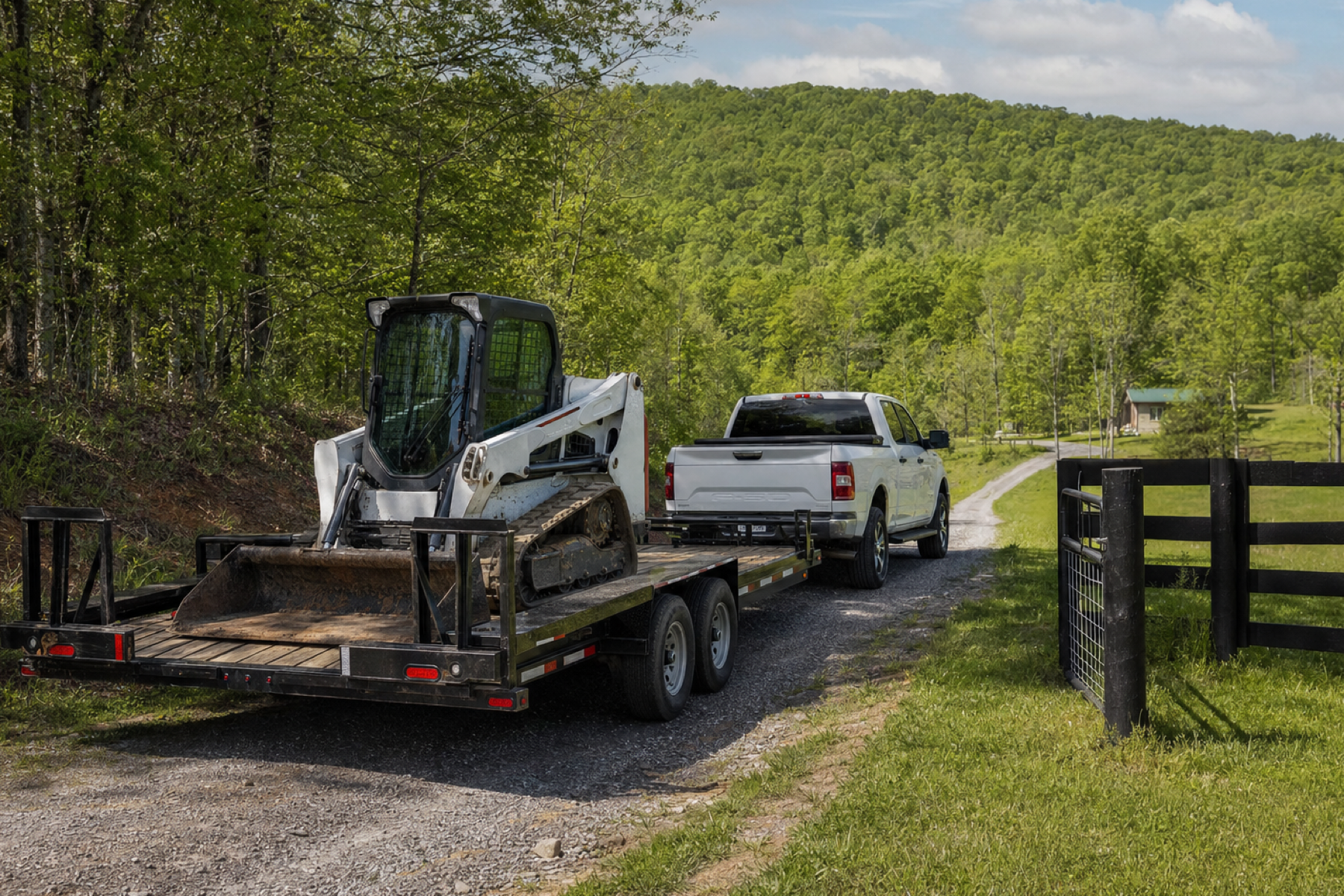
When people picture what drives a clearing estimate, they think about the trees and brush — but the route the equipment takes to reach them can matter just as much. A machine that can't get to the work, or can only get there slowly, changes the whole cost equation before a single tree is touched.
This guide explains how access shapes an estimate, so a quote that seems high for 'easy' vegetation makes sense once you look at the gate and the drive.
Access Decides Which Machine Does the Job
Land-clearing equipment ranges widely in size and capability, and the most productive machine for your vegetation isn't always the one that can physically reach it. If the ideal mulcher or excavator can't fit through the gate or down the drive, the project drops to whatever can — often a smaller machine that works more slowly. Since cost tracks production rate, a smaller machine forced by tight access raises the time, and therefore the price, for the same acreage.
The Access Factors That Move the Number
- Gate and entrance width — frequently the pinch point that caps machine size.
- Overhead clearance — low limbs, wires, or a carport over the entrance rule out taller equipment.
- Drive length and surface — a long or soft drive to reach back acreage adds time and can bog equipment.
- Staging and turning room — space to unload trailers and maneuver near the work area.
- Internal obstacles — fences, outbuildings, and tight corners between the entrance and the work.
When Access Itself Becomes Part of the Job
Sometimes reaching the work is a project of its own. Clearing an access path in first so larger equipment can follow, or improving a soft entrance so a trailer can get in, adds scope up front — but can lower the cost of the main clearing by letting a more productive machine work. A contractor weighs that trade-off during the review: spend a little to open access, or accept slower work with a smaller machine.
Why Access Photos Matter So Much
Because access is invisible in a description of the vegetation, it's one of the most valuable things for a contractor to see before quoting. Photos of the gate, the entrance, overhead clearance, and the route to the work area let them pick the right equipment and price it accurately rather than padding for the unknown. Our guide on what property photos to send covers exactly what to capture, and clearing property with limited access goes deeper on tight sites.
Helpful Guides
This guide is general information for property owners and does not replace an on-site evaluation. Upper Cumberland Land Clearing is an independent referral service; project scope, methods, equipment, pricing and scheduling are determined by the contractor who reviews your property.
Land-Clearing Costs Questions
Yes, sometimes as much as the vegetation. Access determines which machine can reach the work — and if a tight gate or drive forces a smaller, slower machine, the time and cost for the same acreage go up. It's one of the biggest hidden estimate factors.
The gate and entrance width, any overhead clearance limits, the length and firmness of the drive, and how much room there is to unload and maneuver near the work area — ideally with photos. These let a contractor choose and price the right equipment.
Options include using a smaller machine, or clearing an access path in first so larger equipment can follow — a trade-off a contractor evaluates. Either way, describing the access honestly up front prevents equipment arriving that can't reach the work.
Access is a common reason. Light vegetation behind a narrow gate, down a long soft drive, or with no staging room can force slow, small-machine work — raising the price despite the easy brush. A property review sorts out what's driving it.
Ready to Turn Overgrown Land Into Usable Property?
Share your contact details and you’ll be contacted to discuss where the property is, how much land is involved and what needs to be cleared.