Rural Property Projects
Reopening an Abandoned Farm Road
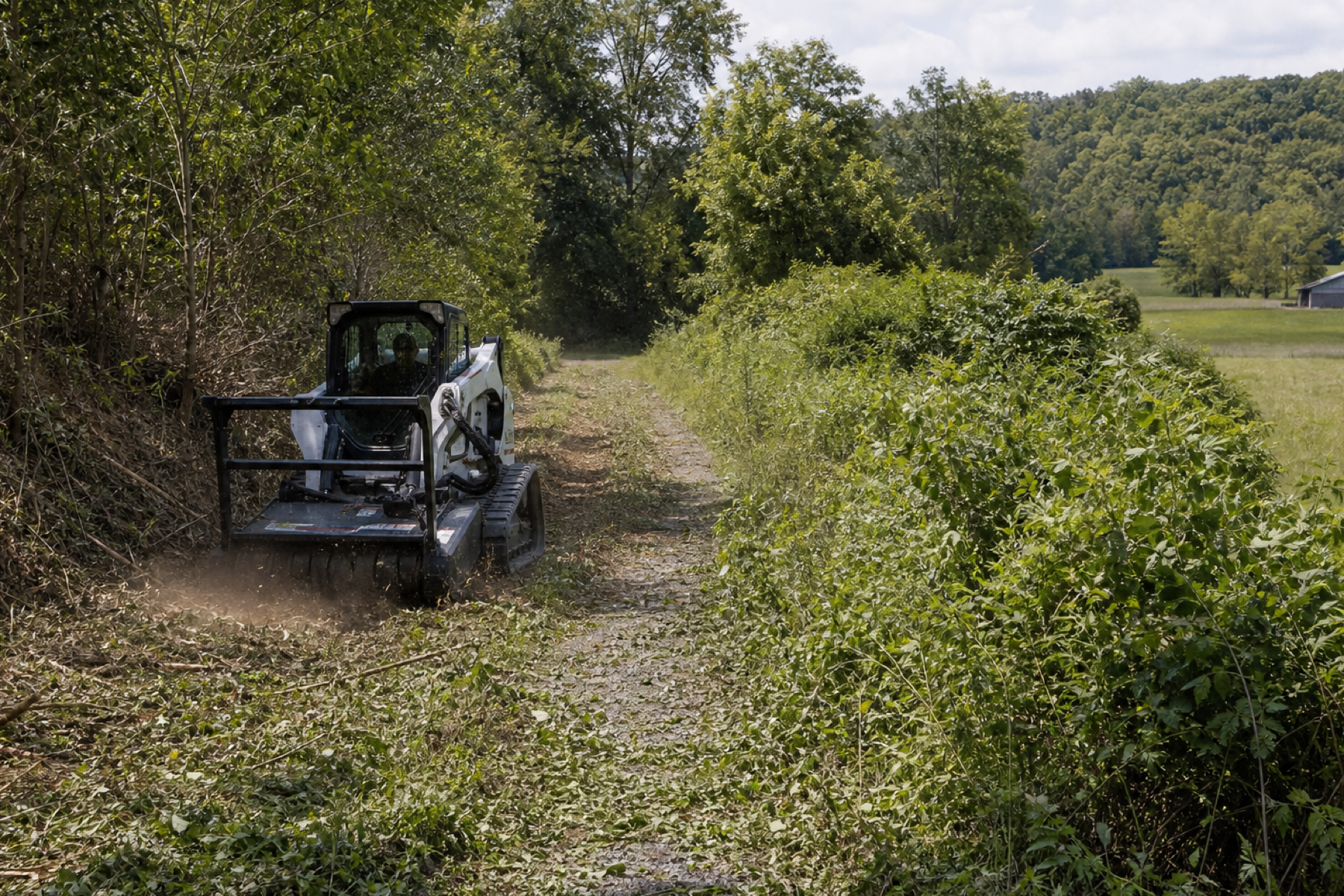
Many rural properties have an old farm road somewhere — a lane that once reached the back field, the timber, or a neighboring parcel, now grown over and forgotten. Reopening it is often easier and cheaper than building new access from scratch, because the roadbed is already there. This guide covers how reclaiming an abandoned road works and what to check along the way.
Why Reopening Beats Building New
An old road already solved the hard problems: someone chose a route that worked, established a roadbed, and often handled the grades and crossings. Even grown over, that base is a head start. Reopening it — clearing the brush and saplings that reclaimed it — is usually less work than routing and building a brand-new lane through untouched ground. The existing bed also tends to be reasonably placed, since it was used for real.
What Reopening Involves
- Clearing the corridor — mulching the brush and saplings that have grown into the old roadbed.
- Handling encroaching trees — removing what's grown up in the road, keeping what lines it if desired.
- Assessing the bed — checking what condition the old surface and base are in.
- Addressing drainage — old culverts and ditches may be clogged, collapsed, or gone.
- Light grading where needed — smoothing and reshaping the reclaimed surface.
Check the Drainage and Crossings
The thing most likely to need attention on an old road is water management. Culverts clog or crush over years of neglect, ditches fill in, and washouts may have formed where drainage failed. A reopened road that doesn't handle water will quickly erode back to unusable, so checking and restoring the drainage and any stream or wet crossings is often the difference between a lasting reclaim and a temporary one. This is where an old road most often needs real work beyond clearing.
Know What You're Reopening To
Two things worth confirming before reopening: where the road actually goes and whether it stays on your property (old roads sometimes crossed boundaries or served neighbors), and how you intend to use it, since a foot/ATV trail needs less than a road for trucks and equipment. Forestry mulching handles the clearing efficiently, and the drainage and grading are scoped to the use. Describe the old road and where it leads when you request a review. Our guides on improving access to rural acreage and creating access trails cover the broader access picture.
Helpful Guides
This guide is general information for property owners and does not replace an on-site evaluation. Upper Cumberland Land Clearing is an independent referral service; project scope, methods, equipment, pricing and scheduling are determined by the contractor who reviews your property.
Rural Property Projects Questions
Usually easier to reopen. The old road already has a chosen route and established bed that handled grades and crossings, so clearing the brush that reclaimed it is typically less work than routing and building a new lane through untouched ground.
Clearing the brush and saplings from the corridor (mulching works well), removing trees grown into the bed, assessing the old surface, and — importantly — restoring drainage: old culverts and ditches are often clogged or collapsed. Light grading smooths the reclaimed surface.
Drainage. Over years of neglect, culverts clog or crush, ditches fill in, and washouts form. A reopened road that can't handle water erodes back to unusable quickly, so restoring the drainage and any crossings is often the key to a lasting result.
Where it actually goes and whether it stays on your property (old roads sometimes crossed boundaries), and how you'll use it — a foot or ATV trail needs less than a road for trucks and equipment, which sets how much clearing, drainage, and grading are needed.
Ready to Turn Overgrown Land Into Usable Property?
Share your contact details and you’ll be contacted to discuss where the property is, how much land is involved and what needs to be cleared.