Rural Property Projects
Creating Access Trails Through Wooded Property
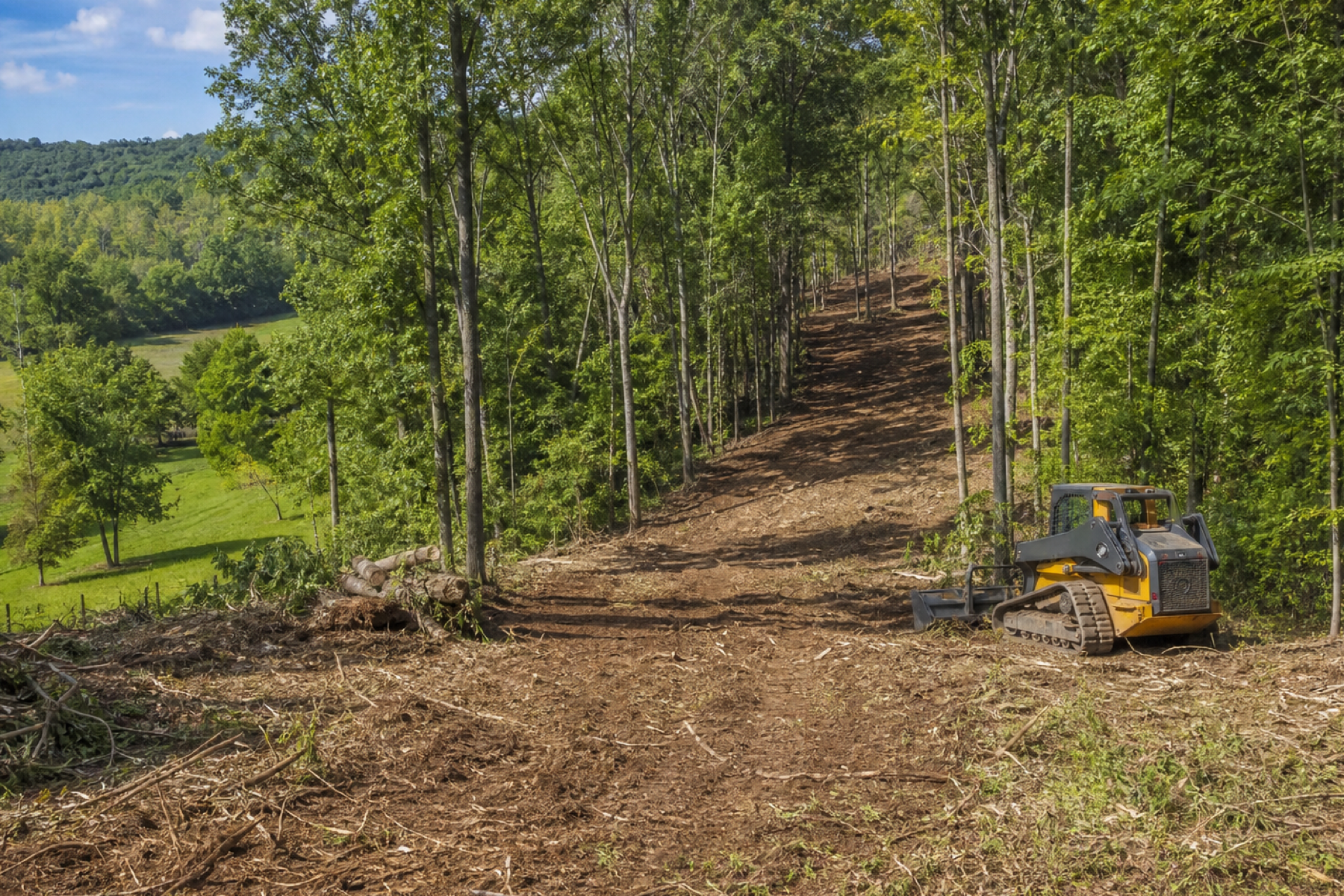
A lot of rural property is effectively unusable simply because you can't get to it — the back acreage is walled off by woods and brush. A cleared access trail changes that, turning unreachable land into property you can actually use, work, and enjoy. It's one of the highest-value, lowest-cost rural clearing projects because a relatively narrow trail unlocks a lot of ground.
Why a Trail Unlocks the Whole Parcel
Access is the quiet key to rural land. Without it, the back of a property might as well not exist — you can't reach it to hunt, farm, maintain, log, or build. A well-placed trail gives you and equipment a way in, which makes everything else possible: checking fences, reaching a pond or food plot, pulling out timber, or just enjoying the land. For the cost of clearing a corridor, you make the rest of the acreage genuinely usable.
Planning the Route
- Follow the land — work with the terrain, using ridges and gentler grades rather than fighting steep pitches.
- Avoid the wet — route around low, boggy areas and cross drainage at sensible points.
- Think about what uses it — foot traffic, ATV, truck, or full equipment set different width and grade needs.
- Keep desirable trees — a trail can wind around good trees rather than through them.
- Mind the destinations — connect the entrance to the places you actually want to reach.
How Trails Are Cleared
Forestry mulching is well suited to trail work — it grinds a clean corridor through brush and small trees in a single pass, leaving a mulched, walkable surface and no debris to haul. For a basic access trail, that's often all it takes. Trails meant for trucks or regular equipment may need more: wider clearing, some grubbing of stumps in the path, light grading, and attention to drainage so the trail doesn't wash. The intended use sets how far beyond simple mulching you go.
Keeping Trails Open
Like any cleared ground, a trail grows back without upkeep — brush and saplings return to a corridor surprisingly fast. The good news is a cleared trail is easy to maintain: an occasional pass with a mower, ATV implement, or mulcher keeps it open. Drainage matters for longevity too — a trail that sheds water lasts far longer than one that channels it and erodes. Our guides on improving access to rural acreage and maintaining land after forestry mulching cover the bigger access picture and the upkeep.
Helpful Guides
This guide is general information for property owners and does not replace an on-site evaluation. Upper Cumberland Land Clearing is an independent referral service; project scope, methods, equipment, pricing and scheduling are determined by the contractor who reviews your property.
Rural Property Projects Questions
Usually with forestry mulching, which grinds a clean corridor through brush and small trees in one pass, leaving a walkable, mulched surface and nothing to haul. Trails for trucks or equipment may also need wider clearing, some stump grubbing in the path, light grading, and drainage.
It depends on use — a foot or ATV trail can be narrow, while a trail for trucks or equipment needs to be wider with room for the vehicle plus clearance. Clear to the use you have in mind, and a bit extra makes maintenance easier.
Work with the terrain (use ridges and gentle grades, avoid steep pitches), route around wet and boggy areas, cross drainage at sensible points, wind around desirable trees, and connect the entrance to the places you actually want to reach.
Yes, without upkeep — brush and saplings return to a corridor fairly quickly. A cleared trail is easy to maintain, though, with an occasional mower, ATV implement, or mulcher pass. Good drainage also keeps it from eroding and extends its life.
Ready to Turn Overgrown Land Into Usable Property?
Share your contact details and you’ll be contacted to discuss where the property is, how much land is involved and what needs to be cleared.