Rural Property Projects
How Wide Should a Cleared Fence Line Be?
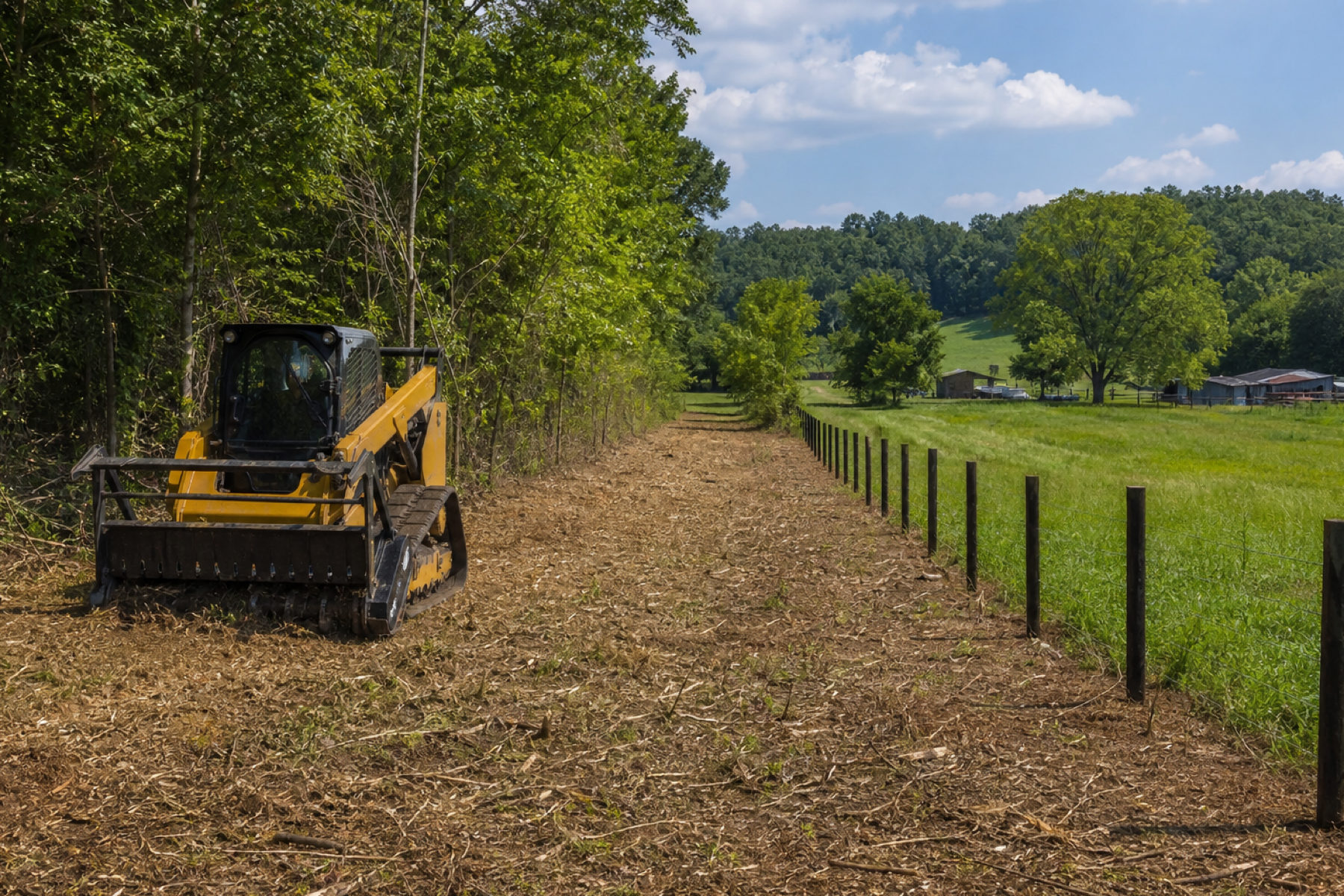
Once you decide to clear a fence line, the next question is how wide. There's no single right answer — it depends on the fence, the equipment you'll maintain it with, and how much regrowth you want to hold off. But there are clear principles that point to a width that protects the fence and stays easy to keep open.
Clear Wide Enough to Protect the Fence
The minimum useful width is enough to keep growth from reaching the fence. Brush and trees that touch fencing shade it, trap moisture, drop limbs, and grow into it — so the cleared strip needs a real buffer on each side you control, not just a token trim right at the wire. A too-narrow clearing lets the problem return almost immediately from the edges.
Clear Wide Enough to Maintain
- Wide enough to drive your mower or bush hog along the line — the cleared strip should fit your maintenance equipment.
- Wide enough to walk and inspect the fence for damage.
- Consistent, so the corridor is easy to run in one pass rather than dodging pinch points.
- A little extra now saves re-clearing later — the maintenance width is often the deciding factor.
Match Width to the Fence and Purpose
Different fences and goals call for different widths. A simple boundary fence you just want to keep clear needs less than a fence line you'll drive and use as a working lane. Electric fencing has its own reason to stay clear — vegetation grounds it out, so a clean strip matters more. And if you're opening the line partly to create an access lane along the boundary, clear it to lane width. The purpose drives the number more than any rule of thumb.
Stay On Your Side of the Line
One firm rule regardless of width: clear only what's on your property unless you have the neighbor's agreement on a shared boundary. Fence lines sit right on property lines, so it's easy to clear across one — make sure you know where the boundary runs before setting the width, especially if the fence itself may not sit exactly on the line. Our guides on clearing a fence line and identifying property lines cover the surrounding steps, and a contractor can recommend a practical width for your fence and maintenance plan when you request a review.
Helpful Guides
This guide is general information for property owners and does not replace an on-site evaluation. Upper Cumberland Land Clearing is an independent referral service; project scope, methods, equipment, pricing and scheduling are determined by the contractor who reviews your property.
Rural Property Projects Questions
Wide enough to keep growth off the fence (a real buffer on each side you control, not just a trim at the wire) and wide enough to drive your mower or bush hog along it for maintenance. The exact width depends on the fence type and whether you also want an access lane — the maintenance width is often the deciding factor.
Too narrow and growth returns from the edges almost immediately and the strip is hard to maintain; wide enough and the fence stays protected and you can mow the line to keep it open. A little extra width now saves re-clearing later.
It benefits from a clean one — vegetation touching an electric fence grounds it out and reduces its effectiveness, so keeping the line clear matters more for electric than for some other fence types.
Only on your side, unless you have the neighbor's agreement on a shared boundary — fence lines sit right on property lines, so it's easy to clear across one. Confirm where the boundary runs (and whether the fence sits on it) before setting the width.
Ready to Turn Overgrown Land Into Usable Property?
Share your contact details and you’ll be contacted to discuss where the property is, how much land is involved and what needs to be cleared.