Project Planning
How to Prepare Gates and Entrances for Equipment
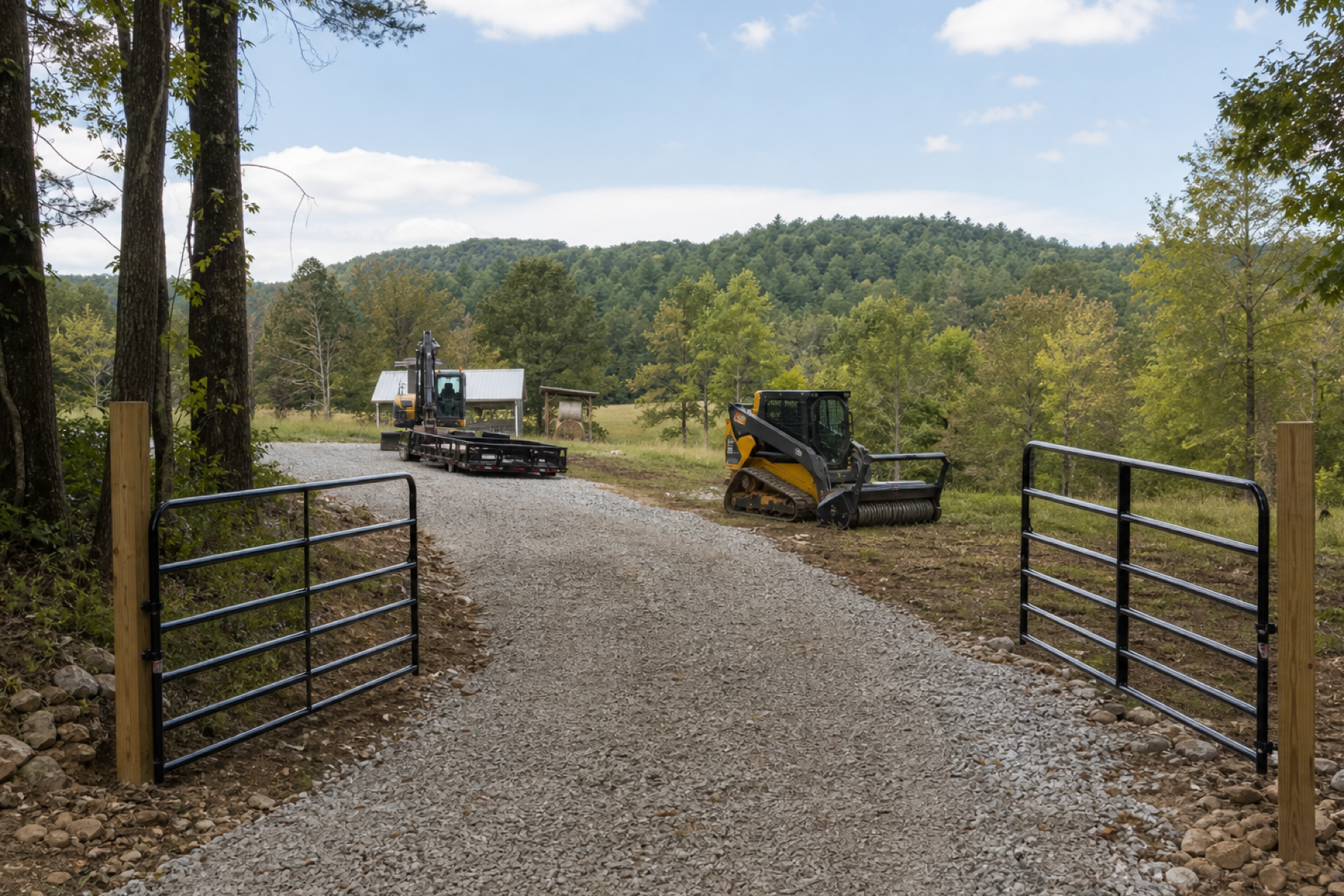
Land-clearing equipment is big, heavy, and arrives on trailers — and none of it can do any work until it gets onto the property. The gate and entrance are where access is won or lost, and a little preparation there can be the difference between the ideal machine reaching the job and settling for a smaller, slower one.
This guide covers how to prepare your gate, entrance, and route so equipment can get in efficiently.
Width and the Pinch Point
The entrance is usually the tightest point equipment has to pass, so its width often caps the machine size. Before the crew arrives, measure or clear your gate opening to its full width — remove a gate that swings into the opening if you can, and clear back brush, posts, or debris crowding the sides. A few feet of extra clearance at the entrance can mean a more capable machine gets in, which means faster, cheaper work.
Overhead Clearance
- Trim or note low branches over the entrance and along the route — tall equipment and trailers need headroom.
- Watch for wires, gateway arches, and carports that limit height.
- Remember trailers are tall too — the delivery rig needs clearance, not just the machine.
The Route In and Staging Room
Getting through the gate is only half of it — equipment then has to travel to the work area and there has to be somewhere to unload. Clear the drive or path of obstacles, note any soft or muddy stretches (heavy rigs and soft ground don't mix), and make sure there's room near the entrance or work area to park the trailer and offload safely. On back acreage, the route itself can be the constraint, so think about how a machine actually gets from the road to the work.
What You Can't Change, Flag and Photograph
Some limits are fixed — a permanently narrow entrance, a tight turn, a low utility line. You can't widen those before the crew arrives, but you can flag them and photograph them so the contractor plans the right equipment and approach in advance. Honest access information prevents the worst outcome: a machine that shows up and can't get to the work. Our guides on how equipment access affects an estimate and clearing property with limited access cover the cost and workaround side.
Helpful Guides
This guide is general information for property owners and does not replace an on-site evaluation. Upper Cumberland Land Clearing is an independent referral service; project scope, methods, equipment, pricing and scheduling are determined by the contractor who reviews your property.
Project Planning Questions
Clear the gate opening to its full width — remove or fully open a swinging gate and cut back brush, posts, or debris crowding the sides. The entrance is usually the pinch point that caps machine size, so a few extra feet of clearance can let a more capable, faster machine get in.
Yes. Tall equipment and the trailers delivering it need headroom, so trim or flag low branches over the entrance and route, and watch for wires, arches, and carports. Height limits are as real a constraint as width.
Flag and photograph the constraint so the contractor plans the right equipment and approach in advance — possibly a smaller machine, or clearing an access path in first. Honest access info prevents equipment arriving that can't reach the work.
Both. After the gate, equipment has to travel to the work and unload, so clear the route of obstacles, note soft or muddy stretches, and make sure there's staging room to park a trailer and offload. On back acreage the route in can be the main constraint.
Ready to Turn Overgrown Land Into Usable Property?
Share your contact details and you’ll be contacted to discuss where the property is, how much land is involved and what needs to be cleared.