Upper Cumberland Land Guide
Common Land-Clearing Conditions Around Cookeville
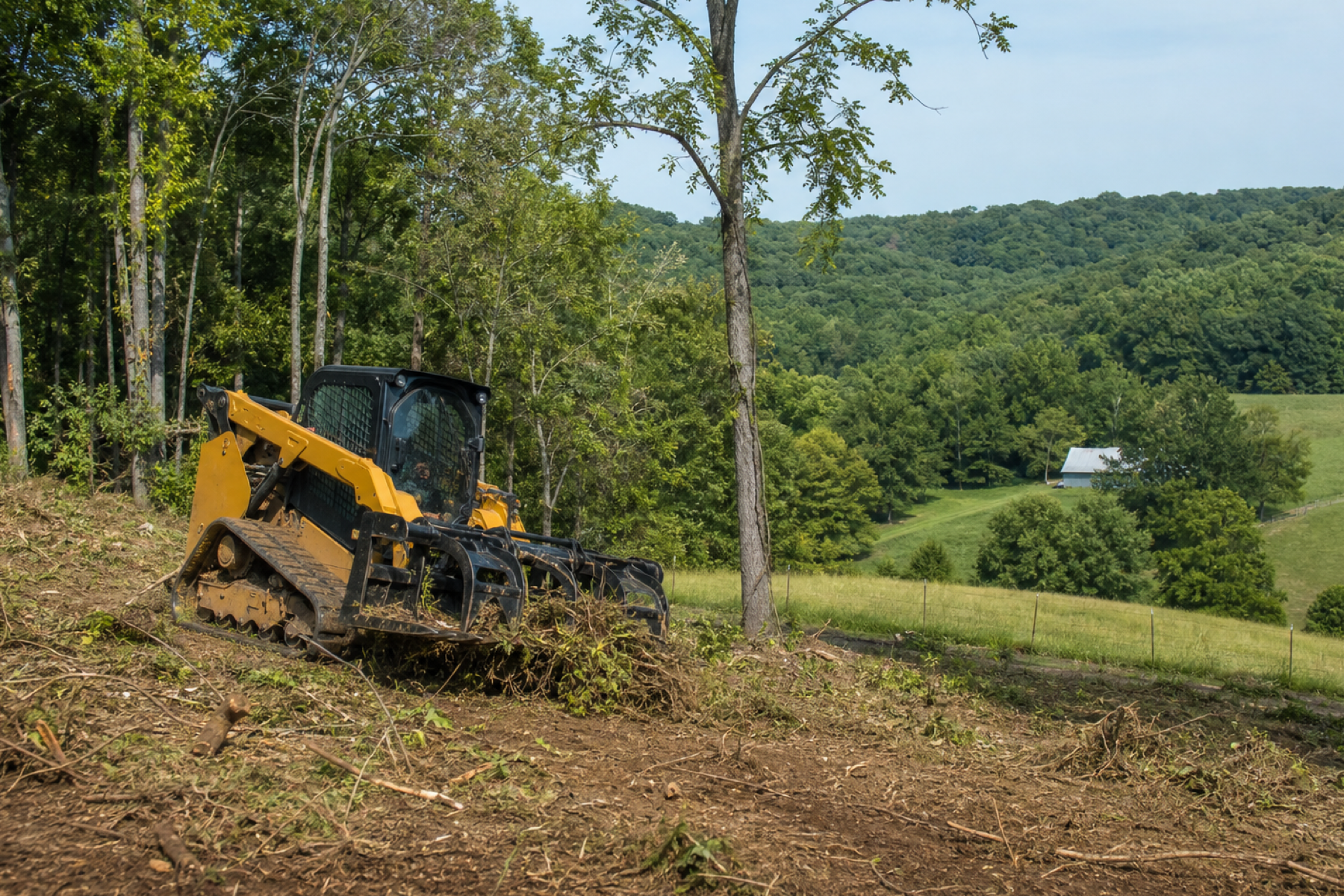
Cookeville sits at the heart of the Upper Cumberland, where the Highland Rim meets the edge of the Cumberland Plateau — and that in-between geography gives Putnam County a distinctive mix of land-clearing conditions. Knowing what's typical around here helps local property owners set expectations before a project.
This guide covers the property types, vegetation, and terrain that clearing projects around Cookeville commonly involve.
A Mix of Property Types
Land-clearing requests around Cookeville come from a broad mix: families preparing homesites outside town in Algood, Baxter, and the county's growing edges; farmers pushing back brush and cedar that's crept into pasture; investors opening up acreage bought at auction or estate sale; and builders getting lots ready as construction continues across Putnam County. That range means projects here span everything from a single wooded lot to reclaiming dozens of overgrown acres.
Typical Vegetation
The area's vegetation is a mixed hardwood-and-cedar landscape. Neglected fields grow up in eastern red cedar, blackberry, sumac, and brush; woodlots carry mixed hardwoods with dense understory; and long-abandoned ground fills with sapling thickets. This kind of growth is well suited to forestry mulching, which is why mulching is one of the most common approaches to reclaiming Cookeville-area property. Larger hardwoods and construction prep bring in traditional clearing alongside it.
Terrain and Ground
- Rolling to hilly ground is the norm, with flatter bottoms along creeks and drainages.
- Soil and rock vary with position — deeper soils in valleys, shallower and rockier toward plateau edges.
- Wet-weather springs and soft bottomland show up on many parcels and affect timing.
- Access ranges from easy in-town lots to long gravel drives on rural tracts.
What It Means for Your Project
The practical takeaway is that Putnam County parcels vary a lot, even nearby — so a property-specific review beats any assumption based on a neighbor's project. The regional patterns here (cedar encroachment, mixed hardwoods, rolling terrain, variable access) are common enough to plan around, but your specific parcel's vegetation, ground, and access set the actual scope. Our broader Upper Cumberland owner's guide and the service page for land clearing in Cookeville cover the wider picture; describe your property when you request a review.
Helpful Guides
This guide is general information for property owners and does not replace an on-site evaluation. Upper Cumberland Land Clearing is an independent referral service; project scope, methods, equipment, pricing and scheduling are determined by the contractor who reviews your property.
Upper Cumberland Land Guide Questions
A broad mix — homesite prep outside town and in Algood and Baxter, reclaiming pasture that's grown up in cedar and brush, opening up auction and estate acreage, and getting lots construction-ready. Projects range from a single wooded lot to dozens of overgrown acres.
A mixed hardwood-and-cedar landscape: neglected fields grow eastern red cedar, blackberry, sumac, and brush; woodlots carry mixed hardwoods with dense understory; and abandoned ground fills with sapling thickets. Much of it is well suited to forestry mulching.
Rolling to hilly, with flatter creek bottoms and shallower, rockier ground toward the plateau edges. Wet-weather springs and soft bottomland are common and affect timing, and access ranges from easy in-town lots to long rural gravel drives.
They help you plan, but Putnam County parcels vary a lot even nearby, so a property-specific review beats assumptions. The regional patterns are worth knowing, but your parcel's actual vegetation, ground, and access determine the real scope.
Ready to Turn Overgrown Land Into Usable Property?
Share your contact details and you’ll be contacted to discuss where the property is, how much land is involved and what needs to be cleared.