Rural Property Projects
Clearing Around a Farm Pond
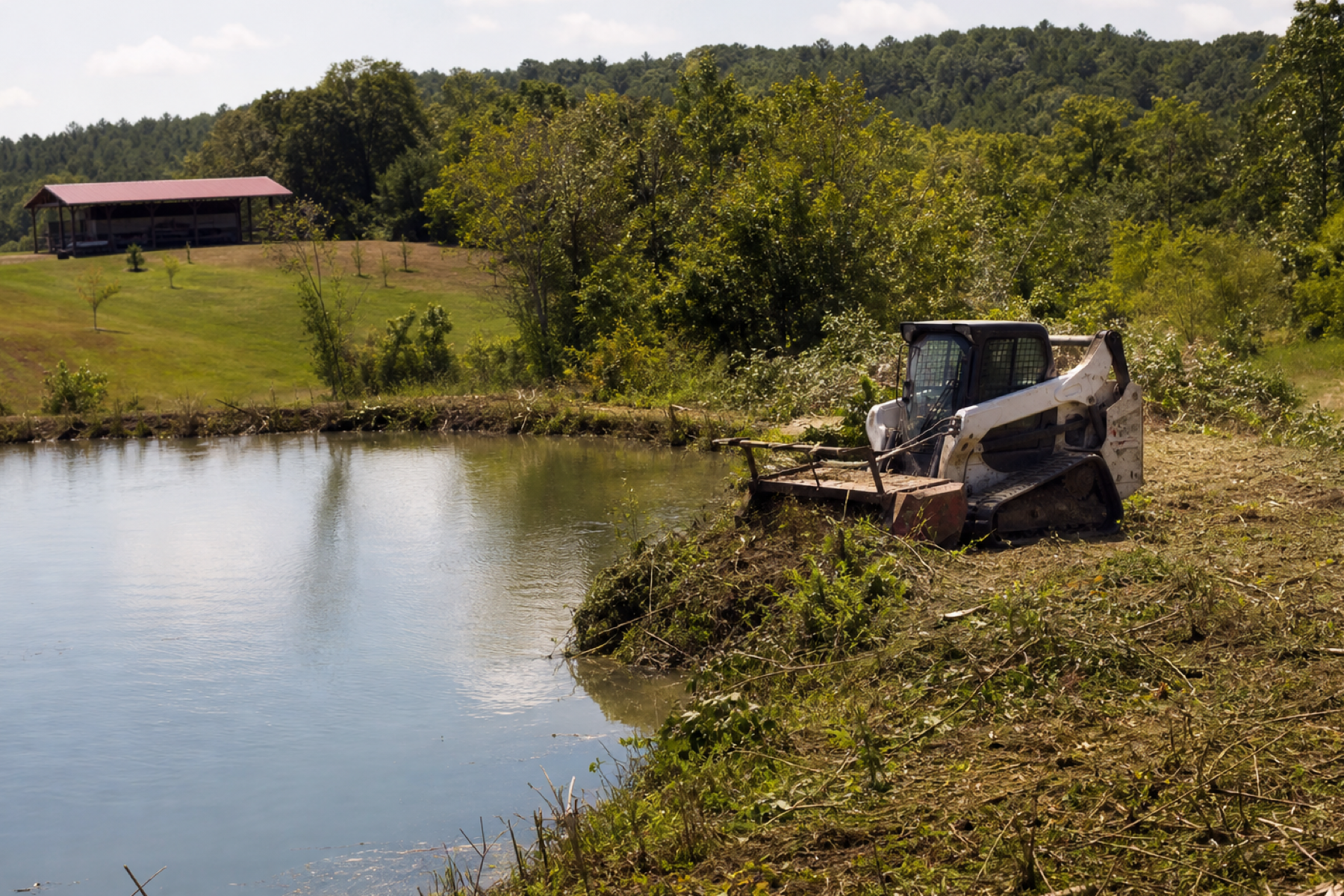
A farm pond is one of a rural property's best features — until the banks grow up in brush and trees and you can barely reach the water. Clearing around a pond restores access, opens up the views and usable shoreline, and reduces the leaves and debris fouling the water. It's rewarding work, but the water's edge calls for a bit more care than open ground.
Why Ponds Get Overgrown — and Why It Matters
Pond banks are prime ground for brush and trees, and once they take hold they cause more than an eyesore. Overhanging trees drop leaves that decompose in the water and degrade it; roots can affect the bank and the dam; brush blocks access for fishing, livestock, or maintenance; and the whole thing hides the shoreline and any problems developing on it. Clearing the banks restores the pond as a usable, healthy feature.
Care at the Water's Edge
- Protect the bank — avoid destabilizing the shoreline or dam, which hold the water in.
- Mind erosion — bare, disturbed soil right at the water erodes into it, so stabilize the edge.
- Keep debris out of the water — clearing near a pond means keeping material from ending up in it.
- Consider what to keep — some shade and shoreline vegetation can be beneficial, so it needn't be bare.
How It's Done
Forestry mulching handles the brush and small trees around a pond cleanly, grinding them in place without hauling — useful right at the water where you don't want to be dragging debris around. Larger trees near the bank are removed selectively, with attention to the roots and the bank's stability. The dam and immediate shoreline are treated carefully, since they're what keep the pond a pond. It's a job where an experienced operator's judgment near the water matters.
Pond Restoration vs. New Pond
Clearing around an existing pond is about restoring access and health to what's there. If you're instead looking to build a new pond, that's a different project — site clearing plus significant excavation and dirt work — covered in our guide on preparing a site for a new pond. Either way, describe the pond, the banks, and your goals when you request a review, and note anything about the dam or water you want protected. Our guide on erosion control covers protecting disturbed ground near water.
Helpful Guides
This guide is general information for property owners and does not replace an on-site evaluation. Upper Cumberland Land Clearing is an independent referral service; project scope, methods, equipment, pricing and scheduling are determined by the contractor who reviews your property.
Rural Property Projects Questions
Overgrown banks block access for fishing, livestock, and maintenance; overhanging trees drop leaves that degrade the water; roots can affect the bank and dam; and brush hides the shoreline and developing problems. Clearing restores the pond as a usable, healthier feature.
Yes — the water's edge needs more care. The bank and dam must stay stable (they hold the water), disturbed soil at the edge should be stabilized so it doesn't erode into the pond, and cleared material must be kept out of the water. It's a job where operator judgment near the water matters.
Not necessarily. Some shade and shoreline vegetation can benefit the pond and stabilize the bank, so clearing is often about opening access and removing problem growth rather than stripping the edge bare. Decide what to keep based on how you use the pond.
That's a different project — preparing a site for a new pond involves clearing plus significant excavation and dirt work, not just opening up existing banks. See our guide on preparing a site for a new pond for what that entails.
Ready to Turn Overgrown Land Into Usable Property?
Share your contact details and you’ll be contacted to discuss where the property is, how much land is involved and what needs to be cleared.